Effects of cannabis: Difference between revisions
No edit summary |
CSV import |
||
| Line 28: | Line 28: | ||
[[Category:Medicinal plants]] | [[Category:Medicinal plants]] | ||
{{Cannabis}} | {{Cannabis}} | ||
<gallery> | |||
File:Marijuana-Cannabis-Weed-Bud-Gram.jpg|Effects of cannabis | |||
File:THC-skeletal.png|Effects of cannabis | |||
File:THV_structure.png|Effects of cannabis | |||
File:Cannabidiol.png|Effects of cannabis | |||
File:CBN_structure.png|Effects of cannabis | |||
File:Cannabivarin.png|Effects of cannabis | |||
File:Cannabidivarin.png|Effects of cannabis | |||
File:Ganja_Smoking_-_Gangasagar_Fair_Transit_Camp_-_Kolkata_2013-01-12_2646.JPG|Effects of cannabis | |||
File:Cannabinoid_Receptors_With_THC-2.svg|Effects of cannabis | |||
File:Bloodshot_EyeBall.jpg|Effects of cannabis | |||
File:Aspergillus.jpg|Effects of cannabis | |||
</gallery> | |||
Latest revision as of 12:06, 18 February 2025
Cannabis, also known as marijuana, is a plant substance commonly used for recreational and medicinal purposes. The psychoactive substance in cannabis, delta-9-tetrahydrocannabinol (THC), is responsible for the plant's intoxicating effects. The plant also contains another important compound, cannabidiol (CBD), which has therapeutic effects but lacks the psychoactive properties of THC<ref>,
 Chemical constituents of marijuana: The complex mixture of natural cannabinoids,
 ,</ref>.
Acute Effects[edit]
When inhaled or consumed, THC interacts with the endocannabinoid system in the brain, producing a variety of physiological and psychological effects. Acute effects include euphoria, altered perception, increased appetite, impaired memory and cognition, and decreased reaction time. In some individuals, cannabis use can also lead to adverse effects such as anxiety, paranoia, and panic attacks<ref>,
 Acute effects of cannabis consumption,
 ,</ref>.
Chronic Effects[edit]
Long-term or heavy cannabis use can lead to persistent cognitive impairment, particularly in memory and attention. It may also lead to dependency, with withdrawal symptoms upon cessation of use. Chronic cannabis use has been linked with mental health disorders, including depression, anxiety, and increased risk of psychosis. Physically, prolonged cannabis smoking is associated with bronchitis and other respiratory complications<ref>,
 Long-term effects of cannabis on brain structure,
 ,</ref>.
Medical Use[edit]
Medical cannabis, particularly CBD, has been used to manage symptoms in a range of conditions, including multiple sclerosis, epilepsy, and chronic pain. Evidence suggests that it can be effective in reducing spasticity, seizures, and pain in some patients. However, more research is required to establish the safety and efficacy of cannabis for these and other medical applications<ref>,
 Medical use of cannabis: An overview,
 ,</ref>.
Legal Status[edit]
The legal status of cannabis varies greatly across the world, with some jurisdictions allowing medical and recreational use and others outlawing the substance entirely. The rapidly changing legal landscape has significant implications for public health, criminal justice, and cannabis research<ref>,
 Legal status of cannabis: A global perspective,
 ,</ref>.
References[edit]
<references group="" responsive="1"></references>
 | |
|---|---|
 |
 |
| Cannabis | ||||||||||||||
|---|---|---|---|---|---|---|---|---|---|---|---|---|---|---|
*
|
-
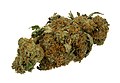 Effects of cannabis
 -
 Effects of cannabis
 -
 Effects of cannabis
 -
 Effects of cannabis
 -
 Effects of cannabis
 -
Effects of cannabis
-
Effects of cannabis
-
Effects of cannabis
-
Effects of cannabis
-
Effects of cannabis
-
Effects of cannabis


