Acrocallosal syndrome: Difference between revisions
CSV import |
CSV import |
||
| Line 45: | Line 45: | ||
[[Category:Genetic disorders]] | [[Category:Genetic disorders]] | ||
[[Category:Rare diseases]] | [[Category:Rare diseases]] | ||
== Acrocallosal_syndrome == | |||
<gallery> | |||
File:Polydactyly_in_a_1_day_old_infant_due_acrocallosal_syndrome.png|Polydactyly in a 1-day-old infant due to acrocallosal syndrome | |||
File:Autosomal_recessive_-_en.svg|Autosomal recessive inheritance pattern | |||
</gallery> | |||
Revision as of 01:23, 18 February 2025
A rare genetic disorder affecting the development of the brain and limbs
Acrocallosal syndrome is a rare genetic disorder characterized by agenesis of the corpus callosum, craniofacial abnormalities, and polydactyly. It is inherited in an autosomal recessive pattern and affects the development of the central nervous system and limbs.
Signs and symptoms
Individuals with acrocallosal syndrome typically present with a range of symptoms, including:
- Agenesis of the corpus callosum: Partial or complete absence of the corpus callosum, the structure that connects the two hemispheres of the brain.
- Craniofacial abnormalities: These may include a prominent forehead, hypertelorism (widely spaced eyes), and a broad nasal bridge.
- Polydactyly: The presence of extra fingers or toes, which is a common feature of the syndrome.
- Developmental delay: Affected individuals often experience delays in reaching developmental milestones.
- Intellectual disability: Varying degrees of intellectual disability are common.
- Hypotonia: Reduced muscle tone, which can affect motor skills.
Genetics
Acrocallosal syndrome is inherited in an autosomal recessive manner, meaning that an individual must inherit two copies of the mutated gene, one from each parent, to be affected. The specific gene associated with the syndrome is not always identified, but mutations in the KIF7 gene have been implicated in some cases.

Diagnosis
Diagnosis of acrocallosal syndrome is based on clinical evaluation, identification of characteristic features, and imaging studies such as MRI to assess the structure of the brain. Genetic testing can confirm the diagnosis by identifying mutations in the KIF7 gene or other associated genes.
Management
There is no cure for acrocallosal syndrome, and treatment is supportive and symptomatic. Management may include:
- Physical therapy: To improve motor skills and muscle tone.
- Occupational therapy: To assist with daily living skills.
- Speech therapy: To address communication difficulties.
- Surgical intervention: In some cases, surgery may be required to correct polydactyly or other physical abnormalities.
Prognosis
The prognosis for individuals with acrocallosal syndrome varies depending on the severity of symptoms and associated complications. Early intervention and supportive therapies can improve quality of life and developmental outcomes.
Related pages
Gallery
-
 Polydactyly in a 1-day-old infant with acrocallosal syndrome

Acrocallosal_syndrome
-
Polydactyly in a 1-day-old infant due to acrocallosal syndrome
-
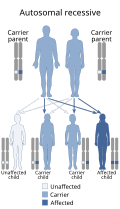 Autosomal recessive inheritance pattern
