Tuberculous meningitis: Difference between revisions
CSV import |
CSV import |
||
| Line 43: | Line 43: | ||
[[Category:Neurology]] | [[Category:Neurology]] | ||
[[Category:Tuberculosis]] | [[Category:Tuberculosis]] | ||
<gallery> | |||
File:Tuberculous-meningitis-scan.jpg|MRI scan showing tuberculous meningitis | |||
File:Tuberculous-meningitis-autopsy.jpg|Autopsy findings of tuberculous meningitis | |||
</gallery> | |||
Revision as of 00:49, 18 February 2025
Tuberculous Meningitis


Tuberculous meningitis is a form of meningitis caused by Mycobacterium tuberculosis, the bacterium responsible for tuberculosis. It is a serious condition that affects the meninges, the protective membranes covering the brain and spinal cord.
Signs and Symptoms
The symptoms of tuberculous meningitis can develop gradually over several weeks. Early symptoms may include fever, headache, nausea, and vomiting. As the disease progresses, patients may experience neck stiffness, confusion, seizures, and coma.
Pathophysiology
Tuberculous meningitis occurs when Mycobacterium tuberculosis spreads from the lungs to the central nervous system. The bacteria can enter the bloodstream and reach the meninges, causing inflammation and the formation of tuberculomas. This inflammation can lead to increased intracranial pressure and hydrocephalus.
Diagnosis
Diagnosis of tuberculous meningitis is challenging and often requires a combination of clinical assessment, cerebrospinal fluid (CSF) analysis, and imaging studies such as MRI or CT scan. CSF analysis typically shows elevated protein levels, low glucose levels, and a high white blood cell count with a predominance of lymphocytes.
Treatment
The treatment of tuberculous meningitis involves a prolonged course of antitubercular therapy (ATT), which includes drugs such as isoniazid, rifampicin, pyrazinamide, and ethambutol. Corticosteroids may also be used to reduce inflammation and prevent complications.
Prognosis
The prognosis of tuberculous meningitis depends on the stage at which treatment is initiated. Early diagnosis and treatment are crucial for a favorable outcome. Delayed treatment can lead to severe neurological damage or death.
Epidemiology
Tuberculous meningitis is more common in regions with high rates of tuberculosis, such as sub-Saharan Africa and Southeast Asia. It is also more prevalent in individuals with HIV/AIDS due to their compromised immune systems.
Related Pages
References
-
 MRI scan showing tuberculous meningitis
 -
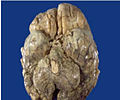 Autopsy findings of tuberculous meningitis
