Compartment syndrome: Difference between revisions
CSV import Tags: mobile edit mobile web edit |
CSV import |
||
| (One intermediate revision by the same user not shown) | |||
| Line 1: | Line 1: | ||
{{SI}} | |||
{{Infobox medical condition | |||
| name = Compartment syndrome | |||
| image = [[File:Fasciotomyforearm.jpg|250px]] | |||
| caption = Fasciotomy of the forearm to relieve compartment syndrome | |||
| field = [[Orthopedic surgery]] | |||
| synonyms = Compartmental syndrome | |||
| symptoms = Severe pain, [[paresthesia]], [[muscle weakness]], [[swelling]] | |||
| complications = [[Muscle necrosis]], [[nerve damage]], [[amputation]] | |||
| onset = Acute or chronic | |||
| duration = Hours to days | |||
| causes = [[Trauma]], [[fracture]], [[crush injury]], [[burn]] | |||
| risks = [[Fracture]], [[tight bandages]], [[prolonged limb compression]] | |||
| diagnosis = [[Clinical assessment]], [[intracompartmental pressure measurement]] | |||
| differential = [[Deep vein thrombosis]], [[cellulitis]], [[peripheral artery disease]] | |||
| treatment = [[Fasciotomy]], [[removal of constricting bandages]] | |||
| medication = [[Analgesics]], [[anti-inflammatory drugs]] | |||
| prognosis = Good with timely treatment, poor if delayed | |||
| frequency = Common in [[trauma]] patients | |||
}} | |||
'''Compartment syndrome''' is a serious condition that involves increased pressure in a muscle compartment. It can lead to muscle and nerve damage and problems with blood flow. | '''Compartment syndrome''' is a serious condition that involves increased pressure in a muscle compartment. It can lead to muscle and nerve damage and problems with blood flow. | ||
== Causes == | == Causes == | ||
[[Compartment syndrome]] can be caused by a traumatic injury such as a fracture or crush injury, anabolic steroid use, or a bandage or cast that is too tight. The pressure within a compartment can be increased by bleeding or swelling after an injury. | [[Compartment syndrome]] can be caused by a traumatic injury such as a fracture or crush injury, anabolic steroid use, or a bandage or cast that is too tight. The pressure within a compartment can be increased by bleeding or swelling after an injury. | ||
== Symptoms == | == Symptoms == | ||
The symptoms of compartment syndrome can include intense pain that doesn't go away when you're at rest or pain that seems greater than you'd expect from the injury itself. Other symptoms can include decreased sensation, numbness and tingling, and difficulty moving the affected area. | The symptoms of compartment syndrome can include intense pain that doesn't go away when you're at rest or pain that seems greater than you'd expect from the injury itself. Other symptoms can include decreased sensation, numbness and tingling, and difficulty moving the affected area. | ||
== Diagnosis == | == Diagnosis == | ||
The diagnosis of compartment syndrome is often based on the patient's medical history and physical examination. If the diagnosis is unclear, a doctor may measure the pressure within the muscle compartment using a special needle and gauge. | The diagnosis of compartment syndrome is often based on the patient's medical history and physical examination. If the diagnosis is unclear, a doctor may measure the pressure within the muscle compartment using a special needle and gauge. | ||
== Treatment == | == Treatment == | ||
The treatment for compartment syndrome is surgery to reduce the pressure within the muscle compartment. This is known as a fasciotomy. In some cases, physical therapy may be needed after surgery to help regain strength and mobility. | The treatment for compartment syndrome is surgery to reduce the pressure within the muscle compartment. This is known as a fasciotomy. In some cases, physical therapy may be needed after surgery to help regain strength and mobility. | ||
== Prognosis == | == Prognosis == | ||
If left untreated, compartment syndrome can lead to severe and permanent damage. Muscle and nerve cells can die, leading to permanent disability. However, with prompt diagnosis and treatment, the prognosis for compartment syndrome is generally good. | If left untreated, compartment syndrome can lead to severe and permanent damage. Muscle and nerve cells can die, leading to permanent disability. However, with prompt diagnosis and treatment, the prognosis for compartment syndrome is generally good. | ||
==Gallery==== Compartment_syndrome == | |||
<gallery> | |||
File:Acute_Compartment_Syndrome_with_blister_formation.JPG|Acute Compartment Syndrome with blister formation | |||
File:Compartment_Syndrome_in_Muscle_(cleaned_up)_(annotated).jpg|Compartment Syndrome in Muscle (cleaned up) | |||
File:Compartment_syndrome_-_updated.jpg|Compartment syndrome - updated | |||
File:Fasciotomy_(Post_Skin-Graft).jpg|Fasciotomy (Post Skin-Graft) | |||
</gallery> | |||
== See also == | == See also == | ||
* [[Fasciotomy]] | * [[Fasciotomy]] | ||
* [[Crush injury]] | * [[Crush injury]] | ||
* [[Rhabdomyolysis]] | * [[Rhabdomyolysis]] | ||
[[Category:Medical emergencies]] | [[Category:Medical emergencies]] | ||
[[Category:Orthopedic problems]] | [[Category:Orthopedic problems]] | ||
[[Category:Surgical procedures]] | [[Category:Surgical procedures]] | ||
{{Medicine-stub}} | {{Medicine-stub}} | ||
Latest revision as of 02:06, 5 April 2025

Editor-In-Chief: Prab R Tumpati, MD
Obesity, Sleep & Internal medicine
Founder, WikiMD Wellnesspedia &
W8MD's medical weight loss NYC, sleep center NYC
Philadelphia medical weight loss and Philadelphia sleep clinics
| Compartment syndrome | |
|---|---|

| |
| Synonyms | Compartmental syndrome |
| Pronounce | N/A |
| Specialty | N/A |
| Symptoms | Severe pain, paresthesia, muscle weakness, swelling |
| Complications | Muscle necrosis, nerve damage, amputation |
| Onset | Acute or chronic |
| Duration | Hours to days |
| Types | N/A |
| Causes | Trauma, fracture, crush injury, burn |
| Risks | Fracture, tight bandages, prolonged limb compression |
| Diagnosis | Clinical assessment, intracompartmental pressure measurement |
| Differential diagnosis | Deep vein thrombosis, cellulitis, peripheral artery disease |
| Prevention | N/A |
| Treatment | Fasciotomy, removal of constricting bandages |
| Medication | Analgesics, anti-inflammatory drugs |
| Prognosis | Good with timely treatment, poor if delayed |
| Frequency | Common in trauma patients |
| Deaths | N/A |
Compartment syndrome is a serious condition that involves increased pressure in a muscle compartment. It can lead to muscle and nerve damage and problems with blood flow.
Causes[edit]
Compartment syndrome can be caused by a traumatic injury such as a fracture or crush injury, anabolic steroid use, or a bandage or cast that is too tight. The pressure within a compartment can be increased by bleeding or swelling after an injury.
Symptoms[edit]
The symptoms of compartment syndrome can include intense pain that doesn't go away when you're at rest or pain that seems greater than you'd expect from the injury itself. Other symptoms can include decreased sensation, numbness and tingling, and difficulty moving the affected area.
Diagnosis[edit]
The diagnosis of compartment syndrome is often based on the patient's medical history and physical examination. If the diagnosis is unclear, a doctor may measure the pressure within the muscle compartment using a special needle and gauge.
Treatment[edit]
The treatment for compartment syndrome is surgery to reduce the pressure within the muscle compartment. This is known as a fasciotomy. In some cases, physical therapy may be needed after surgery to help regain strength and mobility.
Prognosis[edit]
If left untreated, compartment syndrome can lead to severe and permanent damage. Muscle and nerve cells can die, leading to permanent disability. However, with prompt diagnosis and treatment, the prognosis for compartment syndrome is generally good.
Gallery==== Compartment_syndrome[edit]
-
 Acute Compartment Syndrome with blister formation
 -
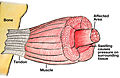 Compartment Syndrome in Muscle (cleaned up)
 -
 Compartment syndrome - updated
 -
 Fasciotomy (Post Skin-Graft)

_(annotated).jpg)

.jpg)
See also[edit]

