Candy making: Difference between revisions
CSV import Tags: mobile edit mobile web edit |
CSV import |
||
| (2 intermediate revisions by the same user not shown) | |||
| Line 1: | Line 1: | ||
{{Short description|The process of creating confections from sugar and other ingredients}} | |||
'''Candy making''' is the art and science of creating [[confectionery]] products, primarily from [[sugar]] and other ingredients. This process involves various techniques and methods to produce a wide range of candies, from simple hard candies to complex chocolates and [[nougat]]. | |||
Candy making | |||
== | ==History== | ||
The | The history of candy making dates back to ancient times when honey was used as a sweetener. The development of sugar refining techniques in the Middle Ages allowed for the creation of more sophisticated confections. By the 19th century, candy making had become a popular industry, with the invention of new machinery and techniques that allowed for mass production. | ||
== | ==Ingredients== | ||
The primary ingredient in candy making is [[sugar]], which can be used in various forms such as granulated sugar, powdered sugar, or corn syrup. Other common ingredients include: | |||
* | * [[Chocolate]] | ||
* [[Nuts]] | |||
* [[Fruits]] | |||
* [[Flavorings]] | |||
* [[Colorings]] | |||
==Techniques== | |||
Candy making involves several techniques, each suited to different types of candy. Some of the most common techniques include: | |||
===Boiling=== | |||
Boiling is a fundamental technique in candy making, used to dissolve sugar and create syrups. The temperature to which the syrup is boiled determines the type of candy produced, such as soft caramels or hard candies. | |||
===Tempering=== | |||
[[Tempering]] is a process used in chocolate making to stabilize the cocoa butter crystals, resulting in a glossy finish and a crisp snap. This involves carefully heating and cooling the chocolate to specific temperatures. | |||
== | ===Pulling=== | ||
* [[ | Pulling is used to aerate sugar mixtures, creating a light and chewy texture. This technique is commonly used in making taffy and nougat. | ||
* [[ | |||
===Molding=== | |||
Molding involves pouring liquid candy into molds to create specific shapes. This is often used in the production of chocolates and gummy candies. | |||
==Types of Candy== | |||
Candy can be categorized into several types based on their texture and ingredients: | |||
* [[Hard candy]] | |||
* [[Soft candy]] | |||
* [[Chewy candy]] | |||
* [[Chocolate]] | * [[Chocolate]] | ||
* [[ | * [[Gummy candy]] | ||
== | ==Equipment== | ||
Candy making requires specific equipment to achieve the desired results. Some essential tools include: | |||
* [[Candy thermometer]] | |||
* [[Double boiler]] | |||
* [[Molds]] | |||
* [[Marble slab]] | |||
==Safety== | |||
Candy making involves working with high temperatures and hot sugar syrups, which can cause burns. It is important to follow safety precautions, such as using protective gear and maintaining a clean workspace. | |||
==Related pages== | |||
* [[Confectionery]] | |||
* [[Chocolate making]] | |||
* [[Sugar]] | |||
* [[Baking]] | |||
[[Category:Confectionery]] | [[Category:Confectionery]] | ||
[[Category:Cooking techniques]] | |||
<gallery> | |||
File:Ryan_Berley_Pouring_Candy_Molds_CHF-First-Friday-December-2012-011.JPG|Ryan Berley Pouring Candy Molds | |||
File:Candy_in_the_making_in_Nablus_027_-_Aug_2011.jpg|Candy in the Making in Nablus | |||
File:Coconut_candy_making,_Vietnam.jpg|Coconut Candy Making, Vietnam | |||
File:HardCandy.jpg|Hard Candy | |||
File:Cotton_candy_making.JPG|Cotton Candy Making | |||
File:Spinning_head_of_the_cotton_candy_maker.jpg|Spinning Head of the Cotton Candy Maker | |||
File:Cotton_candy_Μαλλί_της_γριάς.JPG|Cotton Candy | |||
File:Marshmallow-Creme.jpg|Marshmallow Creme | |||
</gallery> | |||
Latest revision as of 11:22, 25 February 2025
The process of creating confections from sugar and other ingredients
Candy making is the art and science of creating confectionery products, primarily from sugar and other ingredients. This process involves various techniques and methods to produce a wide range of candies, from simple hard candies to complex chocolates and nougat.
History[edit]
The history of candy making dates back to ancient times when honey was used as a sweetener. The development of sugar refining techniques in the Middle Ages allowed for the creation of more sophisticated confections. By the 19th century, candy making had become a popular industry, with the invention of new machinery and techniques that allowed for mass production.
Ingredients[edit]
The primary ingredient in candy making is sugar, which can be used in various forms such as granulated sugar, powdered sugar, or corn syrup. Other common ingredients include:
Techniques[edit]
Candy making involves several techniques, each suited to different types of candy. Some of the most common techniques include:
Boiling[edit]
Boiling is a fundamental technique in candy making, used to dissolve sugar and create syrups. The temperature to which the syrup is boiled determines the type of candy produced, such as soft caramels or hard candies.
Tempering[edit]
Tempering is a process used in chocolate making to stabilize the cocoa butter crystals, resulting in a glossy finish and a crisp snap. This involves carefully heating and cooling the chocolate to specific temperatures.
Pulling[edit]
Pulling is used to aerate sugar mixtures, creating a light and chewy texture. This technique is commonly used in making taffy and nougat.
Molding[edit]
Molding involves pouring liquid candy into molds to create specific shapes. This is often used in the production of chocolates and gummy candies.
Types of Candy[edit]
Candy can be categorized into several types based on their texture and ingredients:
Equipment[edit]
Candy making requires specific equipment to achieve the desired results. Some essential tools include:
Safety[edit]
Candy making involves working with high temperatures and hot sugar syrups, which can cause burns. It is important to follow safety precautions, such as using protective gear and maintaining a clean workspace.
Related pages[edit]
-
 Ryan Berley Pouring Candy Molds
 -
 Candy in the Making in Nablus
 -
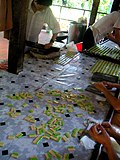 Coconut Candy Making, Vietnam
 -
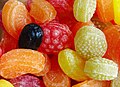 Hard Candy
 -
Cotton Candy Making
-
Spinning Head of the Cotton Candy Maker
-
Cotton Candy
-
Marshmallow Creme


