Tomato chutney
Tomato Chutney is a type of chutney that is predominantly made from tomatoes. It is a popular condiment in various cuisines around the world, including Indian, British, and American.
Origins and History[edit]
Tomato chutney has its roots in Indian cuisine, where it is known as tamatar ki chutney. The use of tomatoes in chutney can be traced back to the 16th century when the fruit was first introduced to India by Portuguese explorers. In the United Kingdom, tomato chutney became popular during the Victorian era, as part of the trend of serving chutneys with cheese and cold meats.
Preparation[edit]
The basic ingredients of tomato chutney are ripe tomatoes, vinegar, sugar, and spices. The tomatoes are first blanched and peeled, then cooked with the other ingredients until they reach a jam-like consistency. The chutney is then preserved by canning or bottling. Variations of the recipe may include additional ingredients such as onions, garlic, ginger, and chili peppers.
Uses[edit]
Tomato chutney is often used as a condiment or dip. In Indian cuisine, it is commonly served with samosas, pakoras, and other snacks. In British and American cuisine, it is often served with cheese, cold meats, and sandwiches.
Health Benefits[edit]
Tomatoes are rich in vitamin C, vitamin K, and lycopene, a powerful antioxidant. Therefore, consuming tomato chutney can provide these nutritional benefits. However, the high sugar content in some recipes may not be suitable for those with certain dietary restrictions.
See Also[edit]

-
 Tomato chutney in a bowl
 -
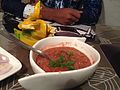 Red tangy chutney
 -
 Paneer tikka with tomato chutney
 -
 Tomato chutney
 -
 Tomato chutney


Medical Disclaimer: WikiMD is for informational purposes only and is not a substitute for professional medical advice. Content may be inaccurate or outdated and should not be used for diagnosis or treatment. Always consult your healthcare provider for medical decisions. Verify information with trusted sources such as CDC.gov and NIH.gov. By using this site, you agree that WikiMD is not liable for any outcomes related to its content. See full disclaimer.
Credits:Most images are courtesy of Wikimedia commons, and templates, categories Wikipedia, licensed under CC BY SA or similar.
Translate page: - East Asian
中文,
日本,
한국어,
South Asian
हिन्दी,
தமிழ்,
తెలుగు,
Urdu,
ಕನ್ನಡ,
Southeast Asian
Indonesian,
Vietnamese,
Thai,
မြန်မာဘာသာ,
বাংলা
European
español,
Deutsch,
français,
Greek,
português do Brasil,
polski,
română,
русский,
Nederlands,
norsk,
svenska,
suomi,
Italian
Middle Eastern & African
عربى,
Turkish,
Persian,
Hebrew,
Afrikaans,
isiZulu,
Kiswahili,
Other
Bulgarian,
Hungarian,
Czech,
Swedish,
മലയാളം,
मराठी,
ਪੰਜਾਬੀ,
ગુજરાતી,
Portuguese,
Ukrainian

