Spirulina (dietary supplement)
Information about Spirulina as a dietary supplement
Template:Infobox dietary supplement
Spirulina is a biomass of cyanobacteria (blue-green algae) that can be consumed by humans and animals. The three species are Arthrospira platensis, Arthrospira fusiformis, and Arthrospira maxima. Cultivated worldwide, spirulina is used as a dietary supplement or whole food. It is also used as a feed supplement in the aquaculture, aquarium, and poultry industries.
Nutritional content[edit]
Spirulina contains an array of nutrients, including protein, vitamins, and minerals. It is particularly rich in protein, providing all essential amino acids. It is also a source of vitamin B1, vitamin B2, vitamin B3, copper, and iron.
Health benefits[edit]
Spirulina is often marketed as a "superfood" due to its high nutrient content. Some studies suggest that it may have antioxidant and anti-inflammatory effects. It is also believed to help lower cholesterol levels, improve immune system function, and enhance endurance.
Potential side effects[edit]
While spirulina is generally considered safe, it can cause adverse effects in some individuals, such as allergic reactions, headaches, and insomnia. People with phenylketonuria (PKU) should avoid spirulina due to its high phenylalanine content.
Cultivation[edit]
Spirulina is cultivated in open-channel raceway ponds, where paddle wheels agitate the water to prevent sedimentation. It requires alkaline water and sunlight for optimal growth.
See also[edit]
References[edit]
External links[edit]
Spirulina (dietary supplement)[edit]
-
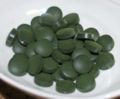 Spirulina tablets
 -
 Spirulina under microscope


Sponsored Health Resource

W8MD Weight Loss, Sleep & MedSpa
Looking for physician-supervised weight loss, semaglutide, tirzepatide, or GLP-1 receptor agonist options? W8MD helps eligible patients in New York City, Brooklyn, New Jersey, Connecticut, Pennsylvania, Delaware, and greater Philadelphia with medical weight loss, sleep medicine, and long-term maintenance support.
GLP-1 specials: Affordable GLP-1 injections NYC and Philadelphia starting from $29.99/week and up for semaglutide with insurance accepted for qualifying visits, and $45/week and up for tirzepatide with insurance accepted for qualifying visits. Self-pay options start from $59.99/week and up for semaglutide and $69.99/week and up for tirzepatide.
- Medical weight loss NYC
- Affordable GLP-1 injections NYC
- Budget GLP-1 weight loss shots Philadelphia
- New Jersey medical weight loss
- NYC medical weight loss blog
- Philadelphia weight loss blog
- Sleep medicine and sleep apnea services
- W8MD MedSpa and wellness
Book a W8MD appointment · View GLP-1 specials
Paid promotional message. Eligibility, pricing, insurance coverage, medication availability, and results vary. Medical evaluation required.

Medical Disclaimer: WikiMD is for informational purposes only and is not a substitute for professional medical advice. Content may be inaccurate or outdated and should not be used for diagnosis or treatment. Always consult your healthcare provider for medical decisions. Verify information with trusted sources such as CDC.gov and NIH.gov. By using this site, you agree that WikiMD is not liable for any outcomes related to its content. See full disclaimer.
Credits:Most images are courtesy of Wikimedia commons, and templates, categories Wikipedia, licensed under CC BY SA or similar.
Translate page: - East Asian
中文,
日本,
한국어,
South Asian
हिन्दी,
தமிழ்,
తెలుగు,
Urdu,
ಕನ್ನಡ,
Southeast Asian
Indonesian,
Vietnamese,
Thai,
မြန်မာဘာသာ,
বাংলা
European
español,
Deutsch,
français,
Greek,
português do Brasil,
polski,
română,
русский,
Nederlands,
norsk,
svenska,
suomi,
Italian
Middle Eastern & African
عربى,
Turkish,
Persian,
Hebrew,
Afrikaans,
isiZulu,
Kiswahili,
Other
Bulgarian,
Hungarian,
Czech,
Swedish,
മലയാളം,
मराठी,
ਪੰਜਾਬੀ,
ગુજરાતી,
Portuguese,
Ukrainian

