Signal crayfish
Signal crayfish (Pacifastacus leniusculus) is a species of crayfish native to North America. It is also known as the Pacific freshwater crayfish and the North American river crab.
Description[edit]
Signal crayfish are large, reaching up to 16-18 cm in length. They are named for the conspicuous white to pale blue patches on the underside of their claws, which appear like 'signals'. The body color varies from brownish to greenish, with a tan or yellowish underside.
Distribution and habitat[edit]
Originally from the Pacific Northwest region of North America, signal crayfish have been introduced to other parts of the world, including Europe and Japan. They inhabit a variety of freshwater habitats, including rivers, lakes, and streams.
Ecology[edit]
Signal crayfish are omnivorous, feeding on a variety of plant and animal matter. They play a significant role in their ecosystems, contributing to nutrient cycling and serving as both predators and prey.
Impact on native species[edit]
In areas where they have been introduced, signal crayfish can have a significant impact on native species. They compete with native crayfish for resources and can spread crayfish plague, a fungal disease to which they are resistant but many native crayfish are not.
Conservation[edit]
Efforts to control the spread of signal crayfish include trapping and removal, as well as public education about the risks of releasing non-native species into the wild.
See also[edit]
| Invasive species | ||||||||||
|---|---|---|---|---|---|---|---|---|---|---|
This invasive species related article is a stub.
|
| Crustaceans | ||||||||||
|---|---|---|---|---|---|---|---|---|---|---|
This crustacean-related article is a stub. You can help WikiMD by expanding it.
|

Signal_crayfish[edit]
-
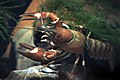 Signal crayfish female Pacifastacus leniusculus
 -
 Kräftklo
 -
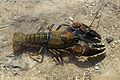 Pacifastacus leniusculus


Medical Disclaimer: WikiMD is for informational purposes only and is not a substitute for professional medical advice. Content may be inaccurate or outdated and should not be used for diagnosis or treatment. Always consult your healthcare provider for medical decisions. Verify information with trusted sources such as CDC.gov and NIH.gov. By using this site, you agree that WikiMD is not liable for any outcomes related to its content. See full disclaimer.
Credits:Most images are courtesy of Wikimedia commons, and templates, categories Wikipedia, licensed under CC BY SA or similar.
Translate page: - East Asian
中文,
日本,
한국어,
South Asian
हिन्दी,
தமிழ்,
తెలుగు,
Urdu,
ಕನ್ನಡ,
Southeast Asian
Indonesian,
Vietnamese,
Thai,
မြန်မာဘာသာ,
বাংলা
European
español,
Deutsch,
français,
Greek,
português do Brasil,
polski,
română,
русский,
Nederlands,
norsk,
svenska,
suomi,
Italian
Middle Eastern & African
عربى,
Turkish,
Persian,
Hebrew,
Afrikaans,
isiZulu,
Kiswahili,
Other
Bulgarian,
Hungarian,
Czech,
Swedish,
മലയാളം,
मराठी,
ਪੰਜਾਬੀ,
ગુજરાતી,
Portuguese,
Ukrainian

