Invasive species
Invasive species are organisms that are not native to a specific location (an ecosystem) and that have a tendency to spread, which is believed to cause damage to the environment, human economy, or human health. One study pointed out that the number of invasive species in the world has risen 70% since 1970, an increase associated with trade globalization.
Characteristics[edit]
Invasive species can be plants, animals, and other organisms (e.g., microbes). Human actions are primarily responsible for the introduction of invasive species, frequently unintentionally. People, for instance, often transport uninvited species while traveling, and ships can take aquatic organisms in their ballast water. Global warming and changes in geology, climate, or human disturbance, such as fire, can also contribute to the spread of invasive species.
Impact[edit]
Invasive species can change the functions of ecosystems. For example, invasive plants can alter fire regimes, nutrient cycling, hydrology, and energy budgets. Some invasive species may drive native species to extinction.
Control[edit]
Control and management of invasive species involves numerous policy and management decisions. Approaches can be prevention, early detection and rapid response, control and management, and long-term measures to restore ecosystems and habitats to a balance of species and ecosystem processes.
See also[edit]
- Introduced species
- Invasive species in the United States
- Invasive species in Australia
- List of invasive species
References[edit]
| Invasive species | ||||||||||
|---|---|---|---|---|---|---|---|---|---|---|
This invasive species related article is a stub.
|
 | This ecology-related article is a stub. You can help WikiMD by expanding the page. |
-
 Beaver dam in Tierra del Fuego
 -
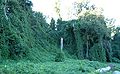 Kudzu on trees in Atlanta, Georgia
 -
 Canadian Goldenrod, Solidago canadensis - Invasive weed
 -
 Vinca spreading along a border
 -
 Brown tree snake (Boiga irregularis)
 -
 Japanese knotweed
 -
 Ocicat woodpecker
 -
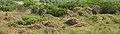 Lantana invasion of abandoned citrus plantation, Sdey Hemed, Israel
 -
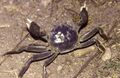 Chinese mitten crab
 -
 Discharging ballast water
 -
 Alligator and Python
 -
 Firewood poster


_(8387580552).jpg)


Medical Disclaimer: WikiMD is for informational purposes only and is not a substitute for professional medical advice. Content may be inaccurate or outdated and should not be used for diagnosis or treatment. Always consult your healthcare provider for medical decisions. Verify information with trusted sources such as CDC.gov and NIH.gov. By using this site, you agree that WikiMD is not liable for any outcomes related to its content. See full disclaimer.
Credits:Most images are courtesy of Wikimedia commons, and templates, categories Wikipedia, licensed under CC BY SA or similar.
Translate page: - East Asian
中文,
日本,
한국어,
South Asian
हिन्दी,
தமிழ்,
తెలుగు,
Urdu,
ಕನ್ನಡ,
Southeast Asian
Indonesian,
Vietnamese,
Thai,
မြန်မာဘာသာ,
বাংলা
European
español,
Deutsch,
français,
Greek,
português do Brasil,
polski,
română,
русский,
Nederlands,
norsk,
svenska,
suomi,
Italian
Middle Eastern & African
عربى,
Turkish,
Persian,
Hebrew,
Afrikaans,
isiZulu,
Kiswahili,
Other
Bulgarian,
Hungarian,
Czech,
Swedish,
മലയാളം,
मराठी,
ਪੰਜਾਬੀ,
ગુજરાતી,
Portuguese,
Ukrainian

