Seminiferous tubule
_(20195953650).jpg)


The Seminiferous Tubules are a component of the male reproductive system that are located within the testes. They are the site of the germination, maturation, and transportation of the sperm cells within the male body. The epithelium of the tubule consists of a type of sustentacular cells known as Sertoli cells, which are a crucial part of spermatogenesis.
Structure[edit]
The seminiferous tubules are a coiled network of tubes that measure up to half a mile in length in each testis. They are lined with a layer of cells that progress through the stages of spermatogenesis to produce sperm. The tubules are surrounded by myoid cells that contract rhythmically to move the immature sperm towards the rete testis for further maturation.
Function[edit]
The primary function of the seminiferous tubules is the production of sperm. This process, known as spermatogenesis, involves the development of spermatogonia into mature spermatozoa. The process is facilitated by Sertoli cells, which provide nourishment and structural support for the developing sperm cells.
Clinical significance[edit]
Damage or disease affecting the seminiferous tubules can lead to infertility in males. Conditions such as varicocele, cryptorchidism, and certain genetic disorders can affect the function of the tubules and result in a reduced sperm count or poor sperm quality.
-
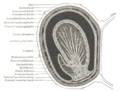 Longitudinal section through the left side of the scrotum and the left testis (seminiferous tubules visible in center, but not labeled).

See also[edit]


Medical Disclaimer: WikiMD is for informational purposes only and is not a substitute for professional medical advice. Content may be inaccurate or outdated and should not be used for diagnosis or treatment. Always consult your healthcare provider for medical decisions. Verify information with trusted sources such as CDC.gov and NIH.gov. By using this site, you agree that WikiMD is not liable for any outcomes related to its content. See full disclaimer.
Credits:Most images are courtesy of Wikimedia commons, and templates, categories Wikipedia, licensed under CC BY SA or similar.
Translate page: - East Asian
中文,
日本,
한국어,
South Asian
हिन्दी,
தமிழ்,
తెలుగు,
Urdu,
ಕನ್ನಡ,
Southeast Asian
Indonesian,
Vietnamese,
Thai,
မြန်မာဘာသာ,
বাংলা
European
español,
Deutsch,
français,
Greek,
português do Brasil,
polski,
română,
русский,
Nederlands,
norsk,
svenska,
suomi,
Italian
Middle Eastern & African
عربى,
Turkish,
Persian,
Hebrew,
Afrikaans,
isiZulu,
Kiswahili,
Other
Bulgarian,
Hungarian,
Czech,
Swedish,
മലയാളം,
मराठी,
ਪੰਜਾਬੀ,
ગુજરાતી,
Portuguese,
Ukrainian

