Sancocho
Sancocho is a traditional soup in several Latin American cuisines derived from the Spanish dish known as cocido. It usually consists of large pieces of meat, tubers and vegetables served in a broth.
Origins[edit]
The origins of Sancocho can be traced back to the Iberian Peninsula, specifically to the region of Spain. The Spanish dish cocido, a stew made with meat and vegetables, is considered the precursor of Sancocho. The dish was brought to the Americas by Spanish colonizers, where it adapted to the ingredients available in each region.
Variations[edit]
There are many variations of Sancocho throughout Latin America, each with its own unique ingredients and preparation methods.
Colombian Sancocho[edit]
In Colombia, Sancocho is typically made with chicken, pork ribs, plantains, corn, potatoes, yuca, and cilantro. It is often served with a side of white rice and a piece of avocado.
Dominican Sancocho[edit]
The Dominican Republic version of Sancocho, known as Sancocho de Siete Carnes (Seven Meat Sancocho), is considered one of the most elaborate and is typically reserved for special occasions. It includes seven types of meat from four different animals.
Panamanian Sancocho[edit]
In Panama, Sancocho is commonly made with chicken, yuca, corn, and the herb culantro. It is considered a national dish and is often served as a hangover remedy.
Cultural Significance[edit]
Sancocho holds a significant cultural value in many Latin American countries. It is often associated with family gatherings and celebrations. The act of preparing Sancocho is often a communal event, with family members contributing different ingredients and participating in the lengthy cooking process.
See Also[edit]

Sancocho[edit]
-
Sancocho de espinazo de cerdo
-
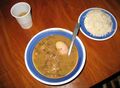 Sancocho de guandú con carne salá
 -
Sancocho de mondongo


Medical Disclaimer: WikiMD is for informational purposes only and is not a substitute for professional medical advice. Content may be inaccurate or outdated and should not be used for diagnosis or treatment. Always consult your healthcare provider for medical decisions. Verify information with trusted sources such as CDC.gov and NIH.gov. By using this site, you agree that WikiMD is not liable for any outcomes related to its content. See full disclaimer.
Credits:Most images are courtesy of Wikimedia commons, and templates, categories Wikipedia, licensed under CC BY SA or similar.
Translate page: - East Asian
中文,
日本,
한국어,
South Asian
हिन्दी,
தமிழ்,
తెలుగు,
Urdu,
ಕನ್ನಡ,
Southeast Asian
Indonesian,
Vietnamese,
Thai,
မြန်မာဘာသာ,
বাংলা
European
español,
Deutsch,
français,
Greek,
português do Brasil,
polski,
română,
русский,
Nederlands,
norsk,
svenska,
suomi,
Italian
Middle Eastern & African
عربى,
Turkish,
Persian,
Hebrew,
Afrikaans,
isiZulu,
Kiswahili,
Other
Bulgarian,
Hungarian,
Czech,
Swedish,
മലയാളം,
मराठी,
ਪੰਜਾਬੀ,
ગુજરાતી,
Portuguese,
Ukrainian


