Cyclooxygenase-2
Cyclooxygenase-2 (COX-2) is an enzyme that plays a significant role in the inflammation process and is associated with certain diseases, such as cancer and arthritis. It is one of the two isoenzymes that produce prostaglandins, a group of lipid compounds that have diverse hormone-like effects in animals.
Function[edit]
COX-2 is primarily responsible for the production of prostaglandins. These compounds are produced in response to injury or infection and cause inflammation and pain. They also protect the lining of the stomach and intestines, help with blood clotting, and maintain kidney function.
Role in Disease[edit]
COX-2 is overexpressed in certain types of cancer, including colorectal cancer, breast cancer, and lung cancer. This overexpression is thought to promote the growth and spread of cancer cells. In addition, COX-2 is involved in the development of arthritis, as it is responsible for the inflammation and pain associated with this condition.
Inhibition[edit]
Nonsteroidal anti-inflammatory drugs (NSAIDs) work by inhibiting the activity of COX-2. This reduces the production of prostaglandins, thereby reducing inflammation and pain. However, because COX-2 also has protective effects on the stomach and intestines, long-term use of NSAIDs can lead to gastrointestinal side effects.
See Also[edit]
References[edit]

This WikiMD article can only be edited by registered and verified editors. You can log in or register.
-
 Enzymatic oxidation of arachidonic acid
 -
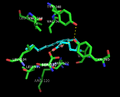 AACOX
AACOX -
 PGG2 mechanism
 -
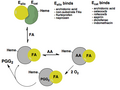 Cyclooxygenase inhibitors
 -
 Flurbiprofen in COX-2


Medical Disclaimer: WikiMD is for informational purposes only and is not a substitute for professional medical advice. Content may be inaccurate or outdated and should not be used for diagnosis or treatment. Always consult your healthcare provider for medical decisions. Verify information with trusted sources such as CDC.gov and NIH.gov. By using this site, you agree that WikiMD is not liable for any outcomes related to its content. See full disclaimer.
Credits:Most images are courtesy of Wikimedia commons, and templates, categories Wikipedia, licensed under CC BY SA or similar.
Translate page: - East Asian
中文,
日本,
한국어,
South Asian
हिन्दी,
தமிழ்,
తెలుగు,
Urdu,
ಕನ್ನಡ,
Southeast Asian
Indonesian,
Vietnamese,
Thai,
မြန်မာဘာသာ,
বাংলা
European
español,
Deutsch,
français,
Greek,
português do Brasil,
polski,
română,
русский,
Nederlands,
norsk,
svenska,
suomi,
Italian
Middle Eastern & African
عربى,
Turkish,
Persian,
Hebrew,
Afrikaans,
isiZulu,
Kiswahili,
Other
Bulgarian,
Hungarian,
Czech,
Swedish,
മലയാളം,
मराठी,
ਪੰਜਾਬੀ,
ગુજરાતી,
Portuguese,
Ukrainian

