Ottoman cuisine
Ottoman Cuisine is a rich culinary tradition that has evolved over centuries, with influences from numerous cultures and regions. It is the cuisine of the Ottoman Empire, which at its height spanned three continents and lasted for more than six centuries.
History[edit]
The Ottoman Empire was one of the largest and longest-lasting empires in history. Its cuisine was influenced by its diverse subjects from the Middle East, the Balkans, Central Europe, and North Africa. The imperial kitchen of the Ottoman court was known for its opulence, with hundreds of chefs specializing in different types of dishes.
Ingredients[edit]
Key ingredients in Ottoman cuisine include lamb, beef, rice, eggplant, peppers, and a variety of spices such as cumin, cinnamon, saffron, and mint. Olive oil was widely used in cooking, and honey was a common sweetener.
Dishes[edit]
Famous dishes from Ottoman cuisine include kebab, baklava, dolma, and manti. Kebab is a dish of skewered and grilled meat, while baklava is a sweet pastry made of layers of filo filled with chopped nuts and sweetened with syrup or honey. Dolma are stuffed vegetables, and manti is a type of dumpling filled with minced meat.
Influence[edit]
Ottoman cuisine has had a significant influence on other culinary traditions, including those of the Middle East, the Balkans, and Central Europe. Many dishes that are popular in these regions today have their origins in Ottoman cuisine.
See also[edit]

-
Enjoying Coffee
-
Femmes Turcs turques de Serquin, leur manière de faire leur pain
-
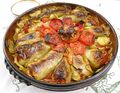 Speca te mbushura me mish
 -
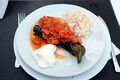 İmam bayıldı
 -
Güllaç with whipped cream
-
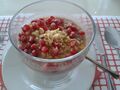 Aşure
Aşure -
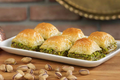 Baklava
 -
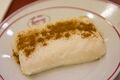 Tavuk Göğsü Dessert
 -
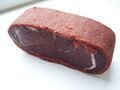 Basturma or Pastroma
 -
Spices in Istanbul Bazaar
-
Mutancana
-
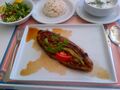 Meal in Turkey
 -
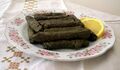 Sarma
Sarma


.png)


Advertise on WikiMD — 81,000+ full articles, ~900,000 total pages, ~250 million page views. Global reach, limited time promotional rates from $1/page/day. Learn more · View stats

Translate page: - East Asian
中文,
日本,
한국어,
South Asian
हिन्दी,
தமிழ்,
తెలుగు,
Urdu,
ಕನ್ನಡ,
Southeast Asian
Indonesian,
Vietnamese,
Thai,
မြန်မာဘာသာ,
বাংলা
European
español,
Deutsch,
français,
Greek,
português do Brasil,
polski,
română,
русский,
Nederlands,
norsk,
svenska,
suomi,
Italian
Middle Eastern & African
عربى,
Turkish,
Persian,
Hebrew,
Afrikaans,
isiZulu,
Kiswahili,
Other
Bulgarian,
Hungarian,
Czech,
Swedish,
മലയാളം,
मराठी,
ਪੰਜਾਬੀ,
ગુજરાતી,
Portuguese,
Ukrainian
About WikiMD • Contact • Disclaimer • Privacy • Copyright • Site statistics
Some content and images may originate from Wikimedia Commons or Wikipedia and remain subject to their stated licenses. Unless otherwise noted, eligible WikiMD content is available under CC BY-SA 4.0.
WikiMD Wellnesspedia — Free health & wellness information for patients, students, and health professionals.


