Opioidergic
Opioidergic refers to the physiological processes and systems that involve opioids, a class of drugs that include substances such as morphine, heroin, oxycodone, and fentanyl. These drugs are known for their analgesic (pain-relieving) effects and their potential for addiction and dependence. The opioidergic system is a critical component of the human body's pain management and reward systems.
Opioids[edit]
Opioids are a class of drugs that include both legal medications like morphine, oxycodone, hydrocodone, and fentanyl, as well as illegal drugs like heroin. They work by binding to opioid receptors in the brain, spinal cord, and other areas of the body to reduce the perception of pain. Opioids can also produce feelings of euphoria, which contributes to their potential for misuse and addiction.
Opioid Receptors[edit]
Opioid receptors are a group of inhibitory G protein-coupled receptors with opioids as endogenous ligands. There are three types of opioid receptors: mu, delta, and kappa, each with different functions and binding affinities for different opioids. The mu-opioid receptor is the primary site of action for the most commonly used opioids, including morphine and heroin.
Opioidergic System[edit]
The opioidergic system refers to the body's system of neurons that produce and respond to endogenous opioids. This system is involved in a variety of physiological processes, including pain regulation, reward, and addiction. Disruptions in the opioidergic system, such as through the misuse of opioids, can lead to a variety of health problems, including opioid use disorder.
Opioid Use Disorder[edit]
Opioid Use Disorder (OUD) is a chronic, relapsing illness, characterized by a dependence on opioids, such as heroin or prescription pain relievers, that leads to significant impairment or distress. Symptoms of OUD can include strong desire for opioids, inability to control or reduce use, persistent use despite negative consequences, and withdrawal symptoms when opioids are not taken.
Treatment[edit]
Treatment for opioid use disorder often involves a combination of medication, counseling, and behavioral therapies. Medications used in treatment can include buprenorphine, methadone, and naltrexone, which work by targeting the opioid receptors in the brain to reduce cravings and withdrawal symptoms.
 | This neuroscience article is a stub. You can help WikiMD by expanding the page. |

This addiction-related article is a stub. You can help WikiMD by expanding it.
-
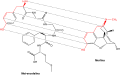 Structural correlation between enkephalins and morphine
 -
 Opioidergic


Advertise on WikiMD — 81,000+ full articles, ~900,000 total pages, ~250 million page views. Global reach, limited time promotional rates from $1/page/day. Learn more · View stats


Translate page: - East Asian
中文,
日本,
한국어,
South Asian
हिन्दी,
தமிழ்,
తెలుగు,
Urdu,
ಕನ್ನಡ,
Southeast Asian
Indonesian,
Vietnamese,
Thai,
မြန်မာဘာသာ,
বাংলা
European
español,
Deutsch,
français,
Greek,
português do Brasil,
polski,
română,
русский,
Nederlands,
norsk,
svenska,
suomi,
Italian
Middle Eastern & African
عربى,
Turkish,
Persian,
Hebrew,
Afrikaans,
isiZulu,
Kiswahili,
Other
Bulgarian,
Hungarian,
Czech,
Swedish,
മലയാളം,
मराठी,
ਪੰਜਾਬੀ,
ગુજરાતી,
Portuguese,
Ukrainian
About WikiMD • Contact • Disclaimer • Privacy • Copyright • Site statistics
Some content and images may originate from Wikimedia Commons or Wikipedia and remain subject to their stated licenses. Unless otherwise noted, eligible WikiMD content is available under CC BY-SA 4.0.
WikiMD Wellnesspedia — Free health & wellness information for patients, students, and health professionals.

