Neurotoxic shellfish poisoning

Prab R. Tumpati, MD — Editor-in-Chief, WikiMD Medical Encyclopedia
Internal medicine • Obesity medicine • Sleep medicine
Professional affiliations: Founder of WikiMD and W8MD Weight Loss, Sleep & MedSpa.
Biography, credentials and affiliations • Editorial policy • Disclosure policy
| Neurotoxic shellfish poisoning | |
|---|---|

| |
| Synonyms | N/A |
| Pronounce | N/A |
| Specialty | N/A |
| Symptoms | Nausea, vomiting, diarrhea, abdominal pain, paresthesia, dizziness, ataxia, muscle weakness |
| Complications | Respiratory failure in severe cases |
| Onset | Minutes to hours after consumption |
| Duration | Hours to days |
| Types | N/A |
| Causes | Consumption of shellfish contaminated with Karenia brevis toxins |
| Risks | Consuming shellfish from affected areas |
| Diagnosis | Clinical evaluation, history of shellfish consumption |
| Differential diagnosis | Paralytic shellfish poisoning, Amnesic shellfish poisoning, Ciguatera fish poisoning |
| Prevention | Monitoring and avoiding shellfish from affected areas |
| Treatment | Supportive care, intravenous fluids, antiemetics |
| Medication | N/A |
| Prognosis | Generally good with supportive care |
| Frequency | Varies by region and season |
| Deaths | N/A |
Neurotoxic Shellfish Poisoning (NSP) is a harmful condition caused by the consumption of shellfish contaminated with certain toxins. These toxins are produced by a type of microscopic algae known as Karenia brevis.
Causes[edit]
The primary cause of NSP is the ingestion of shellfish that have been contaminated with the neurotoxins produced by Karenia brevis. This type of algae is found in marine waters, and shellfish such as oysters, clams, and mussels can accumulate these toxins when they filter feed.
Symptoms[edit]
The symptoms of NSP can occur within a few hours of consuming contaminated shellfish. They can include nausea, vomiting, diarrhea, and abdominal pain. Neurological symptoms can also occur, such as numbness, tingling, dizziness, and muscle weakness. In severe cases, individuals may experience short-term memory loss.
Diagnosis[edit]
Diagnosis of NSP is primarily based on the symptoms and the recent dietary history of the patient. Laboratory tests can also be conducted to detect the presence of the toxins in the patient's blood or stool.
Treatment[edit]
There is no specific antidote for the toxins that cause NSP. Treatment is primarily supportive and includes rehydration and symptom management. In severe cases, hospitalization may be required.
Prevention[edit]
Prevention of NSP involves avoiding the consumption of shellfish from areas known to have outbreaks of Karenia brevis. Public health agencies often issue warnings when such outbreaks occur.
Gallery[edit]
-
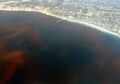 Red tide in La Jolla
 -
 Oysters of the day
 -
 Brevetoxin A
 -
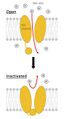 Sodium channel open and closed


See also[edit]
 | This neuroscience article is a stub. You can help WikiMD by expanding the page. |
 | This toxicology-related article is a stub. You can help WikiMD by expanding the page. |
Advertise on WikiMD — 81,000+ full articles, ~900,000 total pages, ~250 million page views. Global reach, limited time promotional rates from $1/page/day. Learn more · View stats


Translate page: - East Asian
中文,
日本,
한국어,
South Asian
हिन्दी,
தமிழ்,
తెలుగు,
Urdu,
ಕನ್ನಡ,
Southeast Asian
Indonesian,
Vietnamese,
Thai,
မြန်မာဘာသာ,
বাংলা
European
español,
Deutsch,
français,
Greek,
português do Brasil,
polski,
română,
русский,
Nederlands,
norsk,
svenska,
suomi,
Italian
Middle Eastern & African
عربى,
Turkish,
Persian,
Hebrew,
Afrikaans,
isiZulu,
Kiswahili,
Other
Bulgarian,
Hungarian,
Czech,
Swedish,
മലയാളം,
मराठी,
ਪੰਜਾਬੀ,
ગુજરાતી,
Portuguese,
Ukrainian
About WikiMD • Contact • Disclaimer • Privacy • Copyright • Site statistics
Some content and images may originate from Wikimedia Commons or Wikipedia and remain subject to their stated licenses. Unless otherwise noted, eligible WikiMD content is available under CC BY-SA 4.0.
WikiMD Wellnesspedia — Free health & wellness information for patients, students, and health professionals.

