Musculoskeletal injury

Editor-In-Chief: Prab R Tumpati, MD
Obesity, Sleep & Internal medicine
Founder, WikiMD Wellnesspedia &
W8MD's weight loss doctor NYC
Philadelphia GLP-1 weight loss and GLP-1 clinic NYC
| Musculoskeletal injury | |
|---|---|

| |
| Synonyms | N/A |
| Pronounce | N/A |
| Specialty | N/A |
| Symptoms | Pain, swelling, bruising, limited range of motion |
| Complications | Chronic pain, disability, osteoarthritis |
| Onset | Sudden or gradual |
| Duration | Varies (acute or chronic) |
| Types | N/A |
| Causes | Trauma, overuse, degenerative changes |
| Risks | Sports, physical activity, aging |
| Diagnosis | Physical examination, imaging studies (X-ray, MRI, CT scan) |
| Differential diagnosis | Fracture, dislocation, sprain, strain |
| Prevention | Proper technique, protective equipment, conditioning exercises |
| Treatment | Rest, ice, compression, elevation (RICE), physical therapy, surgery |
| Medication | N/A |
| Prognosis | Varies depending on severity and treatment |
| Frequency | Common |
| Deaths | N/A |
Musculoskeletal injury refers to damage of muscular or skeletal systems, which is usually due to a strenuous activity. This term is generally associated with muscle pain, joint pain, and bone pain.
Causes[edit]
Musculoskeletal injuries can be caused by a variety of factors, including:
- Physical trauma such as falls, accidents, or sports injuries
- Overuse or strain from repetitive movements
- Poor posture or ergonomics
- Aging, which can lead to degenerative conditions like arthritis and osteoporosis
Symptoms[edit]
The symptoms of a musculoskeletal injury can vary depending on the specific condition, but may include:
- Pain in the muscles, joints, or bones
- Swelling or inflammation
- Difficulty moving the affected area
- Weakness or loss of function in the affected area
Diagnosis[edit]
Diagnosis of musculoskeletal injuries typically involves a physical examination and may also include imaging tests such as X-rays, MRIs, or CT scans. In some cases, a biopsy may be needed to confirm the diagnosis.
Treatment[edit]
Treatment for musculoskeletal injuries can vary depending on the severity and location of the injury, but may include:
- Rest and immobilization of the affected area
- Physical therapy or rehabilitation exercises
- Medications to manage pain and inflammation
- Surgery in severe cases
Prevention[edit]
Prevention strategies for musculoskeletal injuries can include:
- Regular physical activity to maintain strength and flexibility
- Proper ergonomics and posture
- Safe practices during sports and physical activities
- Regular check-ups and screenings for degenerative conditions
Gallery[edit]
Musculoskeletal_injury gallery[edit]
-
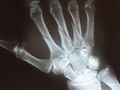 Metacarpal fractures
 -
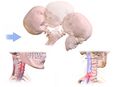 Whiplash injury
 -
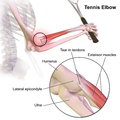 Tennis elbow
 -
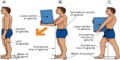 Musculoskeletal injury
 -
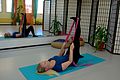 Pilates hamstring stretch


See also[edit]


Medical Disclaimer: WikiMD is for informational purposes only and is not a substitute for professional medical advice. Content may be inaccurate or outdated and should not be used for diagnosis or treatment. Always consult your healthcare provider for medical decisions. Verify information with trusted sources such as CDC.gov and NIH.gov. By using this site, you agree that WikiMD is not liable for any outcomes related to its content. See full disclaimer.
Credits:Most images are courtesy of Wikimedia commons, and templates, categories Wikipedia, licensed under CC BY SA or similar.
Translate page: - East Asian
中文,
日本,
한국어,
South Asian
हिन्दी,
தமிழ்,
తెలుగు,
Urdu,
ಕನ್ನಡ,
Southeast Asian
Indonesian,
Vietnamese,
Thai,
မြန်မာဘာသာ,
বাংলা
European
español,
Deutsch,
français,
Greek,
português do Brasil,
polski,
română,
русский,
Nederlands,
norsk,
svenska,
suomi,
Italian
Middle Eastern & African
عربى,
Turkish,
Persian,
Hebrew,
Afrikaans,
isiZulu,
Kiswahili,
Other
Bulgarian,
Hungarian,
Czech,
Swedish,
മലയാളം,
मराठी,
ਪੰਜਾਬੀ,
ગુજરાતી,
Portuguese,
Ukrainian

