Methionine synthase
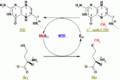
Methionine Synthase is an enzyme crucial in the metabolism of the amino acid methionine. It plays a pivotal role in the methionine cycle, which is essential for DNA synthesis, repair, and methylation. Methionine synthase catalyzes the final step of the methionine cycle, the re-methylation of homocysteine to methionine, using methylcobalamin (a form of Vitamin B12) as a cofactor and 5-methyltetrahydrofolate as the methyl donor.
Function[edit]
Methionine synthase's primary function is to regenerate methionine from homocysteine. Methionine is an essential amino acid and a precursor for S-adenosylmethionine (SAM), a universal methyl donor for almost 100 different substrates, including DNA, RNA, proteins, and lipids. The enzyme's activity is critical for maintaining sufficient methionine and SAM levels for these methylation reactions. Additionally, it helps control homocysteine levels in the blood, elevated levels of which are associated with cardiovascular diseases, stroke, and peripheral vascular diseases.
Structure[edit]
Methionine synthase is a large enzyme composed of several domains necessary for its function and interaction with substrates and cofactors. The enzyme exists in multiple isoforms, resulting from alternative splicing of the MTR gene (5-methyltetrahydrofolate-homocysteine methyltransferase) located on chromosome 1. The active site of the enzyme binds to methylcobalamin (Vitamin B12) and uses it to transfer a methyl group to homocysteine, converting it back to methionine.
Clinical Significance[edit]
Mutations in the MTR gene can lead to reduced activity of methionine synthase, resulting in elevated homocysteine levels, a condition known as hyperhomocysteinemia. This condition is associated with an increased risk of cardiovascular diseases. Furthermore, deficiencies in Vitamin B12 can impair the function of methionine synthase, leading to similar outcomes. Methionine synthase deficiency is a rare disorder that can result in megaloblastic anemia, neurological disorders, and developmental delays.
Genetic Regulation[edit]
The expression of the MTR gene is regulated by various factors, including dietary nutrients and genetic polymorphisms. Understanding the regulation of methionine synthase is crucial for developing dietary and pharmacological interventions to manage conditions associated with its dysfunction.
Treatment and Management[edit]
Management of conditions related to methionine synthase dysfunction involves dietary supplementation with Vitamin B12 and folic acid to support the methylation cycle. In cases of genetic mutations affecting the enzyme, more specific interventions, including betaine supplementation, may be recommended to lower homocysteine levels.
See Also[edit]
 | This medical article is a stub. You can help WikiMD by expanding the page. |
-
 Vitamin B12 structure
 -
 Methionine Synthase Reductase Pathway
 -
 Homocysteine Binding Site
 -
 Methionine_synthase


Medical Disclaimer: WikiMD is for informational purposes only and is not a substitute for professional medical advice. Content may be inaccurate or outdated and should not be used for diagnosis or treatment. Always consult your healthcare provider for medical decisions. Verify information with trusted sources such as CDC.gov and NIH.gov. By using this site, you agree that WikiMD is not liable for any outcomes related to its content. See full disclaimer.
Credits:Most images are courtesy of Wikimedia commons, and templates, categories Wikipedia, licensed under CC BY SA or similar.
Translate page: - East Asian
中文,
日本,
한국어,
South Asian
हिन्दी,
தமிழ்,
తెలుగు,
Urdu,
ಕನ್ನಡ,
Southeast Asian
Indonesian,
Vietnamese,
Thai,
မြန်မာဘာသာ,
বাংলা
European
español,
Deutsch,
français,
Greek,
português do Brasil,
polski,
română,
русский,
Nederlands,
norsk,
svenska,
suomi,
Italian
Middle Eastern & African
عربى,
Turkish,
Persian,
Hebrew,
Afrikaans,
isiZulu,
Kiswahili,
Other
Bulgarian,
Hungarian,
Czech,
Swedish,
മലയാളം,
मराठी,
ਪੰਜਾਬੀ,
ગુજરાતી,
Portuguese,
Ukrainian

