Infusion set
Infusion set is a medical device used to deliver fluids into a patient's body in a controlled manner. It is commonly used in intravenous therapy to administer medications and replace fluids. The set includes a spike, a tube, a roller clamp, a needle, and a connector.
Components[edit]
The spike is the sharp point that pierces the fluid container. The tube is a flexible plastic line that carries the fluid from the container to the patient. The roller clamp is a device that controls the flow rate of the fluid. The needle is a sharp instrument that pierces the patient's skin and vein. The connector is a device that connects the infusion set to the patient's catheter or cannula.
Types[edit]
There are several types of infusion sets, including:
- Primary infusion sets: These are used to deliver the main fluid or medication.
- Secondary infusion sets: These are used to deliver additional fluids or medications.
- Extension sets: These are used to extend the length of the infusion set.
- Y-site infusion sets: These have a Y-shaped connector that allows two fluids to be infused simultaneously.
- Pump infusion sets: These are used with an infusion pump to control the flow rate of the fluid.
Use[edit]
Infusion sets are used in various medical settings, including hospitals, clinics, and home care. They are used for a variety of purposes, such as:
- Delivering intravenous fluids to hydrate patients.
- Administering medications, such as antibiotics, chemotherapy drugs, and pain relievers.
- Providing nutritional support to patients who cannot eat or drink.
- Replacing blood or blood products in patients who have lost a lot of blood.
Risks[edit]
While infusion sets are generally safe, they can pose some risks, including:
- Infection: If the infusion set is not properly cleaned or inserted, it can introduce bacteria into the patient's bloodstream, leading to an infection.
- Air embolism: If air gets into the infusion set, it can enter the patient's bloodstream and cause an air embolism.
- Infiltration: If the needle is not properly inserted into the vein, the fluid can leak into the surrounding tissue, causing swelling and discomfort.
See also[edit]

This WikiMD article can only be edited by registered and verified editors. You can log in or register.
-
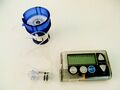 Insulin pump and infusion set
 -
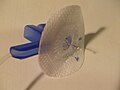 Infusion set 1
 -
 Infusion set 4


Medical Disclaimer: WikiMD is for informational purposes only and is not a substitute for professional medical advice. Content may be inaccurate or outdated and should not be used for diagnosis or treatment. Always consult your healthcare provider for medical decisions. Verify information with trusted sources such as CDC.gov and NIH.gov. By using this site, you agree that WikiMD is not liable for any outcomes related to its content. See full disclaimer.
Credits:Most images are courtesy of Wikimedia commons, and templates, categories Wikipedia, licensed under CC BY SA or similar.
Translate page: - East Asian
中文,
日本,
한국어,
South Asian
हिन्दी,
தமிழ்,
తెలుగు,
Urdu,
ಕನ್ನಡ,
Southeast Asian
Indonesian,
Vietnamese,
Thai,
မြန်မာဘာသာ,
বাংলা
European
español,
Deutsch,
français,
Greek,
português do Brasil,
polski,
română,
русский,
Nederlands,
norsk,
svenska,
suomi,
Italian
Middle Eastern & African
عربى,
Turkish,
Persian,
Hebrew,
Afrikaans,
isiZulu,
Kiswahili,
Other
Bulgarian,
Hungarian,
Czech,
Swedish,
മലയാളം,
मराठी,
ਪੰਜਾਬੀ,
ગુજરાતી,
Portuguese,
Ukrainian

