Imperial units
Imperial units are a system of measurements that were historically used in the United Kingdom, and are still used in some parts of the United Kingdom, the United States, and other countries formerly part of the British Empire. The system includes units for measuring length, area, volume, and mass, among others. Despite the widespread adoption of the Metric system for most official purposes, Imperial units remain in common use for many everyday purposes.
History[edit]
The origins of the Imperial units system can be traced back to the Roman Empire and Anglo-Saxon England, with further standardization occurring in the 12th century during the reign of King Henry II of England. The system was formalized in 1824, when the British Parliament passed the Weights and Measures Act, establishing a uniform set of measurements for the British Empire.
Units[edit]
Length[edit]
The basic unit of length in the Imperial system is the yard, which is subdivided into 3 feet or 36 inches. Other units of length include the mile, which is equivalent to 1,760 yards or 5,280 feet, and the nautical mile, which is used for maritime and aviation purposes.
Area[edit]
The primary unit of area in the Imperial system is the acre, which is used to measure tracts of land. One acre is equivalent to 4,840 square yards or 43,560 square feet.
Volume[edit]
Volume measurements in the Imperial system include the gallon for liquid capacity, which is equal to 4.54609 liters in the UK and 3.78541 liters in the US. The pint is another common unit, with one pint equaling 1/8 of a gallon.
Mass[edit]
The basic unit of mass in the Imperial system is the pound (lb), which is divided into 16 ounces. The stone is also used to measure body weight, particularly in the UK, and is equivalent to 14 pounds.
Conversion to Metric[edit]
The Metric system was officially adopted by many countries, including the UK, in the 20th century, leading to a gradual phasing out of Imperial units. However, the Imperial system is still used for specific purposes, such as road signage in the UK and personal body measurements (height and weight) in the UK and the US.
Current Use[edit]
Today, the use of Imperial units varies by country and context. In the UK, Imperial units are used alongside Metric units, with road distances still measured in miles and beer sold in pints. In the US, the Imperial system is used extensively in everyday life, though it is officially defined in metric terms for scientific and industrial purposes.
See Also[edit]
| Units of Measurement | ||||||||||
|---|---|---|---|---|---|---|---|---|---|---|
This units of measurement related article is a stub.
|
 | This standards- or measurement-related article is a stub. You can help WikiMD by expanding the page. |
-
 Imperial_units
 -
 Imperial standards of length 1876
 -
 Volume measurements
 -
 Mx, a symbol for minim in the apothecaries' system
 -
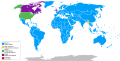 Metric and imperial systems
 -
 Metric, Imperial, and US Customary Units
 -
 Gas can
 -
 Canadian canned food labels showing imperial and metric units


.svg)


Medical Disclaimer: WikiMD is for informational purposes only and is not a substitute for professional medical advice. Content may be inaccurate or outdated and should not be used for diagnosis or treatment. Always consult your healthcare provider for medical decisions. Verify information with trusted sources such as CDC.gov and NIH.gov. By using this site, you agree that WikiMD is not liable for any outcomes related to its content. See full disclaimer.
Credits:Most images are courtesy of Wikimedia commons, and templates, categories Wikipedia, licensed under CC BY SA or similar.
Translate page: - East Asian
中文,
日本,
한국어,
South Asian
हिन्दी,
தமிழ்,
తెలుగు,
Urdu,
ಕನ್ನಡ,
Southeast Asian
Indonesian,
Vietnamese,
Thai,
မြန်မာဘာသာ,
বাংলা
European
español,
Deutsch,
français,
Greek,
português do Brasil,
polski,
română,
русский,
Nederlands,
norsk,
svenska,
suomi,
Italian
Middle Eastern & African
عربى,
Turkish,
Persian,
Hebrew,
Afrikaans,
isiZulu,
Kiswahili,
Other
Bulgarian,
Hungarian,
Czech,
Swedish,
മലയാളം,
मराठी,
ਪੰਜਾਬੀ,
ગુજરાતી,
Portuguese,
Ukrainian

