Altitude sickness

Editor-In-Chief: Prab R Tumpati, MD
Obesity, Sleep & Internal medicine
Founder, WikiMD Wellnesspedia &
W8MD's medical weight loss NYC, sleep center NYC
Philadelphia medical weight loss and Philadelphia sleep clinics
| Altitude sickness | |
|---|---|

| |
| Synonyms | Acute mountain sickness (AMS), altitude illness |
| Pronounce | N/A |
| Specialty | N/A |
| Symptoms | Headache, nausea, dizziness, fatigue, insomnia |
| Complications | High-altitude cerebral edema (HACE), high-altitude pulmonary edema (HAPE) |
| Onset | 6 to 12 hours after ascent |
| Duration | Usually resolves in 1 to 3 days |
| Types | N/A |
| Causes | Rapid ascent to high altitudes |
| Risks | High altitude, rapid ascent, lack of acclimatization |
| Diagnosis | Based on symptoms and history of recent ascent |
| Differential diagnosis | Dehydration, hangover, migraine, viral infection |
| Prevention | Gradual ascent, acclimatization, medications such as acetazolamide |
| Treatment | Descent, oxygen therapy, medications |
| Medication | N/A |
| Prognosis | N/A |
| Frequency | Common in people who ascend rapidly to altitudes above 2,500 meters (8,200 feet) |
| Deaths | N/A |
Altitude sickness, also known as acute mountain sickness (AMS), is a pathological effect of high altitude on humans, caused by acute exposure to low partial pressure of oxygen at high altitude. It commonly occurs above 2,400 meters (approximately 8,000 feet). Early symptoms are headache, fatigue, shortness of breath, nausea, and sleep disturbances. Severe symptoms include pulmonary edema (fluid in the lungs) and cerebral edema (swelling of the brain).
Causes[edit]
Altitude sickness is caused by reduced air pressure and lower oxygen levels at high altitudes. The faster you climb to a high altitude, the more likely you will get acute mountain sickness. You can also get it if you go to a high altitude and exercise (like skiing, hiking, or biking) before your body has adjusted to the altitude.
Symptoms[edit]
Symptoms of altitude sickness usually appear within hours of moving to higher altitudes. They vary depending on the speed of your climb and how hard you push (exert) yourself. Symptoms usually come on within 12 to 24 hours of reaching a higher elevation and then get better within a day or two as your body adjusts to the change in altitude.
Prevention[edit]
Prevention of altitude sickness includes acclimatization, the process of gradually adjusting to changes in environment, such as altitude. It is recommended to ascend no more than 1,000 feet per day to sleep, as the body makes adjustments during sleep to the higher altitude.
Treatment[edit]
Treatment of altitude sickness includes rest, hydration, and descending to a lower altitude as quickly and safely as possible. Medications such as acetazolamide and dexamethasone can also be used to help prevent and treat high altitude sickness.
Gallery[edit]
-
 Peripheral edema of a woman's face, before and after; Annapurna Base Camp, 2015
 -
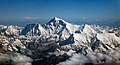 Mount Everest as seen from Drukair


See also[edit]

Ad. Transform your life with W8MD's
GLP-1 weight loss injections special from $29.99


W8MD Medical Weight Loss, Sleep and Medspa offers physician-supervised medical weight loss programs: NYC medical weight loss Philadelphia medical weight loss
Affordable GLP-1 Weight Loss ShotsAffordable GLP-1 Weight Loss Shots
Budget GLP-1 injections NYC (insurance & self-pay options) Popular treatments:
- Semaglutide starting from $29.99/week
- Tirzepatide starting from $45.00/week
✔ Most insurances accepted for visits ✔ Prior authorization support when eligible
Start your physician weight loss NYC journey today:
📍 NYC: Brooklyn weight loss center 📍 Philadelphia: Philadelphia weight loss center
📞 Call: 718-946-5500 (NYC) | 215-676-2334 (Philadelphia)
Tags: Affordable GLP1 weight loss NYC, Wegovy NYC, Zepbound NYC, Philadelphia medical weight loss


|
WikiMD Medical Encyclopedia |
Medical Disclaimer: WikiMD is not a substitute for professional medical advice. The information on WikiMD is provided as an information resource only, may be incorrect, outdated or misleading, and is not to be used or relied on for any diagnostic or treatment purposes. Please consult your health care provider before making any healthcare decisions or for guidance about a specific medical condition. WikiMD expressly disclaims responsibility, and shall have no liability, for any damages, loss, injury, or liability whatsoever suffered as a result of your reliance on the information contained in this site. By visiting this site you agree to the foregoing terms and conditions, which may from time to time be changed or supplemented by WikiMD. If you do not agree to the foregoing terms and conditions, you should not enter or use this site. See full disclaimer.
Credits:Most images are courtesy of Wikimedia commons, and templates, categories Wikipedia, licensed under CC BY SA or similar.
Translate this page: - East Asian
中文,
日本,
한국어,
South Asian
हिन्दी,
தமிழ்,
తెలుగు,
Urdu,
ಕನ್ನಡ,
Southeast Asian
Indonesian,
Vietnamese,
Thai,
မြန်မာဘာသာ,
বাংলা
European
español,
Deutsch,
français,
Greek,
português do Brasil,
polski,
română,
русский,
Nederlands,
norsk,
svenska,
suomi,
Italian
Middle Eastern & African
عربى,
Turkish,
Persian,
Hebrew,
Afrikaans,
isiZulu,
Kiswahili,
Other
Bulgarian,
Hungarian,
Czech,
Swedish,
മലയാളം,
मराठी,
ਪੰਜਾਬੀ,
ગુજરાતી,
Portuguese,
Ukrainian
