Water cycle
The water cycle, also known as the hydrological cycle or the hydrologic cycle, describes the continuous movement of water on, above, and below the surface of the Earth. The water cycle is a complex system that includes various processes such as evaporation, condensation, precipitation, infiltration, runoff, and subsurface flow. This cycle plays a key role in shaping the Earth's climate, supporting life, and sculpting the planet's geological features.
Processes[edit]
The water cycle consists of several key processes:
- Evaporation: The transformation of water from liquid to gas phases as it moves from the surface to the atmosphere. This process is primarily driven by solar energy.
- Transpiration: The release of water vapor from plants and soil into the air. Evaporation and transpiration are collectively known as evapotranspiration.
- Condensation: The change of water from its gaseous form (vapor) back into liquid water, often forming clouds.
- Precipitation: The process by which water (in the form of rain, snow, sleet, or hail) falls from clouds in the sky to the Earth's surface.
- Infiltration: The process by which water on the ground surface enters the soil.
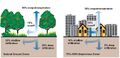
- Runoff: The variety of ways by which water moves across the land. This includes both surface runoff and channel runoff. Eventually, this water makes its way to rivers, lakes, and oceans.
- Subsurface Flow: The flow of water underground, in the vadose zone and aquifers.
Importance[edit]
The water cycle is crucial for several reasons:
- It distributes water across the globe, making it available in various forms (liquid, solid, and gas) to all living organisms.
- It plays a vital role in the global climate system, influencing weather patterns and temperatures.
- It supports all forms of life by providing fresh water for drinking, agriculture, and sanitation.
- It shapes the Earth's geological landscape through processes like erosion and sedimentation.
Human Impact[edit]
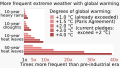
Human activities have significantly impacted the water cycle. The construction of dams and reservoirs, deforestation, urbanization, and the emission of greenhouse gases are some of the ways humans have altered the natural flow of water. These changes can lead to more extreme weather events, reduced water quality, and changes in the availability of water resources.
Conservation[edit]
Efforts to conserve water and protect the water cycle are critical. These include sustainable water management practices, reforestation, reducing greenhouse gas emissions, and protecting wetlands and other important ecosystems. By understanding and respecting the water cycle, humanity can ensure the availability of fresh water for future generations while minimizing environmental impacts.
 | This geology article is a stub. You can help WikiMD by expanding the page. |
 | This environment-related article is a stub. You can help WikiMD by expanding the page. |
 | This hydrology article is a stub. You can help WikiMD by expanding the page. |
-
Water cycle
-
Water cycle
-
Water cycle
-
Water cycle
-
 Water cycle
 -
 Water cycle
 -
Water cycle


Sponsored Health Resource

W8MD Weight Loss, Sleep & MedSpa
Looking for physician-supervised weight loss, semaglutide, tirzepatide, or GLP-1 receptor agonist options? W8MD helps eligible patients in New York City, Brooklyn, New Jersey, Connecticut, Pennsylvania, Delaware, and greater Philadelphia with medical weight loss, sleep medicine, and long-term maintenance support.
GLP-1 specials: Affordable GLP-1 injections NYC and Philadelphia starting from $29.99/week and up for semaglutide with insurance accepted for qualifying visits, and $45/week and up for tirzepatide with insurance accepted for qualifying visits. Self-pay options start from $59.99/week and up for semaglutide and $69.99/week and up for tirzepatide.
- Medical weight loss NYC
- Affordable GLP-1 injections NYC
- Budget GLP-1 weight loss shots Philadelphia
- New Jersey medical weight loss
- NYC medical weight loss blog
- Philadelphia weight loss blog
- Sleep medicine and sleep apnea services
- W8MD MedSpa and wellness
Book a W8MD appointment · View GLP-1 specials
Paid promotional message. Eligibility, pricing, insurance coverage, medication availability, and results vary. Medical evaluation required.

Medical Disclaimer: WikiMD is for informational purposes only and is not a substitute for professional medical advice. Content may be inaccurate or outdated and should not be used for diagnosis or treatment. Always consult your healthcare provider for medical decisions. Verify information with trusted sources such as CDC.gov and NIH.gov. By using this site, you agree that WikiMD is not liable for any outcomes related to its content. See full disclaimer.
Credits:Most images are courtesy of Wikimedia commons, and templates, categories Wikipedia, licensed under CC BY SA or similar.
Translate page: - East Asian
中文,
日本,
한국어,
South Asian
हिन्दी,
தமிழ்,
తెలుగు,
Urdu,
ಕನ್ನಡ,
Southeast Asian
Indonesian,
Vietnamese,
Thai,
မြန်မာဘာသာ,
বাংলা
European
español,
Deutsch,
français,
Greek,
português do Brasil,
polski,
română,
русский,
Nederlands,
norsk,
svenska,
suomi,
Italian
Middle Eastern & African
عربى,
Turkish,
Persian,
Hebrew,
Afrikaans,
isiZulu,
Kiswahili,
Other
Bulgarian,
Hungarian,
Czech,
Swedish,
മലയാളം,
मराठी,
ਪੰਜਾਬੀ,
ગુજરાતી,
Portuguese,
Ukrainian


.jpg)
