Human impact on the nitrogen cycle
The nitrogen cycle is a biogeochemical process that transforms nitrogen and nitrogen-containing compounds in nature. The human impact on the nitrogen cycle is significant, as human activities have dramatically altered the balance of this essential element in the ecosystem.
Introduction[edit]
Nitrogen is a crucial element for all life forms as it is a fundamental component of amino acids, proteins, and DNA. The nitrogen cycle describes the series of transformations that nitrogen undergoes as it moves between the atmosphere, the land, and the oceans. However, human activities such as agriculture, industry, and waste management have significantly disrupted this cycle.
Human Activities Affecting the Nitrogen Cycle[edit]
Agriculture[edit]
The use of synthetic fertilizers in agriculture has been the primary driver of the alteration of the nitrogen cycle. These fertilizers contain high levels of ammonia and nitrate, which can leach into water bodies, causing eutrophication and dead zones.
Industry[edit]
Industrial processes, particularly the production of ammonia for fertilizer and the burning of fossil fuels, release large amounts of nitrogen oxides into the atmosphere. These gases contribute to the formation of smog and acid rain.
Waste Management[edit]
Improper waste management can lead to the release of nitrogen compounds into the environment. For example, untreated or poorly treated sewage can release ammonia and nitrate into water bodies.
Impacts of Nitrogen Cycle Disruption[edit]
The disruption of the nitrogen cycle has several significant impacts on the environment and human health. These include water pollution, air pollution, climate change, and biodiversity loss.
Mitigation Strategies[edit]
Several strategies can be employed to mitigate the human impact on the nitrogen cycle. These include improving fertilizer efficiency, reducing fossil fuel consumption, and improving waste management practices.
 | This environment-related article is a stub. You can help WikiMD by expanding the page. |
 | This medical article is a stub. You can help WikiMD by expanding the page. |
-
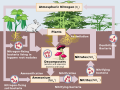 Diagram of the Nitrogen Cycle
 -
Estimated nitrogen surplus across Europe in 2005


Medical Disclaimer: WikiMD is for informational purposes only and is not a substitute for professional medical advice. Content may be inaccurate or outdated and should not be used for diagnosis or treatment. Always consult your healthcare provider for medical decisions. Verify information with trusted sources such as CDC.gov and NIH.gov. By using this site, you agree that WikiMD is not liable for any outcomes related to its content. See full disclaimer.
Credits:Most images are courtesy of Wikimedia commons, and templates, categories Wikipedia, licensed under CC BY SA or similar.
Translate page: - East Asian
中文,
日本,
한국어,
South Asian
हिन्दी,
தமிழ்,
తెలుగు,
Urdu,
ಕನ್ನಡ,
Southeast Asian
Indonesian,
Vietnamese,
Thai,
မြန်မာဘာသာ,
বাংলা
European
español,
Deutsch,
français,
Greek,
português do Brasil,
polski,
română,
русский,
Nederlands,
norsk,
svenska,
suomi,
Italian
Middle Eastern & African
عربى,
Turkish,
Persian,
Hebrew,
Afrikaans,
isiZulu,
Kiswahili,
Other
Bulgarian,
Hungarian,
Czech,
Swedish,
മലയാളം,
मराठी,
ਪੰਜਾਬੀ,
ગુજરાતી,
Portuguese,
Ukrainian


