Habenular commissure
Habenular commissure is a part of the brain that connects the two habenulae. It is a component of the epithalamus, which is a region of the diencephalon. The habenular commissure is involved in various functions, including pain processing, reproductive behavior, nutrition, sleep-wake cycle, stress responses, and learning and memory.
Etymology[edit]
The term "habenular" is derived from the Latin word "habenula," which means "little rein." This is due to the shape of the habenula, which resembles a small rein. The term "commissure" comes from the Latin word "commissura," which means "a joining together."
Structure[edit]
The habenular commissure is located in the posterior part of the thalamus, above the pineal gland. It is a small bundle of nerve fibers that connects the left and right habenulae. The habenulae are small, cone-shaped structures that are part of the epithalamus.
Function[edit]
The habenular commissure, along with the habenulae, is involved in a variety of functions. These include pain processing, reproductive behavior, nutrition, sleep-wake cycle, stress responses, and learning and memory. The habenular commissure is thought to play a role in the coordination of signals between the left and right habenulae, which may be important for these functions.
Clinical significance[edit]
Abnormalities in the habenular commissure have been associated with various neurological disorders, including depression, schizophrenia, and Alzheimer's disease. However, the exact role of the habenular commissure in these disorders is not fully understood.
See also[edit]
References[edit]

This WikiMD article can only be edited by registered and verified editors. You can log in or register.
-
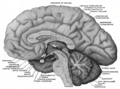 Gray's Anatomy illustration of the habenular commissure


Medical Disclaimer: WikiMD is for informational purposes only and is not a substitute for professional medical advice. Content may be inaccurate or outdated and should not be used for diagnosis or treatment. Always consult your healthcare provider for medical decisions. Verify information with trusted sources such as CDC.gov and NIH.gov. By using this site, you agree that WikiMD is not liable for any outcomes related to its content. See full disclaimer.
Credits:Most images are courtesy of Wikimedia commons, and templates, categories Wikipedia, licensed under CC BY SA or similar.
Translate page: - East Asian
中文,
日本,
한국어,
South Asian
हिन्दी,
தமிழ்,
తెలుగు,
Urdu,
ಕನ್ನಡ,
Southeast Asian
Indonesian,
Vietnamese,
Thai,
မြန်မာဘာသာ,
বাংলা
European
español,
Deutsch,
français,
Greek,
português do Brasil,
polski,
română,
русский,
Nederlands,
norsk,
svenska,
suomi,
Italian
Middle Eastern & African
عربى,
Turkish,
Persian,
Hebrew,
Afrikaans,
isiZulu,
Kiswahili,
Other
Bulgarian,
Hungarian,
Czech,
Swedish,
മലയാളം,
मराठी,
ਪੰਜਾਬੀ,
ગુજરાતી,
Portuguese,
Ukrainian

