Diencephalon
Diencephalon is a part of the brain that is made up of four main components: the thalamus, the hypothalamus, the epithalamus, and the subthalamus. It is located between the cerebral hemispheres and the brainstem.
Structure[edit]
The diencephalon is a complex structure that is located in the central part of the brain. It is surrounded by the cerebral hemispheres and is located above the brainstem. The diencephalon is made up of four main components:
- Thalamus: This is the largest part of the diencephalon. It acts as a relay station for sensory information, sending it to the appropriate parts of the cerebral cortex.
- Hypothalamus: This part of the diencephalon is involved in many functions, including the regulation of body temperature, hunger, thirst, and sleep. It also plays a role in emotional responses and memory.
- Epithalamus: This includes the pineal gland, which produces the hormone melatonin that helps regulate sleep-wake cycles.
- Subthalamus: This part is involved in controlling movement and is connected to the basal ganglia, a group of nuclei involved in motor control.
Function[edit]
The diencephalon plays a crucial role in many functions of the body and mind. It is involved in sensory perception, motor functions, homeostasis, and consciousness. It also plays a role in the endocrine system through the hypothalamus and the pituitary gland.
Clinical significance[edit]
Damage to the diencephalon can lead to a variety of neurological disorders. For example, thalamic syndrome can occur if there is a stroke in the thalamus. This can lead to sensory loss, pain, and spontaneous feelings of pain. Damage to the hypothalamus can lead to disorders such as insomnia, obesity, and diabetes insipidus.
See also[edit]
References[edit]

This WikiMD article can only be edited by registered and verified editors. You can log in or register.
-
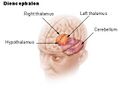 Illustration of the diencephalon
 -
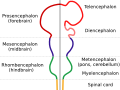 Diagram of the embryonic brain
 -
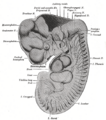 Gray's anatomy illustration of the diencephalon


Medical Disclaimer: WikiMD is for informational purposes only and is not a substitute for professional medical advice. Content may be inaccurate or outdated and should not be used for diagnosis or treatment. Always consult your healthcare provider for medical decisions. Verify information with trusted sources such as CDC.gov and NIH.gov. By using this site, you agree that WikiMD is not liable for any outcomes related to its content. See full disclaimer.
Credits:Most images are courtesy of Wikimedia commons, and templates, categories Wikipedia, licensed under CC BY SA or similar.
Translate page: - East Asian
中文,
日本,
한국어,
South Asian
हिन्दी,
தமிழ்,
తెలుగు,
Urdu,
ಕನ್ನಡ,
Southeast Asian
Indonesian,
Vietnamese,
Thai,
မြန်မာဘာသာ,
বাংলা
European
español,
Deutsch,
français,
Greek,
português do Brasil,
polski,
română,
русский,
Nederlands,
norsk,
svenska,
suomi,
Italian
Middle Eastern & African
عربى,
Turkish,
Persian,
Hebrew,
Afrikaans,
isiZulu,
Kiswahili,
Other
Bulgarian,
Hungarian,
Czech,
Swedish,
മലയാളം,
मराठी,
ਪੰਜਾਬੀ,
ગુજરાતી,
Portuguese,
Ukrainian

