H2 receptor antagonist
H2 receptor antagonists are a class of medications that are commonly used to treat conditions that cause excess stomach acid. These include peptic ulcers, gastroesophageal reflux disease (GERD), and Zollinger-Ellison syndrome.
Mechanism of Action[edit]
H2 receptor antagonists work by blocking the action of histamine on the parietal cells in the stomach, which are responsible for producing acid. This reduces the amount of acid produced, helping to relieve symptoms and promote healing of the affected areas.
Examples[edit]
There are several different H2 receptor antagonists available, including:
Each of these medications has its own specific uses, side effects, and contraindications, so it's important to discuss these with your healthcare provider before starting treatment.
Side Effects[edit]
Like all medications, H2 receptor antagonists can cause side effects. These can vary depending on the specific medication used, but may include:
If you experience any severe or persistent side effects while taking an H2 receptor antagonist, you should contact your healthcare provider immediately.
Contraindications[edit]
H2 receptor antagonists are generally safe for most people to use. However, they may not be suitable for people with certain health conditions, such as:
Again, it's important to discuss these factors with your healthcare provider before starting treatment.
See Also[edit]

This WikiMD article can only be edited by registered and verified editors. You can log in or register.
H2 receptor antagonist[edit]
-
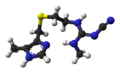 Cimetidine 3D structure
 -
 Famotidine chemical structure


Medical Disclaimer: WikiMD is for informational purposes only and is not a substitute for professional medical advice. Content may be inaccurate or outdated and should not be used for diagnosis or treatment. Always consult your healthcare provider for medical decisions. Verify information with trusted sources such as CDC.gov and NIH.gov. By using this site, you agree that WikiMD is not liable for any outcomes related to its content. See full disclaimer.
Credits:Most images are courtesy of Wikimedia commons, and templates, categories Wikipedia, licensed under CC BY SA or similar.
Translate page: - East Asian
中文,
日本,
한국어,
South Asian
हिन्दी,
தமிழ்,
తెలుగు,
Urdu,
ಕನ್ನಡ,
Southeast Asian
Indonesian,
Vietnamese,
Thai,
မြန်မာဘာသာ,
বাংলা
European
español,
Deutsch,
français,
Greek,
português do Brasil,
polski,
română,
русский,
Nederlands,
norsk,
svenska,
suomi,
Italian
Middle Eastern & African
عربى,
Turkish,
Persian,
Hebrew,
Afrikaans,
isiZulu,
Kiswahili,
Other
Bulgarian,
Hungarian,
Czech,
Swedish,
മലയാളം,
मराठी,
ਪੰਜਾਬੀ,
ગુજરાતી,
Portuguese,
Ukrainian

