Histamine
Histamine is a biogenic amine that is involved in local immune responses as well as regulating physiological function in the gut and acting as a neurotransmitter for the brain, spinal cord, and uterus. Histamine is involved in the inflammatory response and has a central role as a mediator of itching. As part of an immune response to foreign pathogens, histamine is produced by basophils and by mast cells found in nearby connective tissues. Histamine increases the permeability of the capillaries to white blood cells and some proteins, to allow them to engage pathogens in the infected tissues.
Production and regulation[edit]
Histamine is derived from the amino acid histidine, which is converted to histamine by an enzyme called histidine decarboxylase. It is stored in granules in mast cells and basophils and is released as part of an immune response. Once released, histamine can cause a variety of responses including vasodilation, increased vascular permeability, and stimulation of sensory nerve endings.
Role in immune response[edit]
Histamine plays a central role in the immune response, acting as a mediator in the processes of inflammation and allergy. It is released by mast cells and basophils when these cells are activated by an immune stimulus, such as the presence of an antigen. Once released, histamine binds to specific receptors on various cells, triggering a range of responses that include dilation of blood vessels, increased secretion of gastric acid, and stimulation of the heart.
Histamine receptors[edit]
There are four known types of histamine receptors, designated H1 through H4. H1 receptors are found on smooth muscle, endothelial cells, and central nervous system tissue, and mediate contraction of smooth muscle, increase in capillary permeability, and neurotransmission. H2 receptors are located on parietal cells and vascular smooth muscle cells, and mediate gastric acid secretion and vasodilation. H3 receptors are found in the central nervous system and to a lesser extent the peripheral nervous system, where they inhibit the release of histamine and other neurotransmitters. H4 receptors are found primarily in bone marrow and white blood cells, and regulate immune response.
Histamine in disease[edit]
Histamine is involved in many types of allergic reactions. These reactions can range from mild, such as hay fever, to severe, such as anaphylactic shock. Histamine is also involved in conditions such as gastritis and gastroenteritis, where it stimulates the production of stomach acid.
See also[edit]

This WikiMD article can only be edited by registered and verified editors. You can log in or register.
-
 Tautomers of Histamine
 -
 Histidine Decarboxylase Enzyme
 -
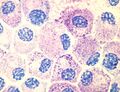 Histamine


Sponsored Health Resource

W8MD Weight Loss, Sleep & MedSpa
Looking for physician-supervised weight loss, semaglutide, tirzepatide, or GLP-1 receptor agonist options? W8MD helps eligible patients in New York City, Brooklyn, New Jersey, Connecticut, Pennsylvania, Delaware, and greater Philadelphia with medical weight loss, sleep medicine, and long-term maintenance support.
GLP-1 specials: Affordable GLP-1 injections NYC and Philadelphia starting from $29.99/week and up for semaglutide with insurance accepted for qualifying visits, and $45/week and up for tirzepatide with insurance accepted for qualifying visits. Self-pay options start from $59.99/week and up for semaglutide and $69.99/week and up for tirzepatide.
- Medical weight loss NYC
- Affordable GLP-1 injections NYC
- Budget GLP-1 weight loss shots Philadelphia
- New Jersey medical weight loss
- NYC medical weight loss blog
- Philadelphia weight loss blog
- Sleep medicine and sleep apnea services
- W8MD MedSpa and wellness
Book a W8MD appointment · View GLP-1 specials
Paid promotional message. Eligibility, pricing, insurance coverage, medication availability, and results vary. Medical evaluation required.

Medical Disclaimer: WikiMD is for informational purposes only and is not a substitute for professional medical advice. Content may be inaccurate or outdated and should not be used for diagnosis or treatment. Always consult your healthcare provider for medical decisions. Verify information with trusted sources such as CDC.gov and NIH.gov. By using this site, you agree that WikiMD is not liable for any outcomes related to its content. See full disclaimer.
Credits:Most images are courtesy of Wikimedia commons, and templates, categories Wikipedia, licensed under CC BY SA or similar.
Translate page: - East Asian
中文,
日本,
한국어,
South Asian
हिन्दी,
தமிழ்,
తెలుగు,
Urdu,
ಕನ್ನಡ,
Southeast Asian
Indonesian,
Vietnamese,
Thai,
မြန်မာဘာသာ,
বাংলা
European
español,
Deutsch,
français,
Greek,
português do Brasil,
polski,
română,
русский,
Nederlands,
norsk,
svenska,
suomi,
Italian
Middle Eastern & African
عربى,
Turkish,
Persian,
Hebrew,
Afrikaans,
isiZulu,
Kiswahili,
Other
Bulgarian,
Hungarian,
Czech,
Swedish,
മലയാളം,
मराठी,
ਪੰਜਾਬੀ,
ગુજરાતી,
Portuguese,
Ukrainian

