Grape leaves
Grape Leaves are the leaves of the Vitis species, which are used in various cuisines worldwide. They are most commonly used in the Mediterranean and Middle Eastern cuisines, where they are typically stuffed with a mixture of rice, meat, and spices, and then cooked. This dish is known as Dolma in many cultures.
Cultivation[edit]
Grape plants are grown worldwide, primarily for their fruit, which is used to make wine, grape juice, and raisins. However, the leaves of the grape plant are also harvested and used in cooking. The leaves are typically picked fresh from the vine and stuffed with a mixture of rice, meat, and spices. They can also be bought in jars or cans.
Culinary Uses[edit]
Grape leaves are used in a variety of dishes around the world. In Mediterranean and Middle Eastern cuisines, they are most commonly used to make Dolma, a dish where the leaves are stuffed with a mixture of rice, meat, and spices, and then cooked. They are also used in the Greek dish Spanakopita, where they are mixed with spinach and feta cheese, and baked in a phyllo pastry.
In addition to these traditional uses, grape leaves can also be used in salads, as a garnish, or as a wrap for meat or fish. They are also sometimes used in pickling, where their tannins can help to preserve the pickles.
Nutritional Value[edit]
Grape leaves are a good source of Vitamins A and Vitamin C, as well as Iron and Fiber. They are low in calories and fat, making them a healthy choice for those on a diet.
Cultural Significance[edit]
Grape leaves have a significant cultural importance in many Mediterranean and Middle Eastern cultures. They are often associated with hospitality and generosity, and are commonly served at festive occasions and family gatherings.
See Also[edit]

-
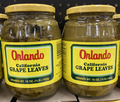 Grape leaves sold in jars
 -
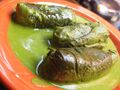 Stuffed grape leaves with yogurt mint sauce


Advertise on WikiMD — 81,000+ full articles, ~900,000 total pages, ~250 million page views. Global reach, limited time promotional rates from $1/page/day. Learn more · View stats

Translate page: - East Asian
中文,
日本,
한국어,
South Asian
हिन्दी,
தமிழ்,
తెలుగు,
Urdu,
ಕನ್ನಡ,
Southeast Asian
Indonesian,
Vietnamese,
Thai,
မြန်မာဘာသာ,
বাংলা
European
español,
Deutsch,
français,
Greek,
português do Brasil,
polski,
română,
русский,
Nederlands,
norsk,
svenska,
suomi,
Italian
Middle Eastern & African
عربى,
Turkish,
Persian,
Hebrew,
Afrikaans,
isiZulu,
Kiswahili,
Other
Bulgarian,
Hungarian,
Czech,
Swedish,
മലയാളം,
मराठी,
ਪੰਜਾਬੀ,
ગુજરાતી,
Portuguese,
Ukrainian
About WikiMD • Contact • Disclaimer • Privacy • Copyright • Site statistics
Some content and images may originate from Wikimedia Commons or Wikipedia and remain subject to their stated licenses. Unless otherwise noted, eligible WikiMD content is available under CC BY-SA 4.0.
WikiMD Wellnesspedia — Free health & wellness information for patients, students, and health professionals.

