Furaneol
A chemical compound known for its sweet, strawberry-like aroma
| Chemical Compound | |
|---|---|
| Identifiers | |
| CAS Number | |
| PubChem CID | |
| ChemSpider ID | |
| UNII | |
| ChEBI | |
| ChEMBL | |
| Properties | |
| Chemical Formula | |
| Molar Mass | |
| Appearance | |
| Density | |
| Melting Point | |
| Boiling Point | |
| Hazards | |
| GHS Pictograms | [[File:|50px]] |
| GHS Signal Word | |
| GHS Hazard Statements | |
| NFPA 704 | [[File:|50px]] |
| References | |
Furaneol, also known as 4-hydroxy-2,5-dimethyl-3(2H)-furanone, is a naturally occurring organic compound that is widely recognized for its sweet, strawberry-like aroma. It is a key flavor compound in a variety of fruits and is used extensively in the food and fragrance industries.
Chemical Structure and Properties[edit]
Furaneol is a furanone, a type of heterocyclic compound characterized by a five-membered ring containing an oxygen atom. Its chemical formula is C6H8O3, and it has a molar mass of 128.13 g/mol. The compound is notable for its pleasant, sweet aroma reminiscent of strawberries, which makes it a valuable additive in flavoring and perfumery.
Occurrence[edit]
Furaneol is found naturally in a variety of fruits, including strawberries, pineapples, and tomatoes. It is also present in caramel and coffee, contributing to their characteristic flavors. The compound is produced during the Maillard reaction, a chemical reaction between amino acids and reducing sugars that occurs during the cooking of foods.
Synthesis[edit]
In addition to its natural occurrence, Furaneol can be synthesized in the laboratory. The synthetic production of Furaneol involves the reaction of acetone with glyoxylic acid in the presence of a catalyst. This process allows for the large-scale production of Furaneol for use in the food and fragrance industries.
Applications[edit]
Furaneol is widely used as a flavoring agent in the food industry. Its sweet, fruity aroma makes it a popular choice for enhancing the flavor of confectionery, baked goods, and beverages. In the fragrance industry, Furaneol is used to impart a sweet, fruity note to perfumes and other scented products.
Health and Safety[edit]
Furaneol is generally recognized as safe (GRAS) by the Food and Drug Administration (FDA) when used in accordance with good manufacturing practices. However, as with all chemical compounds, it should be handled with care to avoid unnecessary exposure.
Related Pages[edit]
- Furaneol
-
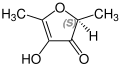 (S)-Furanol V1
 -
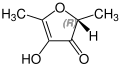 (R)-Furanol V1
-Furanol_V1.svg)
-Furanol_V1.svg)
Sponsored Health Resource

W8MD Weight Loss, Sleep & MedSpa
Looking for physician-supervised weight loss, semaglutide, tirzepatide, or GLP-1 receptor agonist options? W8MD helps eligible patients in New York City, Brooklyn, New Jersey, Connecticut, Pennsylvania, Delaware, and greater Philadelphia with medical weight loss, sleep medicine, and long-term maintenance support.
GLP-1 specials: Affordable GLP-1 injections NYC and Philadelphia starting from $29.99/week and up for semaglutide with insurance accepted for qualifying visits, and $45/week and up for tirzepatide with insurance accepted for qualifying visits. Self-pay options start from $59.99/week and up for semaglutide and $69.99/week and up for tirzepatide.
Medical weight loss NYC | Affordable GLP-1 injections NYC | Budget GLP-1 weight loss shots Philadelphia | New Jersey medical weight loss | NYC medical weight loss | Philadelphia medical weight loss | Sleep clinic NYC | W8MD's Philadelphia GLP-1 doctor | Weight loss prescriptions NYC
Book a W8MD appointment · View GLP-1 specials
Paid promotional message. Eligibility, pricing, insurance coverage, medication availability, and results vary. Medical evaluation required.

Medical Disclaimer: WikiMD is for informational purposes only and is not a substitute for professional medical advice. Content may be inaccurate or outdated and should not be used for diagnosis or treatment. Always consult your healthcare provider for medical decisions. Verify information with trusted sources such as CDC.gov and NIH.gov. By using this site, you agree that WikiMD is not liable for any outcomes related to its content. See full disclaimer.
Credits:Most images are courtesy of Wikimedia commons, and templates, categories Wikipedia, licensed under CC BY SA or similar.
Translate page: - East Asian
中文,
日本,
한국어,
South Asian
हिन्दी,
தமிழ்,
తెలుగు,
Urdu,
ಕನ್ನಡ,
Southeast Asian
Indonesian,
Vietnamese,
Thai,
မြန်မာဘာသာ,
বাংলা
European
español,
Deutsch,
français,
Greek,
português do Brasil,
polski,
română,
русский,
Nederlands,
norsk,
svenska,
suomi,
Italian
Middle Eastern & African
عربى,
Turkish,
Persian,
Hebrew,
Afrikaans,
isiZulu,
Kiswahili,
Other
Bulgarian,
Hungarian,
Czech,
Swedish,
മലയാളം,
मराठी,
ਪੰਜਾਬੀ,
ગુજરાતી,
Portuguese,
Ukrainian

