Fruit tree
Fruit tree refers to a tree that bears fruit that is consumed or used by humans and some animals. These trees are part of the broader category of flowering plants, also known as angiosperms. The fruits produced by these trees have diverse characteristics, ranging from sweet, like apples and oranges, to sour, like lemons and limes.
Classification[edit]
Fruit trees can be classified into several types based on the kind of fruit they produce. Some of the most common types include:
- Citrus trees: These include trees that produce oranges, lemons, limes, and grapefruits.
- Pome fruit trees: These produce fruits with a core of several small seeds, such as apples and pears.
- Stone fruit trees: These produce fruits with a single large seed or "stone", such as peaches, plums, and cherries.
- Tropical fruit trees: These produce fruits that grow in tropical climates, such as mangoes, bananas, and pineapples.
Cultivation[edit]
The cultivation of fruit trees is a significant part of agriculture, especially in regions where the climate and soil conditions are suitable for their growth. The process involves several stages, including planting, pruning, fertilizing, and harvesting.
Uses[edit]
Fruit trees have various uses. Their fruits are consumed fresh, used in cooking, or processed into products like juice, jam, and wine. Some fruit trees are also grown for their ornamental value, while others are used in traditional medicine.
See also[edit]
This plant related article is a stub. You can help WikiMD by expanding it.
 | This agriculture article is a stub. You can help WikiMD by expanding the page. |
-
 Plum tree with fruit
 -
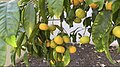 Mandarin orange tree
 -
 Almond tree


Medical Disclaimer: WikiMD is for informational purposes only and is not a substitute for professional medical advice. Content may be inaccurate or outdated and should not be used for diagnosis or treatment. Always consult your healthcare provider for medical decisions. Verify information with trusted sources such as CDC.gov and NIH.gov. By using this site, you agree that WikiMD is not liable for any outcomes related to its content. See full disclaimer.
Credits:Most images are courtesy of Wikimedia commons, and templates, categories Wikipedia, licensed under CC BY SA or similar.
Translate this page: - East Asian
中文,
日本,
한국어,
South Asian
हिन्दी,
தமிழ்,
తెలుగు,
Urdu,
ಕನ್ನಡ,
Southeast Asian
Indonesian,
Vietnamese,
Thai,
မြန်မာဘာသာ,
বাংলা
European
español,
Deutsch,
français,
Greek,
português do Brasil,
polski,
română,
русский,
Nederlands,
norsk,
svenska,
suomi,
Italian
Middle Eastern & African
عربى,
Turkish,
Persian,
Hebrew,
Afrikaans,
isiZulu,
Kiswahili,
Other
Bulgarian,
Hungarian,
Czech,
Swedish,
മലയാളം,
मराठी,
ਪੰਜਾਬੀ,
ગુજરાતી,
Portuguese,
Ukrainian
