Adaptation
| Adaptations | ||||||||||
|---|---|---|---|---|---|---|---|---|---|---|
This Adaptation related article is a stub.
|
Adaptation refers to the process by which organisms adjust to changes in their environment to improve their chances of survival and reproduction. This evolutionary process can occur through changes in genes, behavior, and physical characteristics, allowing species to better cope with their surroundings. Adaptations can be structural, physiological, or behavioral, and they play a crucial role in the survival of species through natural selection.
Types of Adaptation[edit]
Adaptations are generally categorized into three main types:
Structural Adaptations[edit]
Structural adaptations involve physical features of an organism that help it survive in its environment. Examples include the long neck of the giraffe, which allows it to reach leaves high in trees, or the thick fur of the polar bear, which provides insulation in cold environments.
Physiological Adaptations[edit]
Physiological adaptations involve changes in the metabolic processes of an organism. These can include the ability of desert animals like the camel to conserve water or the production of antifreeze proteins in Antarctic fish that prevent their blood from freezing.
Behavioral Adaptations[edit]
Behavioral adaptations are the behaviors that organisms develop to survive in their environments. Examples include birds migrating to warmer climates during winter or the nocturnal habits of owls, which help them avoid predators and increase their hunting efficiency.
Mechanisms of Adaptation[edit]
Adaptation occurs through various mechanisms, primarily through the process of natural selection. Genetic variations that enhance survival and reproduction become more common in the population over generations. Other mechanisms include:
Examples of Adaptation[edit]
Some notable examples of adaptation include:
- The peppered moth's color change during the Industrial Revolution, which helped it camouflage against soot-covered trees.
- The development of antibiotic resistance in bacteria, which is a significant concern in medicine.
- The ability of some plants to grow in arid or nutrient-poor soils by evolving specific root systems or symbiotic relationships with fungi.
Adaptation in Humans[edit]
Humans have also undergone various adaptations through their evolutionary history. For example, populations living at high altitudes have adaptations related to oxygen processing, such as increased lung capacity and hemoglobin affinity for oxygen.
Impact on Ecology and Evolution[edit]
Adaptation plays a critical role in the ecology and evolution of species. It not only influences the survival and distribution of species but also affects ecological interactions such as predation, competition, and symbiosis. Understanding adaptations can help in conservation efforts, particularly in changing environments due to climate change.
See Also[edit]

Adaptation[edit]
-
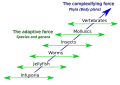 Lamarck's Two-Factor Theory
 -
 Falke vor LKW
 -
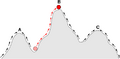 Fitness Landscape Cartoon
 -
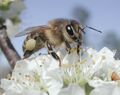 Plumpollen
 -
 Wasp Mimicry
 -
 Pfau imponierend
 -
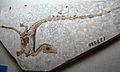 Sinosauropteryx Fossil
 -
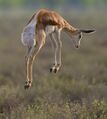 Springbok Pronk


Sponsored Health Resource

W8MD Weight Loss, Sleep & MedSpa
Looking for physician-supervised weight loss, semaglutide, tirzepatide, or GLP-1 receptor agonist options? W8MD helps eligible patients in New York City, Brooklyn, New Jersey, Connecticut, Pennsylvania, Delaware, and greater Philadelphia with medical weight loss, sleep medicine, and long-term maintenance support.
GLP-1 specials: Affordable GLP-1 injections NYC and Philadelphia starting from $29.99/week and up for semaglutide with insurance accepted for qualifying visits, and $45/week and up for tirzepatide with insurance accepted for qualifying visits. Self-pay options start from $59.99/week and up for semaglutide and $69.99/week and up for tirzepatide.
Medical weight loss NYC | Affordable GLP-1 injections NYC | Budget GLP-1 weight loss shots Philadelphia | New Jersey medical weight loss | NYC medical weight loss | Philadelphia medical weight loss | Sleep clinic NYC | W8MD's Philadelphia GLP-1 doctor | Weight loss prescriptions NYC
Book a W8MD appointment · View GLP-1 specials
Paid promotional message. Eligibility, pricing, insurance coverage, medication availability, and results vary. Medical evaluation required.

Medical Disclaimer: WikiMD is for informational purposes only and is not a substitute for professional medical advice. Content may be inaccurate or outdated and should not be used for diagnosis or treatment. Always consult your healthcare provider for medical decisions. Verify information with trusted sources such as CDC.gov and NIH.gov. By using this site, you agree that WikiMD is not liable for any outcomes related to its content. See full disclaimer.
Credits:Most images are courtesy of Wikimedia commons, and templates, categories Wikipedia, licensed under CC BY SA or similar.
Translate page: - East Asian
中文,
日本,
한국어,
South Asian
हिन्दी,
தமிழ்,
తెలుగు,
Urdu,
ಕನ್ನಡ,
Southeast Asian
Indonesian,
Vietnamese,
Thai,
မြန်မာဘာသာ,
বাংলা
European
español,
Deutsch,
français,
Greek,
português do Brasil,
polski,
română,
русский,
Nederlands,
norsk,
svenska,
suomi,
Italian
Middle Eastern & African
عربى,
Turkish,
Persian,
Hebrew,
Afrikaans,
isiZulu,
Kiswahili,
Other
Bulgarian,
Hungarian,
Czech,
Swedish,
മലയാളം,
मराठी,
ਪੰਜਾਬੀ,
ગુજરાતી,
Portuguese,
Ukrainian

