Edible plants
Edible plants are vital to human nutrition and culinary arts. They are plants whose parts are consumed by humans as food. The use of plants for food predates recorded history, and many cultures around the world have harnessed the nutritional and medicinal values of plants. This article explores various categories of edible plants, their significance, and a glossary of common edible plants.


Categories of Edible Plants[edit]
Fruits[edit]
Fruits are the mature ovaries of flowering plants, often sweet and enjoyed raw or in cooked dishes. Examples include apple, banana, and mango.
Vegetables[edit]
Vegetables are plant parts consumed for their nutritional value, including leaves, roots, and stems. Common examples are spinach, carrot, and potato.
Nuts and Seeds[edit]
Nuts and seeds are dense sources of nutrients and energy. They are often eaten raw, roasted, or used as ingredients in various dishes. Examples include almond, walnut, and pumpkin seed.
Herbs and Spices[edit]
Herbs and spices are plants or plant parts used for flavoring, coloring, or preserving food. They include basil, cinnamon, and garlic.
Nutritional and Medicinal Value[edit]
Many edible plants are rich in vitamins, minerals, antioxidants, and fiber, contributing to a balanced diet and various health benefits.
Cultivation and Harvesting[edit]
The cultivation of edible plants varies significantly across different species and climatic conditions. Sustainable farming practices are essential for the continuous supply of food.
Conservation and Biodiversity[edit]
The conservation of plant biodiversity ensures the availability of a wide range of edible plants, supporting food security and ecological balance.
Glossary of Common Edible Plants[edit]


.jpg)


- Achyranthes japonica - A species of flowering plant in the amaranth family, used for medicinal and culinary purposes.
- Acorus - A genus of flowering plants, including Acorus calamus, commonly known as sweet flag, which has culinary and medicinal uses.
- Acorus calamus - Also known as sweet flag, used in herbal medicine and as a flavoring agent.
- Acrostichum aureum - A type of mangrove fern, young fronds of which are consumed in certain cultures.
- Actephila excelsa - An evergreen tree whose fruits and leaves are occasionally consumed.
- Adenophora triphylla - A perennial herb whose root is used in traditional medicine.
- Agrimonia pilosa - A plant used in herbal medicine and occasionally as a culinary ingredient.
- Albizia zygia - A species of tree whose seeds and bark have traditional medicinal uses.
- Alliaria petiolata - Commonly known as garlic mustard, used in salads and as a seasoning.
- Allium ampeloprasum - The species that includes leeks and elephant garlic.
- Allium angulosum - A species of wild onion with edible leaves and bulbs.
- Allium atroviolaceum - A type of wild garlic with culinary applications.
- Allium bisceptrum - Known as twincrest onion, with edible bulbs and leaves.
- Allium carinatum - Also called keeled garlic, commonly used as a seasoning.
- Allium chinense - Also known as Chinese onion, used in Asian cuisines.
- Allium galanthum - A wild onion species with culinary uses.
- Allium hookeri - Also called Hooker chives, commonly used in Indian and Tibetan cooking.
- Allium paniculatum - A species of wild garlic used in seasoning.
- Allium paradoxum - Known as few-flowered garlic, edible but invasive in some regions.
- Allium polyanthum - A wild garlic species with edible bulbs.
- Allium scorodoprasum - Also known as sand leek, used in cooking.
- Allium siculum - Commonly called honey garlic, used for its strong flavor.
- Allium stellatum - Known as prairie onion, used in native North American cuisine.
- Amaranthus albus - A species of amaranth with edible leaves.
- Amaranthus hybridus - Commonly known as smooth pigweed, with edible leaves and seeds.
- Ampelocissus martini - A species of wild grapevine with edible fruits.
- Andrographis paniculata - Also called the king of bitters, used in herbal medicine.
- Aniseia martinicensis - A plant in the morning glory family with edible leaves.
- Antidesma acidum - A fruit-bearing tree found in tropical regions.
- Apodanthera mandonii - A climbing plant with edible tubers.
- Aponogeton lakhonensis - A water plant used as a vegetable in some regions.
- Arabidopsis thaliana - A model organism in plant biology, with limited edibility.
- Aralia elata - Known as the angelica tree, young shoots are used in Japanese cuisine.
- Arbutus menziesii - Commonly called madrone, with edible berries.
- Arctium minus - Also known as lesser burdock, with edible roots.
- Arisaema flavum - A species of jack-in-the-pulpit, with some edible uses after proper preparation.
- Artemisia absinthium - Known as wormwood, used in making absinthe and as an herbal remedy.
- Aster arenarius - A type of aster with occasional edible uses.
- Balanites aegyptiaca - Also known as desert date, with edible fruit and seeds.
- Balanites angolensis - A species in the Balanites genus with edible components.
- Balanites glabra - A tree whose fruit is used in traditional medicine and food.
- Balanites pedicellaris - A species with edible fruits.
- Balanites rotundifolia - Another Balanites species with edible parts.
- Balanites wilsoniana - A wild tree with edible fruit.
- Begonia sutherlandii - A species of begonia with edible leaves and flowers.
- Berberis canadensis - Also known as American barberry, with edible berries.
- Berberis fendleri - A barberry species with edible fruits.
- Berberis pimana - A type of barberry with medicinal and culinary uses.
- Bistorta officinalis - Known as bistort, with edible young leaves and roots.
- Bistorta vivipara - A species of knotweed with edible tubers.
- Blitum nuttallianum - Also known as Nuttall's saltbush, with edible leaves.
- Borage - An herb with edible flowers and leaves.
- Borassus madagascariensis - A palm tree with edible fruits and sap.
- Broccoli - A widely cultivated vegetable in the cabbage family.
- Bromelia pinguin - A bromeliad species with edible fruit.
- Brussels sprout - A vegetable in the Brassicaceae family, grown for its small leafy green buds.
- Calamus rotang - A species of rattan with edible shoots.
- Camassia - A genus of flowering plants whose bulbs were traditionally eaten by Native Americans.
- Campanula rapunculoides - Known as creeping bellflower, with edible roots.
- Canna indica - Also called Indian shot, with edible rhizomes.
- Caper - The edible flower buds of Capparis spinosa, commonly used as a seasoning.
- Capsella bursa-pastoris - Also known as shepherd’s purse, with edible leaves.
- Caralluma edulis - A succulent plant used as a vegetable in some regions.
- Cardamine hirsuta - Also called hairy bittercress, with edible leaves.
- Cardamine oligosperma - A species of bittercress with culinary uses.
- Carpobrotus edulis - Known as sour fig, with edible fruit and leaves.
- Cauliflower - A popular vegetable in the Brassica family.
- Chamaenerion angustifolium - Known as fireweed, with edible young shoots.
- Chamaenerion latifolium - Another fireweed species with edible parts.
- Chard - A leafy green vegetable closely related to beets.
- Chenopodium nuttalliae - Known as huauzontle, a Mexican leafy green.
- Chinese yam - A species of yam cultivated for its edible tubers.
- Cichorium pumilum - A wild chicory species with edible leaves.
- Cirsium arvense - Known as Canada thistle, young shoots are edible.
- Cirsium edule - A thistle species with edible roots and stems.
- Cirsium foliosum - Known as elk thistle, with edible uses.
- Cirsium vulgare - Also called bull thistle, young stems are sometimes eaten.
- Citrus garrawayi - A rare citrus species with edible fruit.
- Citrus inodora - A species of citrus with aromatic fruit.
- Citrus warburgiana - Another rare citrus species with edible fruit.
- Citrus wintersii - A wild citrus variety with edible fruit.
- Claytonia lanceolata - Also known as western spring beauty, with edible roots.
- Claytonia sibirica - A wild edible plant, commonly called Siberian miner’s lettuce.
- Claytosmunda - A genus of ferns, some species of which are consumed.
- Colocasia esculenta - Commonly known as taro, grown for its edible tubers and leaves.
- Corchorus - A genus of plants used for jute fiber, with edible leaves known as molokhia.
- Coreopsis bigelovii - A flowering plant, sometimes used as a food source.
- Crataegus - A genus of shrubs and trees, commonly known as hawthorn, with edible berries.
- Crataegus monogyna - Also called common hawthorn, with edible fruit used in jellies and teas.
- Curcuma amada - Known as mango ginger, with rhizomes used in pickles and curries.
- Curcuma zedoaria - Also called zedoary, with edible roots used as a spice.
- Cyanella hyacinthoides - A tuberous plant with edible parts.
- Cyanella lutea - A species in the Cyanella genus with edible underground structures.
- Cyperus articulatus - A sedge plant with edible rhizomes.
- Dioscorea fordii - A species of yam cultivated for its edible tubers.
- Dioscorea pentaphylla - Known as five-leaved yam, grown for food.
- Diplotaxis tenuifolia - A wild rocket species with edible leaves.
- Dobera glabra - A drought-tolerant tree with edible fruit.
- Dysphania botrys - Also known as Jerusalem oak, an aromatic herb sometimes used in cooking.
- Echites panduratus - A plant with edible parts.
- Eclipta angustata - A plant used in traditional medicine and sometimes consumed.
- Elaeocarpus serratus - Known as Ceylon olive, with edible fruit.
- Erodium cicutarium - Commonly called redstem filaree, with edible leaves and seeds.
- Erodium moschatum - A related species to redstem filaree, also with edible parts.
- Erythronium dens-canis - Also called dog’s-tooth violet, with edible bulbs.
- Erythronium japonicum - A species of fawn lily with edible underground parts.
- Ferula communis - Known as giant fennel, some parts are toxic while others are used medicinally.
- Field pea (Pisum) - A leguminous plant cultivated for its edible seeds.
- Fritillaria affinis - A flowering plant with edible bulbs.
- Fritillaria pudica - Known as yellow fritillary, with edible bulbs.
- Gaylussacia baccata - Also called black huckleberry, producing edible berries.
- Ginkgo biloba - A widely cultivated tree, with edible seeds when properly prepared.
- Glasswort - A group of succulent plants used as a salty vegetable.
- Glechoma hederacea - Commonly known as ground ivy, with edible leaves.
- Goeppertia allouia - Also called lerén, cultivated for its edible tubers.
- Goeppertia macrosepala - Another tuberous species of the Goeppertia genus.
- Gunnera tinctoria - Also called Chilean rhubarb, with edible leaf stalks.
- Gynura procumbens - A medicinal plant with edible leaves.
- Hemerocallis citrina - A daylily species with edible flowers.
- Hemerocallis fulva - Commonly known as orange daylily, with edible flower buds and tubers.
- Hemerocallis lilioasphodelus - A yellow daylily species, traditionally consumed in Asia.
- Hemerocallis middendorffii - Another daylily species with edible uses.
- Hoodia alstonii - A succulent plant sometimes consumed for its appetite-suppressing properties.
- Hoodia currorii - A related species to Hoodia alstonii, used similarly.
- Hymenocallis pimana - A species of spider lily with potential edible uses.
- Hypochaeris chillensis - A plant with edible leaves used in salads.
- Ipomoea muelleri - A species of morning glory with edible tubers.
- Ipomoea muricata - A relative of sweet potatoes, with similar edible parts.
- Jaltomata - A genus of fruit-bearing plants.
- Jaltomata procumbens - A plant known for its small edible berries.
- Jiuhuang bencao - A historic Chinese text documenting various edible plants.
- Juncus textilis - A rush plant with edible rhizomes.
- Juniperus communis - Produces edible juniper berries used as a spice.
- Kalette - A hybrid vegetable combining kale and Brussels sprouts.
- Kishu mikan - A small, seedless citrus fruit.
- Lamium amplexicaule - Commonly called henbit, with edible leaves and flowers.
- Leontodon saxatilis - A flowering plant with edible roots and leaves.
- Leopoldia - A genus of plants with edible bulbs.
- Lepidium campestre - Known as field pepperweed, with edible leaves and seeds.
- Lepidium virginicum - A wild mustard species with culinary uses.
- Lewisia - A genus of flowering plants with edible roots.
- Limnocharis flava - A wetland plant used as a leafy vegetable.
- Lippia micromera - An aromatic herb used for seasoning.
- Liquidambar cambodiana - A tree with edible resin.
- List of forageable plants - A compiled list of plants that can be gathered and consumed from the wild.
- Livistona decora - A species of palm with edible fruit.
- Lobularia maritima - Commonly known as sweet alyssum, with edible flowers.
- Maerua crassifolia - A drought-resistant tree with edible leaves and fruit.
- Malva neglecta - Commonly called common mallow, with edible leaves.
- Maranta arundinacea - Known as arrowroot, cultivated for its starchy rhizomes.
- Matricaria discoidea - Also called pineapple weed, with edible leaves and flowers.
- Mauritia flexuosa - A palm tree with edible fruit called aguaje.
- Melothria pendula - Known as creeping cucumber, producing small edible fruit.
- Mertensia ciliata - Also called mountain bluebells, with edible young leaves.
- Montia fontana - A type of water miner’s lettuce, with edible leaves.
- Montrichardia arborescens - A tropical plant with edible parts when properly prepared.
- Moringa (genus) - Includes the widely cultivated Moringa oleifera, valued for its nutrient-rich leaves and pods.
- Nelumbo lutea - American lotus, with edible seeds and tubers.
- Noronhia emarginata - A tree species with edible fruit.
- Notobasis - A genus of edible thistles.
- Notobasis syriaca - A spiny plant with edible leaves and flowers.
- Nuphar advena - Commonly known as yellow pond-lily, with edible rhizomes.
- Nypa fruticans - Also called nipa palm, with edible fruit and sap.
- Ocimum campechianum - A basil species with culinary uses.
- Oenothera biennis - Also called evening primrose, with edible roots and flowers.
- Olericulture - The science of growing vegetables.
- Opuntia aciculata - A species of prickly pear cactus with edible pads and fruit.
- Opuntia huajuapensis - A species of prickly pear cactus known for its edible fruit and pads.
- Opuntia humifusa - Also called Eastern prickly pear, with edible fruit and pads.
- Opuntia lagunae - A cactus species with edible parts.
- Opuntia macrorhiza - Known for its sweet, edible fruit.
- Opuntia setispina - A lesser-known prickly pear species with edible pads and fruit.
- Orostachys japonica - A succulent plant sometimes used in traditional medicine and as food.
- Oryza coarctata - A species of wild rice with edible grains.
- Oxalis montana - Also called mountain wood sorrel, with edible sour-tasting leaves.
- Oxalis stricta - Known as common yellow wood sorrel, used as a wild edible.
- Oxalis tuberosa - Also called oca, cultivated for its starchy tubers.
- Oxalis violacea - A North American species of wood sorrel with edible parts.
- Oxyria digyna - Commonly known as mountain sorrel, with edible leaves rich in vitamin C.
- Petromarula - A genus of edible plants in the bellflower family.
- Phoenix atlantica - A species of date palm producing edible fruit.
- Phragmites - A common wetland grass with edible shoots and seeds.
- Phragmites australis - Also called common reed, with young shoots and rhizomes that can be eaten.
- Pinus mugo - A dwarf pine tree, with edible seeds (pine nuts).
- Plantago maritima - A species of plantain with edible leaves.
- Polygonatum - A genus of plants with starchy, edible rhizomes.
- Polygonum cognatum - Also called Turkish knotweed, consumed as a vegetable.
- Pontederia cordata - Also known as pickerelweed, with edible seeds and young shoots.
- Potentilla simplex - Commonly called common cinquefoil, with edible roots.
- Prionosciadium saraviki - A plant used in traditional medicine and as a food source.
- Prunus dolichobotrys - A species in the cherry and plum family with edible fruit.
- Prunus speciosa - Also called Oshima cherry, cultivated for its fruit.
- Pteris ensiformis - A fern species with edible young fronds.
- Reynoutria sachalinensis - A plant related to Japanese knotweed, with edible shoots.
- Ribes - A genus of berry-producing shrubs, including currants and gooseberries.
- Ribes burejense - A species of currant with edible berries.
- Rumex acetosella - Commonly called sheep sorrel, with tangy, edible leaves.
- Rumex crispus - Known as curly dock, with edible leaves and seeds.
- Sagittaria - A genus of aquatic plants with starchy, edible tubers.
- Sagittaria cuneata - Also known as arumleaf arrowhead, producing edible tubers.
- Sagittaria engelmanniana - A species of arrowhead with edible rhizomes.
- Sagittaria fasciculata - A rare aquatic plant with edible parts.
- Sagittaria longiloba - A species of arrowhead with tubers used as food.
- Sagittaria macrocarpa - Producing edible, starchy tubers.
- Sagittaria macrophylla - A lesser-known species with edible underground parts.
- Sagittaria natans - A floating-leaved plant with edible tubers.
- Sagittaria papillosa - A wetland plant with edible tubers.
- Sagittaria pygmaea - A small arrowhead plant with edible parts.
- Sagittaria sagittifolia - Also called arrowhead or Chinese potato, cultivated for its tubers.
- Sagittaria sanfordii - A California-native arrowhead species with edible tubers.
- Sagittaria secundifolia - A rare species of aquatic plant with edible parts.
- Sagittaria trifolia - An Asian species of arrowhead with starchy tubers.
- Saguaro - A large cactus with edible fruit and seeds.
- Salak - Also called snake fruit, cultivated for its sweet, tangy fruit.
- Salicornia europaea - Known as samphire or sea asparagus, used as a salty vegetable.
- Salsola tragus - A drought-resistant plant with edible young shoots.
- Salvia verbenaca - Also called wild clary, with edible leaves.
- Salvia yangii - Commonly known as Russian sage, with aromatic and edible parts.
- Sambucus canadensis - Also called American elderberry, producing edible berries and flowers.
- Sambucus racemosa - Known as red elderberry, with fruit that must be cooked before eating.
- Sanguisorba canadensis - Also called Canadian burnet, with edible young leaves.
- Saxifraga oppositifolia - Also known as purple saxifrage, with edible flowers.
- Silybum marianum - Commonly known as milk thistle, with edible leaves and seeds.
- Smilax rotundifolia - A climbing vine with edible young shoots.
- Sonchus oleraceus - Also called sow thistle, used as a leafy vegetable.
- Stephania capitata - A vine with edible tubers.
- Stephania japonica - A climbing plant with traditional uses in food and medicine.
- Suaeda pulvinata - A halophytic plant with edible leaves.
- Syagrus cearensis - A palm tree producing edible fruit.
- Syagrus oleracea - A tropical palm with edible fruit.
- Syagrus weddelliana - Also called queen palm, with edible seeds.
- Tagetes erecta - Also known as African marigold, with edible flowers.
- Taraxacum officinale - Commonly known as dandelion, with edible leaves, roots, and flowers.
- Thalia geniculata - An aquatic plant with edible rhizomes.
- Theobroma speciosum - A relative of cacao, producing edible seeds.
- Thymus citriodorus - Known as lemon thyme, used as a culinary herb.
- Thysanotus tuberosus - A fringed lily species with edible tubers.
- Torreya grandis - A tree producing edible seeds, known as Chinese nutmeg-yew.
- Tragopogon dubius - Also called western salsify, with edible roots and shoots.
- Trichosanthes cucumerina - Known as snake gourd, cultivated for its edible fruit.
- Trichosanthes pilosa - A species of gourd with edible parts.
- Triteleia grandiflora - A wildflower with edible bulbs.
- Ulex - A genus of gorse plants, with edible flowers.
- Uvaria dulcis - A tropical tree with sweet, edible fruit.
- Vaccinium oxycoccos - Also known as small cranberry, with tart, edible berries.
- Valeriana rubra - A flowering plant with roots sometimes used in traditional remedies.
- Veronica americana - An aquatic plant with edible young leaves.
- Vincetoxicum lineare - A climbing plant with edible parts.
- Viola adunca - Also called early blue violet, with edible flowers and leaves.
- Viola canadensis - A violet species with edible leaves and flowers.
- Viola epipsila - A species of wild violet with edible foliage.
- Viola labradorica - Also called Labrador violet, consumed for its leaves and flowers.
- Viola mandshurica - A violet species native to Asia, with edible parts.
- Viola striata - Also called striped violet, with edible flowers and leaves.
- Wurfbainia vera - A plant in the ginger family with edible uses.
- Xerophyllum tenax - Known as bear grass, with historically consumed roots.
- Zingiber - A genus including ginger, valued for its edible rhizomes.
Individual vegetables[edit]
-
 courgette (Cucurbita)
 -
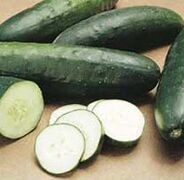 cucumber (Cucumis sativus)
 -
 fennel (Foeniculum vulgare)
 -
 lettuce (Lactuca sativa)
 -
 pumpkins (Cucurbita)
 -
 onion (Allium cepa)
 -
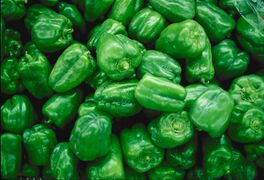 green paprika (Capsicum)
 -
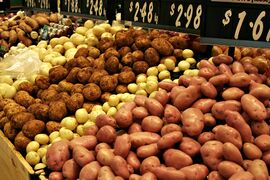
-
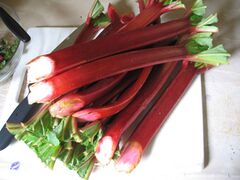 rhubarb (Rheum rhabarbarum)
 -
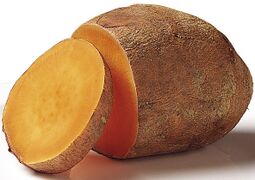 sweet potato (Ipomoea batatas)
 -
 spinach (Spinacia oleracea)
 -
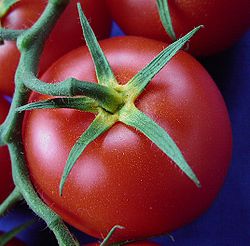 tomatos (Solanum lycopersicum)


Root vegetables[edit]
-
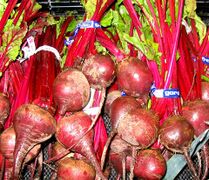 beetroots (Beta vulgaris)
 -
 carrots (Daucus carota subsp. sativus)
 -
 celery (Apium graveolens)
 -
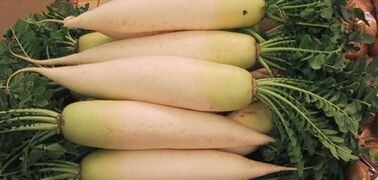 daikon radish (Raphanus sativus)
 -
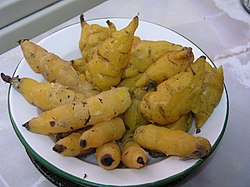 yellow mashua (Tropaeolum tuberosum)
 -
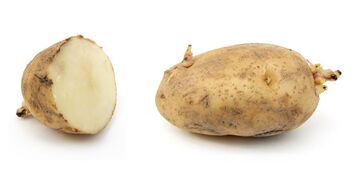 Template:FP star Russet potato (Solanum tuberosum)
 -
 radish (Raphanus sativus)
 -
 black salsify (Scorzonera hispanica)
 -
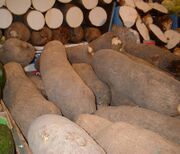


_%27Dolvi%27.jpg)


Legumes[edit]
-
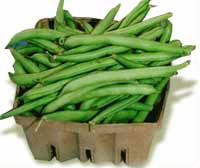 beans (Phaseolus vulgaris)
 -
 beans
beans -
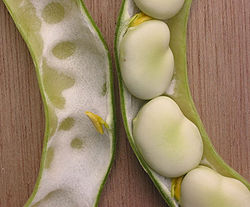 horse bean (Vicia faba)
 -
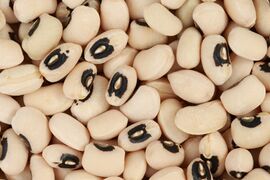 black-eyed peas (Vigna unguiculata subsp. unguiculata)
 -
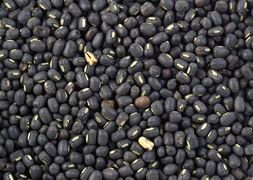 black gram or urad (Vigna mungo)
 -
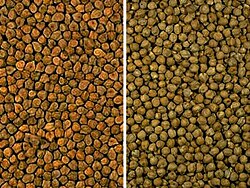 chickpea (Cicer arietinum)
 -
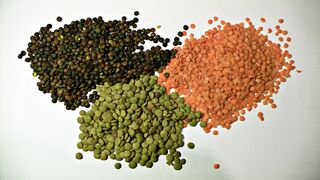 assorted lentils (Lens culinaris)
 -
 peas (pisum sativum)
 -
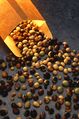 soybean (Glycine max)


Related pages[edit]
See Also[edit]
Edible plants include:
- List of culinary fruits
- List of culinary herbs and spices
- List of culinary nuts
- List of edible cacti
- List of edible flowers
- List of edible seeds
- List of forageable plants (edible plants commonly found in the wild)
- List of leaf vegetables
- List of root vegetables
- List of vegetables
- Edible seaweed


Medical Disclaimer: WikiMD is for informational purposes only and is not a substitute for professional medical advice. Content may be inaccurate or outdated and should not be used for diagnosis or treatment. Always consult your healthcare provider for medical decisions. Verify information with trusted sources such as CDC.gov and NIH.gov. By using this site, you agree that WikiMD is not liable for any outcomes related to its content. See full disclaimer.
Credits:Most images are courtesy of Wikimedia commons, and templates, categories Wikipedia, licensed under CC BY SA or similar.
Translate page: - East Asian
中文,
日本,
한국어,
South Asian
हिन्दी,
தமிழ்,
తెలుగు,
Urdu,
ಕನ್ನಡ,
Southeast Asian
Indonesian,
Vietnamese,
Thai,
မြန်မာဘာသာ,
বাংলা
European
español,
Deutsch,
français,
Greek,
português do Brasil,
polski,
română,
русский,
Nederlands,
norsk,
svenska,
suomi,
Italian
Middle Eastern & African
عربى,
Turkish,
Persian,
Hebrew,
Afrikaans,
isiZulu,
Kiswahili,
Other
Bulgarian,
Hungarian,
Czech,
Swedish,
മലയാളം,
मराठी,
ਪੰਜਾਬੀ,
ગુજરાતી,
Portuguese,
Ukrainian

