Development and discovery of SSRI drugs
Selective Serotonin Reuptake Inhibitors (SSRIs) are a class of drugs primarily used in the treatment of major depressive disorder and anxiety disorders, among other psychological conditions. The development and discovery of SSRIs marked a significant advancement in the field of psychopharmacology, offering a new therapeutic option with a different mechanism of action and side effect profile compared to earlier antidepressants.
History[edit]
The journey towards the discovery of SSRIs began in the 1950s and 1960s with the understanding of the role of neurotransmitters in mood regulation. Researchers identified that certain chemicals in the brain, such as serotonin, played a crucial role in mood balance. This led to the hypothesis that increasing serotonin levels could have antidepressant effects.
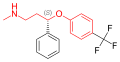
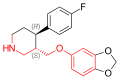
The first SSRI, fluoxetine (Prozac), was discovered in 1972 by scientists at Eli Lilly and Company. It was approved by the Food and Drug Administration (FDA) in 1987. Fluoxetine's development was based on the theory that enhancing serotonin neurotransmission would be an effective treatment for depression. Following fluoxetine, several other SSRIs were developed and approved, including sertraline (Zoloft), paroxetine (Paxil), fluvoxamine (Luvox), citalopram (Celexa), and escitalopram (Lexapro).
Mechanism of Action[edit]
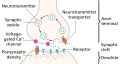
SSRIs function by inhibiting the reuptake of serotonin into the presynaptic neuron, increasing the availability of serotonin in the synaptic cleft, and enhancing neurotransmission. This action is believed to contribute to SSRIs' antidepressant and anxiolytic effects.
Clinical Use[edit]
SSRIs are used to treat a variety of conditions, including:
- Major depressive disorder
- Generalized anxiety disorder
- Panic disorder
- Obsessive-compulsive disorder
- Social anxiety disorder
- Post-traumatic stress disorder
Advantages and Side Effects[edit]
Compared to older antidepressants such as tricyclic antidepressants (TCAs) and monoamine oxidase inhibitors (MAOIs), SSRIs generally have a more favorable side effect profile. Common side effects include nausea, headache, sexual dysfunction, and insomnia. However, they are considered safer, especially in overdose, than their predecessors.
Controversies and Considerations[edit]
Despite their benefits, SSRIs have been subject to controversy, particularly regarding their use in children and adolescents due to the increased risk of suicidal thoughts and behaviors in this population. The FDA requires a black box warning on all antidepressant medications, including SSRIs, to alert healthcare providers and patients to this risk.
Conclusion[edit]
The development and discovery of SSRIs have significantly impacted the treatment of depression and anxiety, offering a safer and often more tolerable option for many patients. Ongoing research continues to explore the full potential of SSRIs, including their use in treating additional disorders and understanding their long-term effects.
 | This medical article is a stub. You can help WikiMD by expanding the page. |
-
 Development and discovery of SSRI drugs
 -
 Development and discovery of SSRI drugs
 -
 Development and discovery of SSRI drugs
 -
 Development and discovery of SSRI drugs
 -
 Development and discovery of SSRI drugs
 -
 Development and discovery of SSRI drugs
 -
 Development and discovery of SSRI drugs
 -
 Development and discovery of SSRI drugs
 -
Development and discovery of SSRI drugs
-
 Development and discovery of SSRI drugs
 -
 Development and discovery of SSRI drugs
 -
 Development and discovery of SSRI drugs


-fluoxetine.svg)


Sponsored Health Resource

W8MD Weight Loss, Sleep & MedSpa
Looking for physician-supervised weight loss, semaglutide, tirzepatide, or GLP-1 receptor agonist options? W8MD helps eligible patients in New York City, Brooklyn, New Jersey, Connecticut, Pennsylvania, Delaware, and greater Philadelphia with medical weight loss, sleep medicine, and long-term maintenance support.
GLP-1 specials: Affordable GLP-1 injections NYC and Philadelphia starting from $29.99/week and up for semaglutide with insurance accepted for qualifying visits, and $45/week and up for tirzepatide with insurance accepted for qualifying visits. Self-pay options start from $59.99/week and up for semaglutide and $69.99/week and up for tirzepatide.
Medical weight loss NYC | Affordable GLP-1 injections NYC | Budget GLP-1 weight loss shots Philadelphia | New Jersey medical weight loss | NYC medical weight loss | Philadelphia medical weight loss | Sleep clinic NYC | W8MD's Philadelphia GLP-1 doctor | Weight loss prescriptions NYC
Book a W8MD appointment · View GLP-1 specials
Paid promotional message. Eligibility, pricing, insurance coverage, medication availability, and results vary. Medical evaluation required.

Medical Disclaimer: WikiMD is for informational purposes only and is not a substitute for professional medical advice. Content may be inaccurate or outdated and should not be used for diagnosis or treatment. Always consult your healthcare provider for medical decisions. Verify information with trusted sources such as CDC.gov and NIH.gov. By using this site, you agree that WikiMD is not liable for any outcomes related to its content. See full disclaimer.
Credits:Most images are courtesy of Wikimedia commons, and templates, categories Wikipedia, licensed under CC BY SA or similar.
Translate page: - East Asian
中文,
日本,
한국어,
South Asian
हिन्दी,
தமிழ்,
తెలుగు,
Urdu,
ಕನ್ನಡ,
Southeast Asian
Indonesian,
Vietnamese,
Thai,
မြန်မာဘာသာ,
বাংলা
European
español,
Deutsch,
français,
Greek,
português do Brasil,
polski,
română,
русский,
Nederlands,
norsk,
svenska,
suomi,
Italian
Middle Eastern & African
عربى,
Turkish,
Persian,
Hebrew,
Afrikaans,
isiZulu,
Kiswahili,
Other
Bulgarian,
Hungarian,
Czech,
Swedish,
മലയാളം,
मराठी,
ਪੰਜਾਬੀ,
ગુજરાતી,
Portuguese,
Ukrainian


