Desmidiales
Desmidiales is an order of green algae, belonging to the class Zygnematophyceae. These unicellular algae are distinguished by their unique cell morphology, typically divided into two symmetrical halves, and are found predominantly in freshwater environments. Desmidiales are of significant interest in the study of aquatic ecosystems due to their sensitivity to changes in water quality and their role in aquatic food webs.
Characteristics[edit]
Desmidiales exhibit a wide range of cell shapes, often described as ornate and symmetrical. Each cell is divided into two compartments by a narrow isthmus, with each half containing a single chloroplast. The chloroplasts are elaborate, often lobed or spiraled, and contain pyrenoids that are involved in the storage of starch. The cell wall of Desmidiales is uniquely composed of two overlapping halves that fit together like a box and its lid. This feature, along with their distinctive shapes, makes them easily recognizable under the microscope.
Habitat and Distribution[edit]
Desmidiales are primarily found in freshwater habitats, such as ponds, lakes, and wetlands. They thrive in clean, acidic to neutral waters and are often used as bioindicators of water quality. The distribution of Desmidiales is global, with species richness highest in temperate regions. However, certain species are adapted to specific environmental conditions, such as highly acidic bogs or alkaline lakes, demonstrating the group's ecological diversity.
Reproduction[edit]
Reproduction in Desmidiales can occur both sexually and asexually. Asexual reproduction is the most common and occurs through simple cell division, where the cell splits into two halves, and each half regenerates the missing part. Sexual reproduction involves a process called conjugation, where two cells align side by side and form a conjugation tube through which genetic material is exchanged. Following conjugation, zygospores are formed, which can withstand adverse environmental conditions until favorable conditions return.
Ecological Role[edit]
Desmidiales play a crucial role in aquatic ecosystems. They are primary producers, converting carbon dioxide into organic matter through photosynthesis and thus supporting higher trophic levels. Additionally, their sensitivity to changes in water chemistry, particularly nutrient levels and pH, makes them valuable indicators of water quality and ecosystem health.
Conservation[edit]
The conservation of Desmidiales is closely linked to the preservation of freshwater ecosystems. Pollution, eutrophication, and habitat destruction pose significant threats to Desmidiales populations. Monitoring Desmidiales diversity and abundance can be an effective tool in assessing the impact of environmental changes and guiding conservation efforts.
Research and Importance[edit]
Research on Desmidiales contributes to our understanding of freshwater biodiversity, ecosystem dynamics, and the impacts of environmental change. Their unique cell structures also make them subjects of interest in cell biology and evolutionary studies. Furthermore, Desmidiales have potential applications in biotechnology, including biofuel production and bioremediation.
 | This alga-related article is a stub. You can help WikiMD by expanding the page. |
See Also[edit]
References[edit]
<references/>
External Links[edit]
0
| Freshwater ecosystems | ||||||||||
|---|---|---|---|---|---|---|---|---|---|---|
This freshwater ecosystems-related article is a stub.
|
| Bioindicators | ||||||||||
|---|---|---|---|---|---|---|---|---|---|---|
This bioindicator related article is a stub.
|
-
 Micrasterias radiata
 -
 Cosmarium
 -
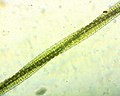 Desmidium swartzii
 -
 Desmidiales


Medical Disclaimer: WikiMD is for informational purposes only and is not a substitute for professional medical advice. Content may be inaccurate or outdated and should not be used for diagnosis or treatment. Always consult your healthcare provider for medical decisions. Verify information with trusted sources such as CDC.gov and NIH.gov. By using this site, you agree that WikiMD is not liable for any outcomes related to its content. See full disclaimer.
Credits:Most images are courtesy of Wikimedia commons, and templates, categories Wikipedia, licensed under CC BY SA or similar.
Translate this page: - East Asian
中文,
日本,
한국어,
South Asian
हिन्दी,
தமிழ்,
తెలుగు,
Urdu,
ಕನ್ನಡ,
Southeast Asian
Indonesian,
Vietnamese,
Thai,
မြန်မာဘာသာ,
বাংলা
European
español,
Deutsch,
français,
Greek,
português do Brasil,
polski,
română,
русский,
Nederlands,
norsk,
svenska,
suomi,
Italian
Middle Eastern & African
عربى,
Turkish,
Persian,
Hebrew,
Afrikaans,
isiZulu,
Kiswahili,
Other
Bulgarian,
Hungarian,
Czech,
Swedish,
മലയാളം,
मराठी,
ਪੰਜਾਬੀ,
ગુજરાતી,
Portuguese,
Ukrainian
