Dementia with Lewy bodies
| Dementia with Lewy bodies | |
|---|---|
| Lewy body in the substantia nigra from a person with Parkinson's disease.jpg | |
| Microscopic image of a Lewy body (arrowhead) in a neuron of the substantia nigra; scale bar=20 microns (0.02mm) | |
| Synonyms | Diffuse Lewy body disease, dementia due to Lewy body disease
|
| Specialty | Neurology, psychiatry |
| Symptoms | Dementia, abnormal behavior during REM sleep, fluctuations in alertness, visual hallucinations, parkinsonism
|
| Usual onset | After the age of 50, median 76 |
| Duration | Long term
|
| Causes | Unknown
|
| Diagnosis | Based on symptoms and biomarkers |
| Differential diagnosis | Alzheimer's, Parkinson's disease dementia, certain mental illnesses, vascular dementia
|
| Medication | Donepezil, rivastigmine and memantine; melatonin |
| Prognosis | Variable; average survival 4 years from diagnosis |
| Frequency | About 0.4% of persons older than 65
|
Dementia with Lewy bodies (DLB) is a type of dementia that is associated with the build-up of a protein called alpha-synuclein in the brain. It is the third most common cause of dementia, after Alzheimer's disease and vascular dementia, accounting for 10-15% of all cases.
Signs and Symptoms[edit]
Individuals with DLB may exhibit a range of symptoms, including:
Cognitive impairment Fluctuating attention Recurrent visual hallucinations Parkinsonism DLB frequently presents with significant neuropsychiatric symptoms, including hallucinations and delusions. In some cases, these symptoms may precede the onset of cognitive decline.
Causes[edit]
The exact cause of DLB is unknown. The condition is characterized by the presence of Lewy bodies, which are abnormal aggregates of protein that develop inside nerve cells, impairing their function.
Diagnosis[edit]
The diagnosis of DLB is often challenging, as it shares symptoms with several other conditions, including Alzheimer's disease and Parkinson's disease. Diagnosis typically involves a thorough medical history, physical examination, cognitive testing, and brain scans.
Treatment[edit]
There is currently no cure for DLB. Treatment focuses on managing symptoms and may include medications such as cholinesterase inhibitors, antipsychotics, and levodopa.
Prognosis[edit]
The prognosis for DLB is poor, with a life expectancy of 5-8 years after the onset of symptoms.
Epidemiology[edit]
DLB is the third most common cause of dementia, accounting for 10-15% of all cases. The condition most commonly affects individuals between the ages of 50 and 85.
See Also[edit]
References[edit]
<references>
External links[edit]
Dementia with Lewy bodies at Curlie
Dementia with Lewy bodies at Curlie
Lewy Body Dementia Association

This WikiMD article can only be edited by registered and verified editors. You can log in or register.
-
 Dementia with Lewy bodies
 -
 Dementia with Lewy bodies
 -
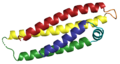 Dementia with Lewy bodies
 -
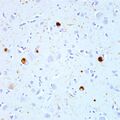 Dementia with Lewy bodies
 -
 Dementia with Lewy bodies
 -
 Dementia with Lewy bodies
 -
 Dementia with Lewy bodies
 -
 Dementia with Lewy bodies
 -
 Dementia with Lewy bodies
 -
 Dementia with Lewy bodies

.jpg)

_of_alpha-synuclein_in_Lewy_Bodies_and_Lewy_Neurites_in_the_neocortex_of_a_patient_with_Lewy_Body_Disease.jpg)


Sponsored Health Resource

W8MD Weight Loss, Sleep & MedSpa
Looking for physician-supervised weight loss, semaglutide, tirzepatide, or GLP-1 receptor agonist options? W8MD helps eligible patients in New York City, Brooklyn, New Jersey, Connecticut, Pennsylvania, Delaware, and greater Philadelphia with medical weight loss, sleep medicine, and long-term maintenance support.
GLP-1 specials: Affordable GLP-1 injections NYC and Philadelphia starting from $29.99/week and up for semaglutide with insurance accepted for qualifying visits, and $45/week and up for tirzepatide with insurance accepted for qualifying visits. Self-pay options start from $59.99/week and up for semaglutide and $69.99/week and up for tirzepatide.
Medical weight loss NYC | Affordable GLP-1 injections NYC | Budget GLP-1 weight loss shots Philadelphia | New Jersey medical weight loss | NYC medical weight loss | Philadelphia medical weight loss | Sleep clinic NYC | W8MD's Philadelphia GLP-1 doctor | Weight loss prescriptions NYC
Book a W8MD appointment · View GLP-1 specials
Paid promotional message. Eligibility, pricing, insurance coverage, medication availability, and results vary. Medical evaluation required.

Medical Disclaimer: WikiMD is for informational purposes only and is not a substitute for professional medical advice. Content may be inaccurate or outdated and should not be used for diagnosis or treatment. Always consult your healthcare provider for medical decisions. Verify information with trusted sources such as CDC.gov and NIH.gov. By using this site, you agree that WikiMD is not liable for any outcomes related to its content. See full disclaimer.
Credits:Most images are courtesy of Wikimedia commons, and templates, categories Wikipedia, licensed under CC BY SA or similar.
Translate page: - East Asian
中文,
日本,
한국어,
South Asian
हिन्दी,
தமிழ்,
తెలుగు,
Urdu,
ಕನ್ನಡ,
Southeast Asian
Indonesian,
Vietnamese,
Thai,
မြန်မာဘာသာ,
বাংলা
European
español,
Deutsch,
français,
Greek,
português do Brasil,
polski,
română,
русский,
Nederlands,
norsk,
svenska,
suomi,
Italian
Middle Eastern & African
عربى,
Turkish,
Persian,
Hebrew,
Afrikaans,
isiZulu,
Kiswahili,
Other
Bulgarian,
Hungarian,
Czech,
Swedish,
മലയാളം,
मराठी,
ਪੰਜਾਬੀ,
ગુજરાતી,
Portuguese,
Ukrainian

