Chlorosoman
Chlorosoman[edit]
Chlorosoman, also known as O-pinacolyl methylphosphonochloridate, is a highly toxic organophosphorus compound. It is a chemical warfare agent classified as a nerve agent, similar in structure and function to soman (GD). Chlorosoman is part of the G-series of nerve agents, which were originally developed in Germany during World War II.
Chemical Structure and Properties[edit]
Chlorosoman is an organophosphate compound with the chemical formula C7H16ClO2P. It is a colorless liquid at room temperature and has a faint fruity odor. The presence of the chlorine atom in its structure differentiates it from soman, which contains a fluorine atom instead.
Chemical Formula[edit]
- Molecular formula: C7H16ClO2P
- Molar mass: 198.63 g/mol
Mechanism of Action[edit]
Chlorosoman, like other nerve agents, exerts its toxic effects by inhibiting the enzyme acetylcholinesterase (AChE). This enzyme is responsible for breaking down the neurotransmitter acetylcholine in the synaptic cleft. Inhibition of AChE leads to an accumulation of acetylcholine, resulting in continuous stimulation of muscles, glands, and central nervous system structures.
Symptoms of Exposure[edit]
Exposure to chlorosoman can cause a range of symptoms due to overstimulation of the nervous system. These symptoms include:
- Miosis (constriction of the pupils)
- Rhinorrhea (runny nose)
- Dyspnea (difficulty breathing)
- Muscle twitching and weakness
- Convulsions
- Loss of consciousness
- Respiratory failure
Treatment[edit]
The treatment for chlorosoman poisoning involves the administration of atropine, an anticholinergic drug that blocks the effects of acetylcholine at muscarinic receptors. Additionally, pralidoxime (2-PAM) can be used to reactivate acetylcholinesterase if administered soon after exposure. Supportive care, including mechanical ventilation, may be necessary in severe cases.
Safety and Handling[edit]
Due to its extreme toxicity, chlorosoman is classified as a Schedule 1 substance under the Chemical Weapons Convention (CWC). Its production, stockpiling, and use are strictly controlled and monitored by international agreements.
See Also[edit]
References[edit]
- Frederick R.,
 Medical Aspects of Chemical and Biological Warfare,

 Office of The Surgeon General, Department of the Army, United States of America,
 1997,


 ISBN 978-0160451358,
- Eyer, P.."Neuropsychopathological changes by organophosphorus compounds—a review".Human & Experimental Toxicology.1997;16(9)
- 473–481.doi:10.1177/096032719701600901.
Chlorosoman[edit]
-
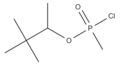 Chlorosoman
 -
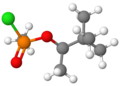 Chlorosoman 3D


Medical Disclaimer: WikiMD is for informational purposes only and is not a substitute for professional medical advice. Content may be inaccurate or outdated and should not be used for diagnosis or treatment. Always consult your healthcare provider for medical decisions. Verify information with trusted sources such as CDC.gov and NIH.gov. By using this site, you agree that WikiMD is not liable for any outcomes related to its content. See full disclaimer.
Credits:Most images are courtesy of Wikimedia commons, and templates, categories Wikipedia, licensed under CC BY SA or similar.
Translate page: - East Asian
中文,
日本,
한국어,
South Asian
हिन्दी,
தமிழ்,
తెలుగు,
Urdu,
ಕನ್ನಡ,
Southeast Asian
Indonesian,
Vietnamese,
Thai,
မြန်မာဘာသာ,
বাংলা
European
español,
Deutsch,
français,
Greek,
português do Brasil,
polski,
română,
русский,
Nederlands,
norsk,
svenska,
suomi,
Italian
Middle Eastern & African
عربى,
Turkish,
Persian,
Hebrew,
Afrikaans,
isiZulu,
Kiswahili,
Other
Bulgarian,
Hungarian,
Czech,
Swedish,
മലയാളം,
मराठी,
ਪੰਜਾਬੀ,
ગુજરાતી,
Portuguese,
Ukrainian

