Cervical fracture

Editor-In-Chief: Prab R Tumpati, MD
Obesity, Sleep & Internal medicine
Founder, WikiMD Wellnesspedia &
W8MD's weight loss doctor NYC
Philadelphia GLP-1 weight loss and GLP-1 clinic NYC
| Cervical fracture | |
|---|---|
| File:PdensfracCT.png | |
| Synonyms | Broken neck |
| Pronounce | N/A |
| Specialty | Orthopedics, Neurosurgery |
| Symptoms | Neck pain, neurological deficits, muscle weakness |
| Complications | Spinal cord injury, paralysis, death |
| Onset | Sudden |
| Duration | Varies |
| Types | N/A |
| Causes | Trauma, falls, motor vehicle accidents, sports injuries |
| Risks | Osteoporosis, high-impact sports, elderly age |
| Diagnosis | Physical examination, X-ray, CT scan, MRI |
| Differential diagnosis | Cervical strain, cervical spondylosis, herniated disc |
| Prevention | N/A |
| Treatment | Immobilization, surgery, physical therapy |
| Medication | N/A |
| Prognosis | Varies depending on severity |
| Frequency | Common in trauma cases |
| Deaths | N/A |
A Cervical Fracture is a break in one or more of the seven cervical vertebrae (the bones in the neck). This type of fracture is typically caused by high-energy trauma, such as car accidents or falls.
Causes[edit]
The most common causes of a cervical fracture include:
Symptoms[edit]
Symptoms of a cervical fracture can vary greatly depending on the severity of the injury, but may include:
Diagnosis[edit]
Diagnosis of a cervical fracture typically involves a physical examination and imaging tests, such as:
Treatment[edit]
Treatment for a cervical fracture depends on the severity of the injury, but may include:
Prognosis[edit]
The prognosis for a cervical fracture depends on the severity of the injury and the patient's overall health. Some people may recover fully, while others may have long-term complications.
Gallery[edit]
-
Cervical fracture
-
Cervical fracture dislocation C6-C7
-
Teardrop fracture C3 CT marked
-
Teardrop fracture C3
-
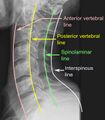 X-ray of vertebral lines
 -
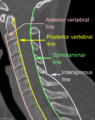 Vertebral lines
 -
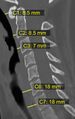 CT of prevertebral space


See Also[edit]


Medical Disclaimer: WikiMD is for informational purposes only and is not a substitute for professional medical advice. Content may be inaccurate or outdated and should not be used for diagnosis or treatment. Always consult your healthcare provider for medical decisions. Verify information with trusted sources such as CDC.gov and NIH.gov. By using this site, you agree that WikiMD is not liable for any outcomes related to its content. See full disclaimer.
Credits:Most images are courtesy of Wikimedia commons, and templates, categories Wikipedia, licensed under CC BY SA or similar.
Translate page: - East Asian
中文,
日本,
한국어,
South Asian
हिन्दी,
தமிழ்,
తెలుగు,
Urdu,
ಕನ್ನಡ,
Southeast Asian
Indonesian,
Vietnamese,
Thai,
မြန်မာဘာသာ,
বাংলা
European
español,
Deutsch,
français,
Greek,
português do Brasil,
polski,
română,
русский,
Nederlands,
norsk,
svenska,
suomi,
Italian
Middle Eastern & African
عربى,
Turkish,
Persian,
Hebrew,
Afrikaans,
isiZulu,
Kiswahili,
Other
Bulgarian,
Hungarian,
Czech,
Swedish,
മലയാളം,
मराठी,
ਪੰਜਾਬੀ,
ગુજરાતી,
Portuguese,
Ukrainian


