Caspase 3
Caspase 3 is a member of the caspase family, a group of enzymes that play essential roles in apoptosis, necrosis, and inflammation. Caspase 3 is a crucial mediator of apoptosis, or programmed cell death, and is therefore a key factor in the maintenance of cellular homeostasis and the prevention of disease.
Structure[edit]
Caspase 3 is synthesized as an inactive enzyme precursor, or zymogen, that is activated through a process of proteolytic cleavage. The active enzyme is a heterotetramer, composed of two large and two small subunits. The active sites of caspase 3 are located within the large subunits.
Function[edit]
Caspase 3 is activated during the early stages of apoptosis and is responsible for the cleavage of several key proteins, leading to the morphological and biochemical changes associated with cell death. These include the cleavage of poly (ADP-ribose) polymerase (PARP), a DNA repair enzyme, and the inactivation of DNA fragmentation factor (DFF), leading to DNA fragmentation.
Role in Disease[edit]
Given its central role in apoptosis, dysregulation of caspase 3 activity has been implicated in a number of diseases. Overactivation of caspase 3 can lead to excessive cell death, contributing to conditions such as neurodegenerative diseases and ischemic injury. Conversely, reduced caspase 3 activity can result in insufficient cell death, contributing to the development of cancer.
Therapeutic Potential[edit]
Due to its role in disease, caspase 3 is a potential target for therapeutic intervention. Inhibitors of caspase 3 may be beneficial in conditions characterized by excessive cell death, while activators of caspase 3 may be useful in conditions characterized by insufficient cell death, such as cancer.
| Enzymes | ||||||||||
|---|---|---|---|---|---|---|---|---|---|---|
|
 | This cell biology article is a stub. You can help WikiMD by expanding the page. |
| Apoptosis | ||||||||||
|---|---|---|---|---|---|---|---|---|---|---|
This apoptosis-related article is a stub.
|
 | This medical article is a stub. You can help WikiMD by expanding the page. |
-
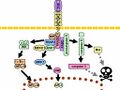 TNF signaling pathway
 -
 Extrinsic and intrinsic pathways to caspase-3 activation
 -
 Caspase 3 subunits
 -
 Caspase 3 active site


Medical Disclaimer: WikiMD is for informational purposes only and is not a substitute for professional medical advice. Content may be inaccurate or outdated and should not be used for diagnosis or treatment. Always consult your healthcare provider for medical decisions. Verify information with trusted sources such as CDC.gov and NIH.gov. By using this site, you agree that WikiMD is not liable for any outcomes related to its content. See full disclaimer.
Credits:Most images are courtesy of Wikimedia commons, and templates, categories Wikipedia, licensed under CC BY SA or similar.
Translate page: - East Asian
中文,
日本,
한국어,
South Asian
हिन्दी,
தமிழ்,
తెలుగు,
Urdu,
ಕನ್ನಡ,
Southeast Asian
Indonesian,
Vietnamese,
Thai,
မြန်မာဘာသာ,
বাংলা
European
español,
Deutsch,
français,
Greek,
português do Brasil,
polski,
română,
русский,
Nederlands,
norsk,
svenska,
suomi,
Italian
Middle Eastern & African
عربى,
Turkish,
Persian,
Hebrew,
Afrikaans,
isiZulu,
Kiswahili,
Other
Bulgarian,
Hungarian,
Czech,
Swedish,
മലയാളം,
मराठी,
ਪੰਜਾਬੀ,
ગુજરાતી,
Portuguese,
Ukrainian

