Biophysical profile
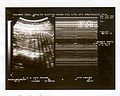
Biophysical Profile is a prenatal ultrasound evaluation used to check on a baby's well-being. The test is usually performed in the third trimester of pregnancy. It measures the health of the baby by observing five specific body functions. These include fetal movement, fetal tone, fetal breathing, amniotic fluid volume, and fetal heart rate.
Overview[edit]
The Biophysical Profile (BPP) is a combination of tests that assess the health of a fetus during pregnancy. It is typically performed in the third trimester and can provide valuable information about the baby's well-being. The BPP includes an Ultrasound and a Non-stress test (NST).
Components of the Biophysical Profile[edit]
The BPP evaluates five areas of fetal health:
- Fetal movement: The number and type of movements the baby makes in a certain period are recorded.
- Fetal tone: This refers to the baby's muscle tone. It is evaluated by observing if the baby can move its limbs in and out of extension.
- Fetal breathing: The baby's practice of breathing movements is observed.
- Amniotic fluid volume: The amount of amniotic fluid surrounding the baby is measured.
- Fetal heart rate: This is evaluated using a non-stress test, which measures the baby's heart rate in response to its own movements.
Each of these components is scored, with a maximum total score of 10. A score of 8 to 10 is generally considered reassuring, while a lower score may indicate the need for further testing or intervention.
When is a Biophysical Profile Performed?[edit]
A BPP may be performed for various reasons, including:
- If the mother has a high-risk pregnancy
- If the pregnancy has gone past the due date
- If the mother has a medical condition such as diabetes or high blood pressure
- If there is a concern about the baby's growth or movements
Risks and Limitations[edit]
The BPP is generally considered safe for both the mother and the baby. However, like any test, it has limitations. For example, a low score does not always mean there is a problem, and a high score does not guarantee that the baby is healthy. The BPP is just one tool that doctors use to assess the well-being of the baby.
See Also[edit]
References[edit]

This WikiMD article can only be edited by registered and verified editors. You can log in or register.
-
 Biophysical profile

Advertise on WikiMD — 81,000+ full articles, ~900,000 total pages, ~250 million page views. Global reach, limited time promotional rates from $1/page/day. Learn more · View stats

Translate page: - East Asian
中文,
日本,
한국어,
South Asian
हिन्दी,
தமிழ்,
తెలుగు,
Urdu,
ಕನ್ನಡ,
Southeast Asian
Indonesian,
Vietnamese,
Thai,
မြန်မာဘာသာ,
বাংলা
European
español,
Deutsch,
français,
Greek,
português do Brasil,
polski,
română,
русский,
Nederlands,
norsk,
svenska,
suomi,
Italian
Middle Eastern & African
عربى,
Turkish,
Persian,
Hebrew,
Afrikaans,
isiZulu,
Kiswahili,
Other
Bulgarian,
Hungarian,
Czech,
Swedish,
മലയാളം,
मराठी,
ਪੰਜਾਬੀ,
ગુજરાતી,
Portuguese,
Ukrainian
About WikiMD • Contact • Disclaimer • Privacy • Copyright • Site statistics
Some content and images may originate from Wikimedia Commons or Wikipedia and remain subject to their stated licenses. Unless otherwise noted, eligible WikiMD content is available under CC BY-SA 4.0.
WikiMD Wellnesspedia — Free health & wellness information for patients, students, and health professionals.

