Beta oxidation
Beta oxidation is a metabolic process involving multiple steps by which fatty acid molecules are broken down within the mitochondria in eukaryotic cells, and in the cytoplasm of prokaryotic cells. This process generates acetyl-CoA, which enters the citric acid cycle, and NADH and FADH2, which are co-enzymes used in the electron transport chain. It is named 'beta oxidation' because the beta carbon of the fatty acid undergoes oxidation to a carbonyl group.
Process[edit]
Beta oxidation consists of four steps: dehydrogenation, hydration, another dehydrogenation, and finally thiolytic cleavage. Each step is facilitated by a specific enzyme.
- Dehydrogenation: The first step in beta oxidation is the oxidation of the fatty acid by acyl-CoA dehydrogenase to create a trans double bond between the alpha and beta carbons. This process generates one molecule of FADH2.
- Hydration: In the second step, water is added to the fatty acid by enoyl-CoA hydratase to form a beta-hydroxy group. This step is an example of stereospecificity, as only the L isomer of the molecule is produced.
- Second Dehydrogenation: The third step is another oxidation, this time of the beta-hydroxy group to a keto group. This step is catalyzed by hydroxyacyl-CoA dehydrogenase, and generates one molecule of NADH.
- Thiolytic Cleavage: The final step is the cleavage of the beta-ketoacyl CoA by thiolase, releasing an acetyl-CoA molecule and a fatty acid chain shortened by two carbon atoms.
Regulation[edit]
Beta oxidation is regulated by a number of factors, including the availability of fatty acids, the levels of malonyl-CoA, and the energy status of the cell. The rate of beta oxidation can be increased by exercise, fasting, and low-carbohydrate diets.
Clinical Significance[edit]
Defects in beta oxidation can lead to a number of metabolic disorders, including medium-chain acyl-CoA dehydrogenase deficiency (MCADD), long-chain 3-hydroxyacyl-CoA dehydrogenase deficiency (LCHADD), and carnitine deficiency. These conditions can lead to symptoms such as hypoglycemia, lethargy, and muscle weakness, and can be life-threatening if not properly managed.
See Also[edit]
.svg) | This biochemistry article is a stub. You can help WikiMD by expanding the page. |
Beta_oxidation[edit]
-
 Metabolism1
 -
 Metabolism2
 -
 Metabolism3
 -
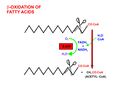 Metabolism4
 -
 Beta oxidation Anindita
 -
 Beta-Oxidation1
 -
 Beta-Oxidation2
 -
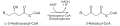 Beta-Oxidation3
 -
 Beta-Oxidation4
 -
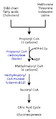 Odd-chain FA oxydation
 -
 Linoleic acid beta oxidation
 -
 Steps in b-oxidation of odd-numbered saturated fatty acid


Sponsored Health Resource

W8MD Weight Loss, Sleep & MedSpa
Looking for physician-supervised weight loss, semaglutide, tirzepatide, or GLP-1 receptor agonist options? W8MD helps eligible patients in New York City, Brooklyn, New Jersey, Connecticut, Pennsylvania, Delaware, and greater Philadelphia with medical weight loss, sleep medicine, and long-term maintenance support.
GLP-1 specials: Affordable GLP-1 injections NYC and Philadelphia starting from $29.99/week and up for semaglutide with insurance accepted for qualifying visits, and $45/week and up for tirzepatide with insurance accepted for qualifying visits. Self-pay options start from $59.99/week and up for semaglutide and $69.99/week and up for tirzepatide.
Medical weight loss NYC | Affordable GLP-1 injections NYC | Budget GLP-1 weight loss shots Philadelphia | New Jersey medical weight loss | NYC medical weight loss | Philadelphia medical weight loss | Sleep clinic NYC | W8MD's Philadelphia GLP-1 doctor | Weight loss prescriptions NYC
Book a W8MD appointment · View GLP-1 specials
Paid promotional message. Eligibility, pricing, insurance coverage, medication availability, and results vary. Medical evaluation required.

Medical Disclaimer: WikiMD is for informational purposes only and is not a substitute for professional medical advice. Content may be inaccurate or outdated and should not be used for diagnosis or treatment. Always consult your healthcare provider for medical decisions. Verify information with trusted sources such as CDC.gov and NIH.gov. By using this site, you agree that WikiMD is not liable for any outcomes related to its content. See full disclaimer.
Credits:Most images are courtesy of Wikimedia commons, and templates, categories Wikipedia, licensed under CC BY SA or similar.
Translate page: - East Asian
中文,
日本,
한국어,
South Asian
हिन्दी,
தமிழ்,
తెలుగు,
Urdu,
ಕನ್ನಡ,
Southeast Asian
Indonesian,
Vietnamese,
Thai,
မြန်မာဘာသာ,
বাংলা
European
español,
Deutsch,
français,
Greek,
português do Brasil,
polski,
română,
русский,
Nederlands,
norsk,
svenska,
suomi,
Italian
Middle Eastern & African
عربى,
Turkish,
Persian,
Hebrew,
Afrikaans,
isiZulu,
Kiswahili,
Other
Bulgarian,
Hungarian,
Czech,
Swedish,
മലയാളം,
मराठी,
ਪੰਜਾਬੀ,
ગુજરાતી,
Portuguese,
Ukrainian

