Acetyl-CoA


Acetyl-CoA is a central metabolite in biochemistry, playing a critical role in the metabolism of carbohydrates, fats, and proteins. It is a key molecule in the citric acid cycle (also known as the Krebs cycle) and is involved in the synthesis and oxidation of fatty acids.
Structure[edit]
Acetyl-CoA is a complex molecule composed of an acetyl group attached to coenzyme A. The acetyl group is derived from pyruvate, which is the end product of glycolysis. Coenzyme A is a large molecule that contains a pantothenic acid moiety, a cysteamine group, and a 3'-phosphoadenosine diphosphate.
Function[edit]
Acetyl-CoA serves as a substrate for several important biochemical pathways:
- Citric Acid Cycle: Acetyl-CoA enters the citric acid cycle by combining with oxaloacetate to form citrate, which is then metabolized to produce ATP, NADH, and FADH2.
- Fatty Acid Synthesis: Acetyl-CoA is a precursor for the synthesis of fatty acids. It is converted to malonyl-CoA by the enzyme acetyl-CoA carboxylase, which is the first step in fatty acid biosynthesis.
- Ketone Body Production: In the liver, acetyl-CoA can be converted into ketone bodies during periods of low carbohydrate intake or prolonged exercise.
- Cholesterol Synthesis: Acetyl-CoA is also a precursor for the synthesis of cholesterol and other isoprenoids.
Metabolic Pathways[edit]
Pyruvate Dehydrogenase Complex[edit]

The pyruvate dehydrogenase complex is a multi-enzyme complex that converts pyruvate into acetyl-CoA. This reaction links glycolysis to the citric acid cycle and is a key regulatory point in cellular metabolism.
Beta-Oxidation[edit]
In the process of beta-oxidation, fatty acids are broken down into acetyl-CoA units, which can then enter the citric acid cycle for energy production.
Amino Acid Catabolism[edit]
Certain amino acids can be converted into acetyl-CoA through various catabolic pathways, contributing to the pool of acetyl-CoA available for energy production and biosynthesis.
Importance in Metabolism[edit]

Acetyl-CoA is a pivotal molecule in metabolism, acting as a crossroads for various metabolic pathways. Its central role in energy production and biosynthesis makes it essential for cellular function and survival.
Related Pages[edit]
Gallery[edit]
-
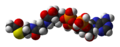 3D van der Waals model of Acetyl-CoA

Acetyl-CoA[edit]
Advertise on WikiMD — 81,000+ full articles, ~900,000 total pages, ~250 million page views. Global reach, limited time promotional rates from $1/page/day. Learn more · View stats


Translate page: - East Asian
中文,
日本,
한국어,
South Asian
हिन्दी,
தமிழ்,
తెలుగు,
Urdu,
ಕನ್ನಡ,
Southeast Asian
Indonesian,
Vietnamese,
Thai,
မြန်မာဘာသာ,
বাংলা
European
español,
Deutsch,
français,
Greek,
português do Brasil,
polski,
română,
русский,
Nederlands,
norsk,
svenska,
suomi,
Italian
Middle Eastern & African
عربى,
Turkish,
Persian,
Hebrew,
Afrikaans,
isiZulu,
Kiswahili,
Other
Bulgarian,
Hungarian,
Czech,
Swedish,
മലയാളം,
मराठी,
ਪੰਜਾਬੀ,
ગુજરાતી,
Portuguese,
Ukrainian
About WikiMD • Contact • Disclaimer • Privacy • Copyright • Site statistics
Some content and images may originate from Wikimedia Commons or Wikipedia and remain subject to their stated licenses. Unless otherwise noted, eligible WikiMD content is available under CC BY-SA 4.0.
WikiMD Wellnesspedia — Free health & wellness information for patients, students, and health professionals.

