Bebinca
Bebinca, also known as bibik or bebinka, is a traditional Indian dessert that is particularly popular in the state of Goa. It is a multi-layered pudding that is often served during special occasions and festivals such as Christmas.
History[edit]
Bebinca's origins can be traced back to the Portuguese colonization of Goa in the 16th century. The dessert is believed to have been created by Catholic nuns in the convents of Old Goa. The name "Bebinca" is thought to be derived from the Portuguese word "bebida", which means "drink", as the dessert was traditionally served with a glass of Port wine.
Preparation[edit]
Bebinca is made from a batter consisting of coconut milk, egg yolks, sugar, and flour. The batter is poured into a pan and baked until it forms a layer. This process is repeated several times until multiple layers are formed. The dessert is then cooled and cut into slices before serving. The number of layers in a Bebinca can vary, but traditionally, it is made with seven layers.
Cultural Significance[edit]
Bebinca is a significant part of Goan culture and is often served at weddings, Christmas, and other festive occasions. It is also a popular souvenir for tourists visiting Goa.
Variations[edit]
There are several variations of Bebinca found in other parts of India and in countries with a significant Goan diaspora. Some variations include adding nutmeg, cardamom, or cinnamon to the batter for additional flavor.
See Also[edit]


-
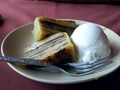 Bebinca


Medical Disclaimer: WikiMD is for informational purposes only and is not a substitute for professional medical advice. Content may be inaccurate or outdated and should not be used for diagnosis or treatment. Always consult your healthcare provider for medical decisions. Verify information with trusted sources such as CDC.gov and NIH.gov. By using this site, you agree that WikiMD is not liable for any outcomes related to its content. See full disclaimer.
Credits:Most images are courtesy of Wikimedia commons, and templates, categories Wikipedia, licensed under CC BY SA or similar.
Translate page: - East Asian
中文,
日本,
한국어,
South Asian
हिन्दी,
தமிழ்,
తెలుగు,
Urdu,
ಕನ್ನಡ,
Southeast Asian
Indonesian,
Vietnamese,
Thai,
မြန်မာဘာသာ,
বাংলা
European
español,
Deutsch,
français,
Greek,
português do Brasil,
polski,
română,
русский,
Nederlands,
norsk,
svenska,
suomi,
Italian
Middle Eastern & African
عربى,
Turkish,
Persian,
Hebrew,
Afrikaans,
isiZulu,
Kiswahili,
Other
Bulgarian,
Hungarian,
Czech,
Swedish,
മലയാളം,
मराठी,
ਪੰਜਾਬੀ,
ગુજરાતી,
Portuguese,
Ukrainian

