Atypical teratoid rhabdoid tumor

Editor-In-Chief: Prab R Tumpati, MD
Obesity, Sleep & Internal medicine
Founder, WikiMD Wellnesspedia &
W8MD's weight loss doctor NYC
Philadelphia GLP-1 weight loss and GLP-1 clinic NYC
| Atypical teratoid rhabdoid tumor | |
|---|---|

| |
| Synonyms | ATRT |
| Pronounce | N/A |
| Specialty | N/A |
| Symptoms | Headache, nausea, vomiting, lethargy, ataxia, cranial nerve palsy |
| Complications | Hydrocephalus, neurological deficits |
| Onset | Typically in children under 3 years old |
| Duration | Variable |
| Types | Central nervous system (CNS) tumors |
| Causes | Genetic mutations, often involving the SMARCB1 gene |
| Risks | Genetic predisposition |
| Diagnosis | MRI, biopsy, histopathology |
| Differential diagnosis | Medulloblastoma, primitive neuroectodermal tumor |
| Prevention | None known |
| Treatment | Surgery, chemotherapy, radiation therapy |
| Medication | Chemotherapeutic agents |
| Prognosis | Poor, with a high rate of recurrence |
| Frequency | Rare, accounting for 1-2% of all pediatric brain tumors |
| Deaths | High mortality rate |
Atypical teratoid rhabdoid tumor (ATRT) is a rare type of cancer that primarily affects children. It is a highly aggressive tumor that typically occurs in the central nervous system, specifically in the cerebellum or brain stem.
Epidemiology[edit]
ATRT is most commonly diagnosed in children under the age of three, but it can occur in older children and adults. It accounts for approximately 1-2% of all pediatric brain tumors.
Pathophysiology[edit]
ATRT is characterized by the presence of rhabdoid cells, which are large cells with eccentric nuclei and abundant cytoplasm. These tumors often contain a mixture of different cell types, including neuronal, epithelial, and mesenchymal cells. The genetic hallmark of ATRT is the deletion or mutation of the SMARCB1 gene, which is involved in chromatin remodeling.
Clinical Presentation[edit]
Patients with ATRT often present with symptoms of increased intracranial pressure, such as headache, nausea, vomiting, and lethargy. Other symptoms can include ataxia, hemiparesis, and cranial nerve palsies.
Diagnosis[edit]
The diagnosis of ATRT is typically made based on the histological appearance of the tumor on biopsy. Magnetic resonance imaging (MRI) is often used to identify the location and extent of the tumor. Genetic testing can also be used to identify the characteristic SMARCB1 mutation.
Treatment[edit]
The treatment of ATRT typically involves a combination of surgery, radiation therapy, and chemotherapy. The goal of treatment is to remove as much of the tumor as possible and to kill any remaining cancer cells. Despite aggressive treatment, the prognosis for patients with ATRT is generally poor, with a median survival of less than one year.
Research[edit]
Research into ATRT is ongoing, with a focus on understanding the genetic basis of the disease and developing new treatments. Clinical trials are currently being conducted to evaluate the effectiveness of various chemotherapy regimens and targeted therapies.
 | This medical article is a stub. You can help WikiMD by expanding the page. |
Atypical_teratoid_rhabdoid_tumor[edit]
-
 Hematoxylin and eosin stain overview of atypical teratoid rhabdoid tumor
 -
 Rhabdoid tumor cell
 -
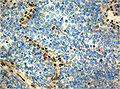 Loss of INI1 expression in atypical teratoid rhabdoid tumor


Medical Disclaimer: WikiMD is for informational purposes only and is not a substitute for professional medical advice. Content may be inaccurate or outdated and should not be used for diagnosis or treatment. Always consult your healthcare provider for medical decisions. Verify information with trusted sources such as CDC.gov and NIH.gov. By using this site, you agree that WikiMD is not liable for any outcomes related to its content. See full disclaimer.
Credits:Most images are courtesy of Wikimedia commons, and templates, categories Wikipedia, licensed under CC BY SA or similar.
Translate page: - East Asian
中文,
日本,
한국어,
South Asian
हिन्दी,
தமிழ்,
తెలుగు,
Urdu,
ಕನ್ನಡ,
Southeast Asian
Indonesian,
Vietnamese,
Thai,
မြန်မာဘာသာ,
বাংলা
European
español,
Deutsch,
français,
Greek,
português do Brasil,
polski,
română,
русский,
Nederlands,
norsk,
svenska,
suomi,
Italian
Middle Eastern & African
عربى,
Turkish,
Persian,
Hebrew,
Afrikaans,
isiZulu,
Kiswahili,
Other
Bulgarian,
Hungarian,
Czech,
Swedish,
മലയാളം,
मराठी,
ਪੰਜਾਬੀ,
ગુજરાતી,
Portuguese,
Ukrainian

