Acetyldihydrocodeine
A semi-synthetic opioid analgesic
| Acetyldihydrocodeine | |
|---|---|
|
| |
|
| |
| Chemical nomenclature | |
| IUPAC name | 3-Acetoxy-6,7-didehydro-4,5_-epoxy-17-methylmorphinan
|


Acetyldihydrocodeine is a semi-synthetic opioid analgesic that is derived from dihydrocodeine. It is used for the treatment of moderate to severe pain and is known for its effectiveness in pain management.
Pharmacology[edit]
Acetyldihydrocodeine is an opioid that acts primarily on the central nervous system to relieve pain. It binds to the opioid receptors, which are part of the G protein-coupled receptor family, and modulates the perception of pain. The drug is metabolized in the liver and excreted by the kidneys.
Medical uses[edit]
Acetyldihydrocodeine is prescribed for the relief of moderate to severe pain. It is often used in cases where other analgesics, such as nonsteroidal anti-inflammatory drugs (NSAIDs), are not effective. It may also be used in combination with other medications to enhance pain relief.
Side effects[edit]
Common side effects of acetyldihydrocodeine include nausea, vomiting, constipation, drowsiness, and dizziness. Like other opioids, it has the potential for addiction and abuse. Long-term use can lead to tolerance and physical dependence.
Legal status[edit]
The legal status of acetyldihydrocodeine varies by country. In some regions, it is classified as a controlled substance due to its potential for abuse and addiction. It is important for prescribers to adhere to local regulations when prescribing this medication.
Synthesis[edit]
Acetyldihydrocodeine is synthesized from dihydrocodeine through an acetylation process. This involves the introduction of an acetyl group to the dihydrocodeine molecule, enhancing its lipophilicity and potentially altering its pharmacokinetic properties.
Related pages[edit]
Gallery[edit]
-
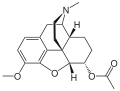 Structural formula of Acetyldihydrocodeine
 -
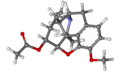 Ball-and-stick model of Acetyldihydrocodeine

Medical Disclaimer: WikiMD is for informational purposes only and is not a substitute for professional medical advice. Content may be inaccurate or outdated and should not be used for diagnosis or treatment. Always consult your healthcare provider for medical decisions. Verify information with trusted sources such as CDC.gov and NIH.gov. By using this site, you agree that WikiMD is not liable for any outcomes related to its content. See full disclaimer.
Credits:Most images are courtesy of Wikimedia commons, and templates, categories Wikipedia, licensed under CC BY SA or similar.
Translate page: - East Asian
中文,
日本,
한국어,
South Asian
हिन्दी,
தமிழ்,
తెలుగు,
Urdu,
ಕನ್ನಡ,
Southeast Asian
Indonesian,
Vietnamese,
Thai,
မြန်မာဘာသာ,
বাংলা
European
español,
Deutsch,
français,
Greek,
português do Brasil,
polski,
română,
русский,
Nederlands,
norsk,
svenska,
suomi,
Italian
Middle Eastern & African
عربى,
Turkish,
Persian,
Hebrew,
Afrikaans,
isiZulu,
Kiswahili,
Other
Bulgarian,
Hungarian,
Czech,
Swedish,
മലയാളം,
मराठी,
ਪੰਜਾਬੀ,
ગુજરાતી,
Portuguese,
Ukrainian

