5-EAPB
A psychoactive drug of the benzofuran class
| 5-EAPB | |
|---|---|
|
| |
|
|


5-EAPB (5-(2-aminopropyl)benzofuran) is a psychoactive drug of the benzofuran class. It is structurally related to MDMA and has been used as a recreational drug.
Chemical structure and properties[edit]
5-EAPB is a benzofuran derivative, which means it contains a benzene ring fused to a furan ring. The chemical structure of 5-EAPB includes an amine group attached to the second carbon of the propyl chain, making it an amphetamine-like compound. The presence of the benzofuran moiety is responsible for its unique pharmacological properties.
Pharmacology[edit]
5-EAPB acts as a serotonin-norepinephrine-dopamine releasing agent (SNDRA). This means it increases the levels of the neurotransmitters serotonin, norepinephrine, and dopamine in the brain by promoting their release from presynaptic neurons. This action is similar to that of other entactogens like MDMA, which is known for its empathogenic effects.
Effects[edit]
The effects of 5-EAPB are reported to be similar to those of MDMA, including feelings of euphoria, increased empathy, and enhanced sensory perception. Users may also experience stimulation, increased energy, and sociability. However, the effects can vary depending on the dose and individual sensitivity.
Legal status[edit]
The legal status of 5-EAPB varies by country. In some jurisdictions, it is classified as a controlled substance due to its potential for abuse and lack of medical use. In others, it may be available as a research chemical or designer drug.
Safety and toxicity[edit]
The safety profile of 5-EAPB is not well-established, and its use carries potential risks. As with other psychoactive substances, there is a risk of adverse effects, including cardiovascular issues, neurotoxicity, and serotonin syndrome. Users should exercise caution and be aware of the potential for addiction and psychological dependence.
Related pages[edit]
Gallery[edit]
-
 Chemical structure of 5-EAPB
 -
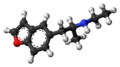 Ball-and-stick model of 5-EAPB
Advertise on WikiMD — 81,000+ full articles, ~900,000 total pages, ~250 million page views. Global reach, limited time promotional rates from $1/page/day. Learn more · View stats

Translate page: - East Asian
中文,
日本,
한국어,
South Asian
हिन्दी,
தமிழ்,
తెలుగు,
Urdu,
ಕನ್ನಡ,
Southeast Asian
Indonesian,
Vietnamese,
Thai,
မြန်မာဘာသာ,
বাংলা
European
español,
Deutsch,
français,
Greek,
português do Brasil,
polski,
română,
русский,
Nederlands,
norsk,
svenska,
suomi,
Italian
Middle Eastern & African
عربى,
Turkish,
Persian,
Hebrew,
Afrikaans,
isiZulu,
Kiswahili,
Other
Bulgarian,
Hungarian,
Czech,
Swedish,
മലയാളം,
मराठी,
ਪੰਜਾਬੀ,
ગુજરાતી,
Portuguese,
Ukrainian
About WikiMD • Contact • Disclaimer • Privacy • Copyright • Site statistics
Some content and images may originate from Wikimedia Commons or Wikipedia and remain subject to their stated licenses. Unless otherwise noted, eligible WikiMD content is available under CC BY-SA 4.0.
WikiMD Wellnesspedia — Free health & wellness information for patients, students, and health professionals.

