Acquired C1 esterase inhibitor deficiency

Editor-In-Chief: Prab R Tumpati, MD
Obesity, Sleep & Internal medicine
Founder, WikiMD Wellnesspedia &
W8MD's medical weight loss NYC, sleep center NYC
Philadelphia medical weight loss and Philadelphia sleep clinics
| Acquired C1 esterase inhibitor deficiency | |
|---|---|

| |
| Synonyms | Acquired angioedema due to C1 inhibitor deficiency |
| Pronounce | N/A |
| Specialty | N/A |
| Symptoms | Angioedema, abdominal pain, laryngeal edema |
| Complications | Airway obstruction, anaphylaxis |
| Onset | Typically in adulthood |
| Duration | Chronic |
| Types | N/A |
| Causes | Autoimmune disease, lymphoproliferative disorders |
| Risks | Family history, autoimmune disorders |
| Diagnosis | Complement system testing, C1 inhibitor levels |
| Differential diagnosis | Hereditary angioedema, allergic reactions |
| Prevention | Avoidance of known triggers |
| Treatment | C1 inhibitor concentrate, antifibrinolytics, androgens |
| Medication | Icatibant, Ecallantide |
| Prognosis | Variable, depends on underlying cause |
| Frequency | Rare |
| Deaths | N/A |
Acquired C1 esterase inhibitor deficiency is a rare condition characterized by the deficiency of the C1 esterase inhibitor (C1-INH), which leads to episodes of angioedema. This condition is distinct from hereditary angioedema and is often associated with other underlying diseases.
Pathophysiology[edit]
The C1 esterase inhibitor is a crucial component of the complement system, which is part of the body's immune response. It regulates the activation of the complement pathway, particularly the classical pathway. In acquired C1 esterase inhibitor deficiency, the lack of functional C1-INH leads to uncontrolled activation of the complement system, resulting in excessive production of bradykinin, a peptide that increases vascular permeability and causes angioedema.

Causes[edit]
Acquired C1 esterase inhibitor deficiency is often associated with other medical conditions, such as lymphoproliferative disorders (e.g., non-Hodgkin lymphoma) and autoimmune diseases. It can also occur in the context of monoclonal gammopathy of undetermined significance (MGUS).
Clinical Presentation[edit]
Patients with acquired C1 esterase inhibitor deficiency typically present with recurrent episodes of angioedema, which can affect the face, extremities, gastrointestinal tract, and airways. Unlike allergic reactions, these episodes are not associated with urticaria or pruritus.

Diagnosis[edit]
The diagnosis of acquired C1 esterase inhibitor deficiency involves measuring the levels and function of C1-INH in the blood. Low levels of C1-INH and C4, along with normal C1q levels, are indicative of the condition. A detailed patient history and examination are also crucial to rule out hereditary angioedema and identify any associated conditions.

Treatment[edit]
Management of acquired C1 esterase inhibitor deficiency focuses on treating the underlying condition and preventing angioedema attacks. Acute attacks can be treated with C1-INH replacement therapy, bradykinin receptor antagonists, or fresh frozen plasma. Long-term prophylaxis may involve the use of androgens or antifibrinolytics.
Prognosis[edit]
The prognosis of acquired C1 esterase inhibitor deficiency depends on the underlying condition. Effective management of the associated disease can lead to a reduction in the frequency and severity of angioedema attacks.
See also[edit]
Gallery[edit]
-
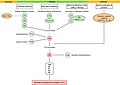 Complement activation
 -
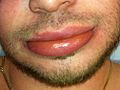 Angioedema affecting the face
 -
 Diagnostic approach to C1 inhibitor deficiency
Ad. Transform your health with W8MD Weight Loss, Sleep & MedSpa

Tired of being overweight?
Special offer:
Budget GLP-1 weight loss medications
- Semaglutide starting from $29.99/week and up with insurance for visit of $59.99 and up per week self pay.
- Tirzepatide starting from $45.00/week and up (dose dependent) or $69.99/week and up self pay
✔ Same-week appointments, evenings & weekends
Learn more:
- GLP-1 weight loss clinic NYC
- W8MD's NYC medical weight loss
- W8MD Philadelphia GLP-1 shots
- Philadelphia GLP-1 injections
- Affordable GLP-1 shots NYC
|
WikiMD Medical Encyclopedia |
Medical Disclaimer: WikiMD is for informational purposes only and is not a substitute for professional medical advice. Content may be inaccurate or outdated and should not be used for diagnosis or treatment. Always consult your healthcare provider for medical decisions. Verify information with trusted sources such as CDC.gov and NIH.gov. By using this site, you agree that WikiMD is not liable for any outcomes related to its content. See full disclaimer.
Credits:Most images are courtesy of Wikimedia commons, and templates, categories Wikipedia, licensed under CC BY SA or similar.
Translate this page: - East Asian
中文,
日本,
한국어,
South Asian
हिन्दी,
தமிழ்,
తెలుగు,
Urdu,
ಕನ್ನಡ,
Southeast Asian
Indonesian,
Vietnamese,
Thai,
မြန်မာဘာသာ,
বাংলা
European
español,
Deutsch,
français,
Greek,
português do Brasil,
polski,
română,
русский,
Nederlands,
norsk,
svenska,
suomi,
Italian
Middle Eastern & African
عربى,
Turkish,
Persian,
Hebrew,
Afrikaans,
isiZulu,
Kiswahili,
Other
Bulgarian,
Hungarian,
Czech,
Swedish,
മലയാളം,
मराठी,
ਪੰਜਾਬੀ,
ગુજરાતી,
Portuguese,
Ukrainian
