Flavan
Flavan is a type of polyphenol, specifically a flavonoid, that is found in various plant species. It is one of the most common and widespread groups of plant metabolites and is important for plant growth and development. Flavans are also known for their potential health benefits in humans, including anti-inflammatory, anti-cancer, and anti-oxidant effects.
Structure and Classification[edit]
Flavans are characterized by a 15-carbon skeleton, which consists of two phenyl groups and a heterocyclic ring. This carbon structure can be abbreviated C6-C3-C6. Based on the variation in the heterocyclic ring, flavans can be classified into several types, including flavan-3-ols, flavan-4-ols, and flavan-3,4-diols.
Biosynthesis[edit]
The biosynthesis of flavans is part of the larger phenylpropanoid pathway in plants. This pathway begins with the amino acid phenylalanine, which is converted into cinnamic acid by the enzyme phenylalanine ammonia lyase (PAL). Cinnamic acid is then converted into p-coumaric acid by cinnamate 4-hydroxylase (C4H), and p-coumaric acid is converted into chalcone by chalcone synthase (CHS). Chalcone is the precursor to all flavonoids, including flavans.
Health Benefits[edit]
Flavans have been studied for their potential health benefits. They have been found to have anti-inflammatory, anti-cancer, and anti-oxidant effects. For example, flavan-3-ols are the main type of flavonoid found in green tea, and they have been associated with a reduced risk of heart disease and cancer. However, more research is needed to fully understand the health benefits of flavans and how they work in the body.
See Also[edit]
This flavonoid-related article is a stub. You can help WikiMD by expanding it.
-
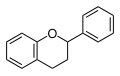 Flavan acsv

Medical Disclaimer: WikiMD is for informational purposes only and is not a substitute for professional medical advice. Content may be inaccurate or outdated and should not be used for diagnosis or treatment. Always consult your healthcare provider for medical decisions. Verify information with trusted sources such as CDC.gov and NIH.gov. By using this site, you agree that WikiMD is not liable for any outcomes related to its content. See full disclaimer.
Credits:Most images are courtesy of Wikimedia commons, and templates, categories Wikipedia, licensed under CC BY SA or similar.
Translate this page: - East Asian
中文,
日本,
한국어,
South Asian
हिन्दी,
தமிழ்,
తెలుగు,
Urdu,
ಕನ್ನಡ,
Southeast Asian
Indonesian,
Vietnamese,
Thai,
မြန်မာဘာသာ,
বাংলা
European
español,
Deutsch,
français,
Greek,
português do Brasil,
polski,
română,
русский,
Nederlands,
norsk,
svenska,
suomi,
Italian
Middle Eastern & African
عربى,
Turkish,
Persian,
Hebrew,
Afrikaans,
isiZulu,
Kiswahili,
Other
Bulgarian,
Hungarian,
Czech,
Swedish,
മലയാളം,
मराठी,
ਪੰਜਾਬੀ,
ગુજરાતી,
Portuguese,
Ukrainian
