Chalcone synthase
Chalcone Synthase (CHS) is a pivotal enzyme in the flavonoid biosynthesis pathway, playing a crucial role in the production of chalcone, which serves as a precursor for a wide range of polyphenolic compounds. These compounds are significant for their roles in plant defense mechanisms, pigmentation, and human health benefits. CHS catalyzes the first step in the pathway, leading to the synthesis of flavonoids, a diverse group of phytochemicals with antioxidant properties.
Function[edit]
Chalcone Synthase catalyzes the condensation of one molecule of CoA-linked p-Coumaric acid with three molecules of Malonyl-CoA, resulting in the formation of chalcone. This reaction is considered the entry point into the flavonoid biosynthesis pathway. Chalcone serves as a core structure that can be further modified to produce a wide variety of flavonoids, including flavones, flavonols, isoflavonoids, and anthocyanins, each with distinct biological activities and functions in plants.
Structure[edit]
The CHS enzyme is typically a homodimer, with each subunit consisting of a series of alpha helices and beta sheets forming a catalytic pocket where substrate molecules bind. The active site of the enzyme is highly conserved across different plant species, reflecting the enzyme's critical role in plant metabolism and the evolutionary pressure to maintain its function.
Genetic Regulation[edit]
The expression of the CHS gene is tightly regulated by a complex network of signaling pathways responsive to both internal and external stimuli, including light, plant hormones, and stress conditions. This regulation ensures that flavonoid production is appropriately modulated in response to environmental changes, thereby optimizing the plant's defensive and adaptive responses.
Biological Significance[edit]
In plants, the flavonoids synthesized by the action of CHS play essential roles in UV protection, symbiosis, flower coloration, and defense against pathogens and herbivores. Beyond their significance in plant biology, flavonoids are also of considerable interest for their potential health benefits in humans, including anti-inflammatory, antioxidant, and anticarcinogenic properties.
Applications[edit]
Due to its central role in flavonoid biosynthesis, CHS has been a target of genetic and metabolic engineering efforts aimed at enhancing flavonoid content in crops. Such modifications have the potential to improve plant resistance to diseases and pests, as well as to increase the nutritional and medicinal value of plant-derived products.
Research[edit]
Research on CHS has contributed significantly to our understanding of the flavonoid biosynthesis pathway, offering insights into the regulation of this pathway and its integration with other metabolic processes in plants. Studies have also explored the evolutionary history of the CHS gene, revealing how gene duplication and functional diversification have contributed to the metabolic versatility of plants.
See Also[edit]
References[edit]
.svg) | This biochemistry article is a stub. You can help WikiMD by expanding the page. |
Chalcone_synthase[edit]
-
 X-ray crystallography image of Chalcone Synthase
 -
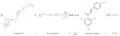 Reaction stoichiometry of Chalcone Synthase


Medical Disclaimer: WikiMD is for informational purposes only and is not a substitute for professional medical advice. Content may be inaccurate or outdated and should not be used for diagnosis or treatment. Always consult your healthcare provider for medical decisions. Verify information with trusted sources such as CDC.gov and NIH.gov. By using this site, you agree that WikiMD is not liable for any outcomes related to its content. See full disclaimer.
Credits:Most images are courtesy of Wikimedia commons, and templates, categories Wikipedia, licensed under CC BY SA or similar.
Translate page: - East Asian
中文,
日本,
한국어,
South Asian
हिन्दी,
தமிழ்,
తెలుగు,
Urdu,
ಕನ್ನಡ,
Southeast Asian
Indonesian,
Vietnamese,
Thai,
မြန်မာဘာသာ,
বাংলা
European
español,
Deutsch,
français,
Greek,
português do Brasil,
polski,
română,
русский,
Nederlands,
norsk,
svenska,
suomi,
Italian
Middle Eastern & African
عربى,
Turkish,
Persian,
Hebrew,
Afrikaans,
isiZulu,
Kiswahili,
Other
Bulgarian,
Hungarian,
Czech,
Swedish,
മലയാളം,
मराठी,
ਪੰਜਾਬੀ,
ગુજરાતી,
Portuguese,
Ukrainian

