Uštipci
Uštipci are a type of fried dough food, popular in the Balkans. They are similar to doughnuts and are often served with powdered sugar, jam, cheese, or meat. Uštipci are typically made from a simple dough of flour, water, yeast, and salt, although some variations may include milk, eggs, or sugar.
History[edit]
The exact origins of uštipci are unclear, but they are believed to have originated in the Balkans. They are a common food in many countries in the region, including Serbia, Bosnia and Herzegovina, Croatia, North Macedonia, and Montenegro. Uštipci are often served as a breakfast food, but can also be eaten as a snack or dessert.
Preparation[edit]
To prepare uštipci, the dough is first mixed and then allowed to rise for several hours. Once the dough has risen, it is divided into small pieces, which are then shaped into balls or discs. These are then fried in hot oil until they are golden brown. The finished uštipci are often dusted with powdered sugar or served with a side of jam or cheese.
Variations[edit]
There are many variations of uštipci, depending on the region and personal preference. In some areas, the dough is sweetened with sugar, while in others it is left plain. Some people prefer to fill their uštipci with cheese or meat, while others prefer them plain or with a dusting of powdered sugar. In some regions, uštipci are served with a side of ajvar, a type of red pepper spread.
See also[edit]

-
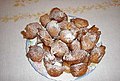 Uštipci

Ad. Transform your life with W8MD's
GLP-1 weight loss injections special from $29.99 with insurance
|
WikiMD Medical Encyclopedia |
Medical Disclaimer: WikiMD is for informational purposes only and is not a substitute for professional medical advice. Content may be inaccurate or outdated and should not be used for diagnosis or treatment. Always consult your healthcare provider for medical decisions. Verify information with trusted sources such as CDC.gov and NIH.gov. By using this site, you agree that WikiMD is not liable for any outcomes related to its content. See full disclaimer.
Credits:Most images are courtesy of Wikimedia commons, and templates, categories Wikipedia, licensed under CC BY SA or similar.
Translate this page: - East Asian
中文,
日本,
한국어,
South Asian
हिन्दी,
தமிழ்,
తెలుగు,
Urdu,
ಕನ್ನಡ,
Southeast Asian
Indonesian,
Vietnamese,
Thai,
မြန်မာဘာသာ,
বাংলা
European
español,
Deutsch,
français,
Greek,
português do Brasil,
polski,
română,
русский,
Nederlands,
norsk,
svenska,
suomi,
Italian
Middle Eastern & African
عربى,
Turkish,
Persian,
Hebrew,
Afrikaans,
isiZulu,
Kiswahili,
Other
Bulgarian,
Hungarian,
Czech,
Swedish,
മലയാളം,
मराठी,
ਪੰਜਾਬੀ,
ગુજરાતી,
Portuguese,
Ukrainian
