Apple cider
-
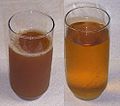 Cider and apple juice
 -
 Apple cider
 -
 Apple cider
 -
 Apple cider
 -
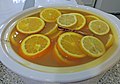 Hot cider


Apple Cider[edit]
Apple cider is a beverage made from the fermented juice of apples. It is a popular drink in many parts of the world and can be enjoyed in various forms, including hard cider, sweet cider, and spiced cider. The production and consumption of apple cider have a rich history, and the beverage is often associated with autumn and harvest festivals.
History[edit]
The origins of apple cider can be traced back to ancient times. The Romans were known to have made a form of cider from apples, and the beverage was popular in Europe during the Middle Ages. With the colonization of the Americas, apple cider became a staple drink in the United States, particularly in the New England region.
Production[edit]
Apple cider is produced by pressing apples to extract their juice. The juice is then fermented, either naturally or with the addition of yeast, to produce alcohol. The type of apples used, the fermentation process, and the addition of other ingredients can all influence the flavor and characteristics of the cider.
Types of Apples[edit]
Different varieties of apples are used to produce cider, each contributing unique flavors and aromas. Common apple varieties used in cider making include Granny Smith, Golden Delicious, and McIntosh. Cider makers often blend different types of apples to achieve a balanced flavor profile.
Fermentation[edit]
The fermentation process is crucial in cider production. It involves the conversion of sugars in the apple juice into alcohol and carbon dioxide by yeast. The fermentation can be controlled to produce either a sweet or dry cider, depending on the desired end product.
Types of Cider[edit]
Hard Cider[edit]
Hard cider is the alcoholic version of apple cider, typically containing between 4% and 8% alcohol by volume. It is similar to beer in its production and consumption and can be found in a variety of styles, from dry to sweet.
Sweet Cider[edit]
Sweet cider, also known as soft cider, is non-alcoholic and is essentially fresh apple juice. It is often consumed as a refreshing beverage and is a popular choice during the fall season.
Spiced Cider[edit]
Spiced cider is a variation of sweet cider that is flavored with spices such as cinnamon, nutmeg, and cloves. It is often served warm and is a traditional drink during the holiday season.
Cultural Significance[edit]
Apple cider holds cultural significance in many regions. In the United States, it is associated with Thanksgiving and Halloween celebrations. In the United Kingdom, cider is a popular drink in pubs and is often enjoyed during social gatherings.
Related Pages[edit]
Ad. Transform your health with W8MD Weight Loss, Sleep & MedSpa

Tired of being overweight?
Get started with evidence based, physician-supervised
affordable GLP-1 weight loss injections
Now available in New York City and Philadelphia:
- Semaglutide starting from $59.99/week and up
- Tirzepatide starting from $69.99/week and up (dose dependent)
✔ Evidence-based medical weight loss ✔ Insurance-friendly visits available ✔ Same-week appointments, evenings & weekends
Learn more:
Start your transformation today with W8MD weight loss centers.
|
WikiMD Medical Encyclopedia |
Medical Disclaimer: WikiMD is for informational purposes only and is not a substitute for professional medical advice. Content may be inaccurate or outdated and should not be used for diagnosis or treatment. Always consult your healthcare provider for medical decisions. Verify information with trusted sources such as CDC.gov and NIH.gov. By using this site, you agree that WikiMD is not liable for any outcomes related to its content. See full disclaimer.
Credits:Most images are courtesy of Wikimedia commons, and templates, categories Wikipedia, licensed under CC BY SA or similar.
Translate this page: - East Asian
中文,
日本,
한국어,
South Asian
हिन्दी,
தமிழ்,
తెలుగు,
Urdu,
ಕನ್ನಡ,
Southeast Asian
Indonesian,
Vietnamese,
Thai,
မြန်မာဘာသာ,
বাংলা
European
español,
Deutsch,
français,
Greek,
português do Brasil,
polski,
română,
русский,
Nederlands,
norsk,
svenska,
suomi,
Italian
Middle Eastern & African
عربى,
Turkish,
Persian,
Hebrew,
Afrikaans,
isiZulu,
Kiswahili,
Other
Bulgarian,
Hungarian,
Czech,
Swedish,
മലയാളം,
मराठी,
ਪੰਜਾਬੀ,
ગુજરાતી,
Portuguese,
Ukrainian
