Check dam
Check Dam
A check dam is a small, sometimes temporary, dam constructed across a swale, drainage ditch, or waterway to counteract erosion by reducing water flow velocity. Check dams are typically used in areas where the natural flow of water needs to be slowed down to prevent soil erosion and to promote water infiltration into the ground.
Design and Construction[edit]
Check dams can be made from a variety of materials, including stone, concrete, logs, or even sandbags. The choice of material often depends on the intended permanence of the structure and the resources available.
Materials[edit]
- Stone: Stone check dams are durable and can last for many years. They are often used in permanent installations.
- Concrete: Concrete check dams are also durable and are used in more permanent settings.
- Logs: Log check dams are typically used in temporary situations or in areas where logs are readily available.
- Sandbags: Sandbag check dams are used for temporary erosion control and are easy to install and remove.
Construction Steps[edit]
1. Site Selection: Choose a location where water flow is causing erosion or where water retention is desired. 2. Foundation Preparation: Clear the area of debris and vegetation to ensure a stable foundation. 3. Material Placement: Place the chosen materials across the waterway, ensuring that the center of the dam is lower than the sides to allow overflow. 4. Anchoring: Secure the materials in place to prevent them from being washed away by water flow. 5. Maintenance: Regularly inspect the check dam for damage and make necessary repairs.
Functions and Benefits[edit]
Check dams serve several important functions:
- Erosion Control: By slowing down water flow, check dams reduce the erosive force of water, protecting soil and vegetation.
- Water Infiltration: Slower water flow allows more water to seep into the ground, recharging groundwater supplies.
- Sediment Capture: Check dams trap sediment, which can improve water quality downstream and build up soil in the area.
Applications[edit]
Check dams are used in various settings, including:
- Agricultural Lands: To prevent soil erosion and improve water retention in fields.
- Construction Sites: To control sediment runoff and protect nearby water bodies.
- Watershed Management: As part of larger efforts to manage water resources and prevent flooding.
Environmental Impact[edit]
While check dams can be beneficial for erosion control and water management, they can also have environmental impacts. Improperly designed or maintained check dams can lead to unintended consequences such as:
- Habitat Disruption: Altering water flow can impact aquatic and riparian habitats.
- Water Quality Issues: If not properly managed, check dams can lead to stagnant water, which may affect water quality.
Also see[edit]
Template:Erosion control techniques
| Water management topics | ||||||||
|---|---|---|---|---|---|---|---|---|
This water management related article is a stub.
|
-
 Check dam in Viehofen
 -
 Bioswale with check dam
 -
 Check dam in Thadayana
 -
 Log dam in May Qoqah
 -
 Log dam in a gully
 -
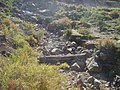 Log dam in Adawro river
 -
 Log dam building in Adawro


Ad. Transform your life with W8MD's
GLP-1 weight loss injections special from $29.99


W8MD Medical Weight Loss, Sleep and Medspa offers physician-supervised medical weight loss programs: NYC medical weight loss Philadelphia medical weight loss
Affordable GLP-1 Weight Loss ShotsAffordable GLP-1 Weight Loss Shots
Budget GLP-1 injections NYC (insurance & self-pay options) Popular treatments:
- Semaglutide starting from $29.99/week
- Tirzepatide starting from $45.00/week
✔ Most insurances accepted for visits ✔ Prior authorization support when eligible
Start your physician weight loss NYC journey today:
📍 NYC: Brooklyn weight loss center 📍 Philadelphia: Philadelphia weight loss center
📞 Call: 718-946-5500 (NYC) | 215-676-2334 (Philadelphia)
Tags: Affordable GLP1 weight loss NYC, Wegovy NYC, Zepbound NYC, Philadelphia medical weight loss


|
WikiMD Medical Encyclopedia |
Medical Disclaimer: WikiMD is not a substitute for professional medical advice. The information on WikiMD is provided as an information resource only, may be incorrect, outdated or misleading, and is not to be used or relied on for any diagnostic or treatment purposes. Please consult your health care provider before making any healthcare decisions or for guidance about a specific medical condition. WikiMD expressly disclaims responsibility, and shall have no liability, for any damages, loss, injury, or liability whatsoever suffered as a result of your reliance on the information contained in this site. By visiting this site you agree to the foregoing terms and conditions, which may from time to time be changed or supplemented by WikiMD. If you do not agree to the foregoing terms and conditions, you should not enter or use this site. See full disclaimer.
Credits:Most images are courtesy of Wikimedia commons, and templates, categories Wikipedia, licensed under CC BY SA or similar.
Translate this page: - East Asian
中文,
日本,
한국어,
South Asian
हिन्दी,
தமிழ்,
తెలుగు,
Urdu,
ಕನ್ನಡ,
Southeast Asian
Indonesian,
Vietnamese,
Thai,
မြန်မာဘာသာ,
বাংলা
European
español,
Deutsch,
français,
Greek,
português do Brasil,
polski,
română,
русский,
Nederlands,
norsk,
svenska,
suomi,
Italian
Middle Eastern & African
عربى,
Turkish,
Persian,
Hebrew,
Afrikaans,
isiZulu,
Kiswahili,
Other
Bulgarian,
Hungarian,
Czech,
Swedish,
മലയാളം,
मराठी,
ਪੰਜਾਬੀ,
ગુજરાતી,
Portuguese,
Ukrainian
